Low-altitude airspace security has shifted from an emerging battlefield challenge to an urgent, industrial-scale procurement problem. As drone warfare evolves at a breakneck pace, the demand for dedicated counter-UAS platforms has outgrown domestic supply chains, forcing European defence planners to look for agile, combat-tested hardware that can be produced locally and at scale.
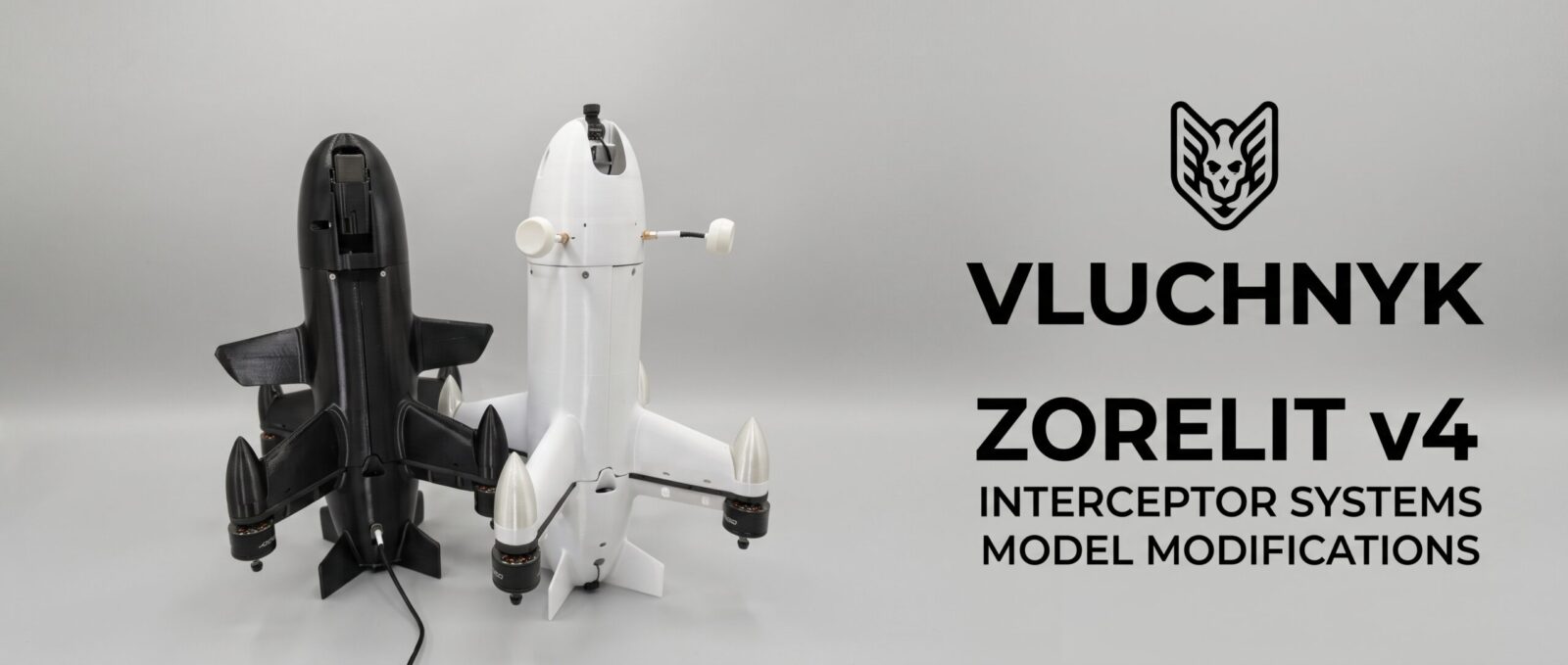
Ukrainian defence tech startup Vluchnyk is emerging as a test case for this cross-border model. According to exclusive reporting by Ukrainian outlet Defender Media, the company – founded by Platon Presich and Stepan Radiboh – has grown from an FPV assembly workshop into a dedicated manufacturer of counter-drone interceptors. Backed by Scandinavian venture capital from Sweden’s Hede Capital Partners AB and Denmark’s Skylen, Vluchnyk is preparing to launch international joint ventures while engineering a high-speed system capable of tackling jet-powered aerial threats.
Pivoting from FPV Assembly to Point Air Defence
Like many companies in Ukraine, Vluchnyk started with volunteering. Co-founder Platon Presich delivered various aid from abroad to the Ukrainian Defence Forces while working across land management, legal services, and construction. Stepan Radiboh actively supported him while continuing to run his own IT company.
By 2023, the founders decided to scale their impact:
“We realized that volunteering was good, but we could do more”, recalls Presich in an interview with Defender Media.
The team initially spent a year working on their own terminal guidance system for drones. However, because development of the “last-mile” system was progressing too slowly, the team pivoted to assembling drones – something that could deliver immediate value. By that time, they already had assembly experience from building drones to test their guidance system. In 2024, Presich and Radiboh officially registered the company, which now employs up to 15 people, supplying the military with kamikaze drones in several sizes and a bomber drone.
Over time, the team halted standard FPV assembly, explaining that the market had become oversaturated with large players. Micro-air defence, however, was showing strong momentum:
“We were making interceptors in a 10-inch drone form factor. They worked well, so we decided to tackle more complex targets”, says Radiboh.
Inside the Fleet: Zorelit v4 and the Jet-Powered Challenge
The core of Vluchnyk’s current operations is the Zorelit v4, a dedicated interceptor optimized against Shahed loitering munitions. The system underwent its first operational tests in September 2025 and secured its maiden military delivery contract in December of the same year. Currently deployed across up to 10 frontline units, the platform relies primarily on a 384-pixel thermal camera configuration to secure the bulk of its intercepts.
The interceptor is produced in six distinct modifications, differentiated by optical payloads, communication links, and AI integration. Each of these six versions can be configured with either a standard range of 46 km or an extended range of 65–70 km.
Unit pricing scales accordingly, spanning from UAH 35,100 to UAH 95,900 (~$800 to $2,200) based on the chosen setup. Across all variants, the base platform delivers consistent flight performance:
Maximum Speed: 348 km/h (with a cruising speed of 135 km/h).
Endurance: Approximately 25 minutes at cruising speed.
Payload: 300 to 600 grams warhead.
As Russian forces shift operational profiles from piston-engine Shaheds to high-speed jet-powered drones – such as the Banderol and modified Geran airframes – Vluchnyk is finalizing its next-generation platform: the Zorelit v6. Designed with higher-spec components, the v6 will exceed speeds of 400 km/h and operate at altitudes of up to 5 km, targeting an estimated price point of around UAH 85,000 (~$1,950).
Nordic Expansion and Cross-Border Licensing
Vluchnyk initially launched with $60,000–$80,000 of the co-founders’ personal capital before securing non-dilutive grants from the Brave1 defence cluster and a UAH 2.5 million allocation (~$57,000) from the Lviv City Council. In 2025, the company brought in equity investment from Nordic funds.
Swedish investment firm Hede Capital Partners AB has built an active portfolio in the Ukrainian defence tech market, backing startups such as Sky Hunter, Black Forest Systems, MaXon Systems, Bravo Dynamics, Aeromotors, and Trinity Robotics.
Patrik Olson, founder of Hede Capital, notes:
“We saw a team that understands an effective interceptor must not only impress technically. It has to be cost-effective, scalable, rapid to deploy, and capable of evolving as the threat changes”.
Danish platform Skylen also acquired a significant minority stake after meeting the founders at DALO Industry Days. In comments provided to Defender Media, Alexander Nielsen, Senior Advisor at Skylen, highlighted that Denmark and broader European markets face an urgent need for volumetric counter-UAS capabilities. Beyond capital, Skylen is onboarding Vluchnyk onto ComplyTrain, a Danish platform preparing the startup for ISO and NATO-aligned AQAP certification to clear Western procurement barriers.
To bring production closer to European buyers, Vluchnyk and its partners established Scandinavian X – a Swedish entity co-founded with Front Ventures, Skygaard, and Hede Capital to produce interceptors under Ukrainian license. Although backed politically by the Swedish government, launch operations remain pending as the startup navigates Ukraine’s complex export licensing process. A second European joint venture agreement is currently being finalized.
Advancing to Autonomous Interception
Vluchnyk’s long-term technical roadmap targets full flight autonomy. The startup’s proprietary terminal guidance system – the original software project the founders began in 2023 – currently identifies aerial targets at distances of roughly 800 meters before executing autonomous terminal strikes.
Alongside domestic peers like F-Drones, MaXon Systems, and The Fourth Law, Vluchnyk is conducting range trials to automate the entire interception cycle:
The interceptor launches independently.
It transitions to cruise velocity and navigates toward the target vector via integration with SkyMap, an airspace data platform fusing radar and external sensor telemetry.
Upon visual confirmation by the onboard sensor, the terminal guidance system engages automatically.
Following upcoming combat trials of its autonomous navigation stack, Vluchnyk plans to expand its counter-drone portfolio with additional micro-air defence systems designed to plug directly into allied European defence architectures.
👉 Read the full, in-depth interview and company profile on Defender Media.