

In the face of relentless aggression, Ukraine’s spirit of innovation burns brighter than ever. As the war rages on, Ukrainian tech companies, fueled by patriotism and necessity, are developing groundbreaking solutions that not only bolster their nation’s defense but also have the potential to reshape the global defense landscape.

From AI-powered drones detecting enemy movements to robotic systems protecting soldiers on the frontline, Ukrainian ingenuity is transforming the battlefield. Cutting-edge communication tools ensure secure and efficient coordination, while virtual reality simulators offer solace and rehabilitation to those impacted by the conflict.
These 25 companies, profiled in depth by our partners at AIN, are just a glimpse into the vibrant Ukrainian Defense Tech ecosystem. They represent a powerful testament to the resilience, adaptability, and technological prowess of a nation fighting for its freedom.
As Ukraine continues its valiant struggle, its tech sector stands as a beacon of hope, demonstrating that even in the darkest of times, innovation can flourish, and technology can be a force for good. The world watches in awe as Ukrainian Defense Tech companies forge a path towards victory, proving that the spirit of a nation, armed with ingenuity and determination, is an indomitable force.
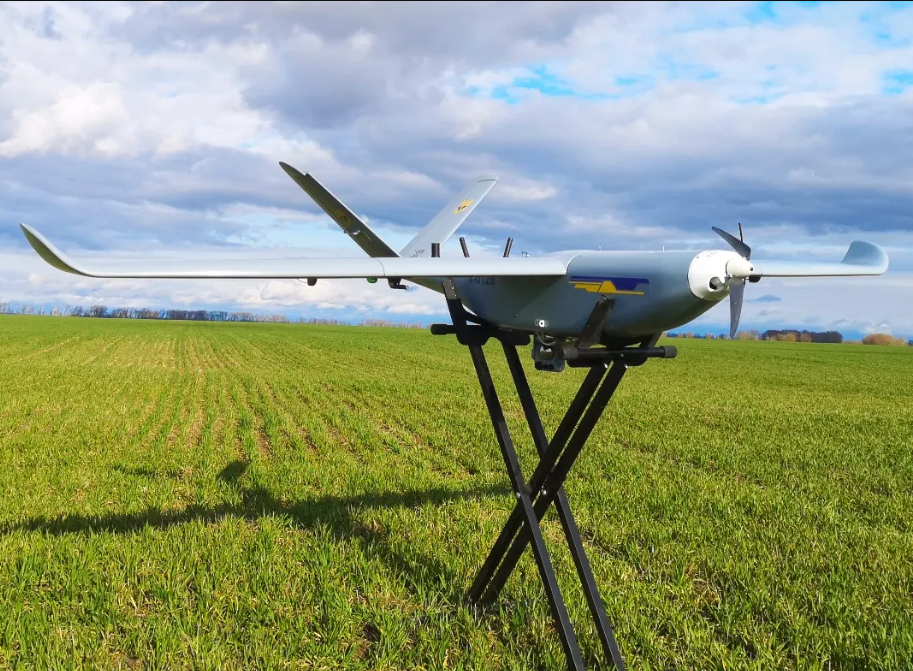
Airlogix, originally a cargo drone startup, pivoted to military reconnaissance UAVs after the 2022 invasion. Their flagship product, the GOR reconnaissance aviation complex, offers advanced capabilities like extended flight time, high altitude operation, and powerful cameras. The company is committed to supporting Ukraine’s defense efforts and sees potential in exporting their technology in the future.
Airlogix: From Cargo Drones to Military Reconnaissance
Airlogix, founded in 2020 as a startup focused on cargo delivery to remote areas using drones, shifted its focus from civilian to military applications with the onset of the full-scale invasion in 2022. The company now specializes in the production of unmanned aerial vehicles (UAVs) and aviation complexes, stating that they are “on the wing to victory”.
“Before the full-scale invasion, we had no connection to the military. We had civilian engineers with bright ideas for the future. But February 24th happened, and we realized we had to help”, says founder and CEO Vitalii Kolesnichenko.
Airlogix launched the production of reconnaissance UAVs, explaining that while they previously worked with cargo drones, they lacked expertise in ammunition and bombers. Their reconnaissance aviation complex, named GOR, boasts a flight duration of up to four hours, an operating altitude of up to 3500 meters, and a range of 260 km. It can be assembled in 30 seconds and prepared for a mission in 10 minutes. GOR is equipped with advanced cameras, including the lightweight Raptor with dual EO/IR stabilization and long-range capabilities, the EO/IR camera with stabilization HightHawk2, and the X80 camera with 80x zoom capability. The project also features a backup navigation system for accurate coordinates during GPS jamming and a communication system with eight channels of pseudo-random frequency hopping to prevent suppression.
Currently, Airlogix is not considering returning to cargo UAVs for the civilian sector. “We need to prepare for the next phase of the war because they [the Russians] are constantly trying to destroy us, as history shows. After this round of war, they will become stronger, gain more people and technology, and attack us again. We must be ready – have our own technologies, means of protection, weapons”, says Kolesnichenko.
He also notes that Defense Tech startups will face challenges in securing funding after the war due to the focus on reconstruction efforts. “Of course, there will be some purchases, but they won’t be significant enough for us to earn and reinvest in further development. So, most likely, exports will begin. We will need to focus on other markets and keep investments and international support in the country – this way we can create new technologies”, Kolesnichenko believes.
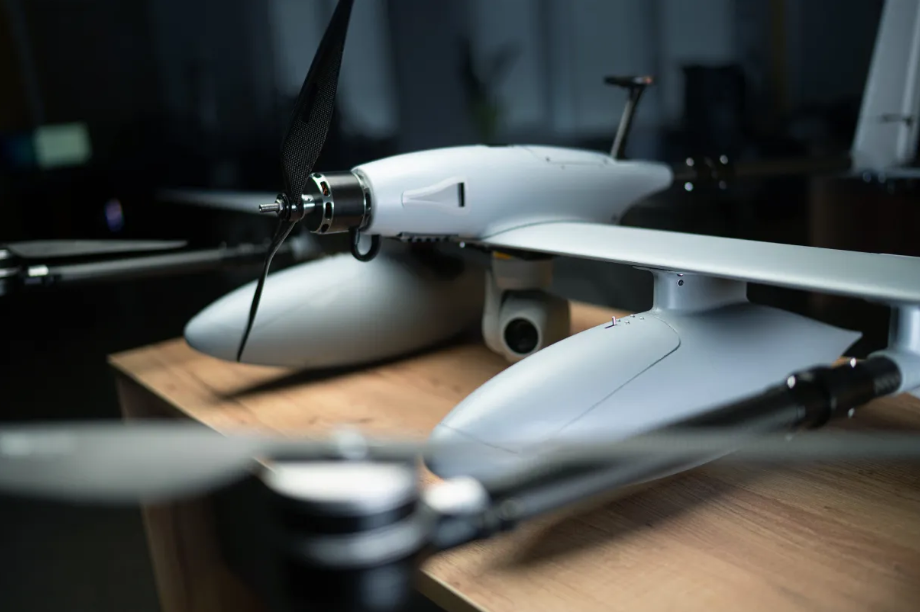
Buntar Aerospace is a Ukrainian startup focused on developing advanced UAV solutions for defense. Their Buntar-1 UAV is a long-range reconnaissance drone equipped with AI-powered mission planning and navigation systems, even capable of operating without GPS. The company prioritizes reducing mission costs and increasing UAV reusability. They are actively seeking NATO certification and aim to address reconnaissance gaps on a global scale.
Buntar Aerospace: Ukrainian “Star Wars” Innovation
Inspired by “Star Wars”, Ukrainian startup Buntar Aerospace was founded in 2023 to develop cutting-edge solutions for the defense industry. Their flagship product, the Buntar-1 UAV, is a long-range reconnaissance drone with an operating distance of over 40 km from its control station. The company also offers Buntar Copilot, AI-powered software for automated mission planning and execution, and an AI-based navigation system that functions even without GPS.
Co-founder Kateryna Bezsudna explains that they chose to focus on UAVs after analyzing the Defense Tech market and consulting with the military, recognizing it as a critical segment. They prioritized building a strong team and securing investments, emphasizing the importance of providing engineers with the resources they need to create high-quality products.
Buntar Aerospace currently has three R&D teams: one developing the aircraft, another working on the mission planning and execution software, and the third tackling navigation challenges without GPS using multiple methods simultaneously.
The Buntar-1 UAV utilizes a multirotor system for takeoff, transitioning to airplane mode for flight, reducing the risk of loss during takeoff or landing. The team’s primary goal is to decrease the cost of reconnaissance missions by increasing the number of flights a single UAV can complete before being lost. They analyzed hundreds of scenarios leading to UAV loss and incorporated these risks into the initial design phase. These solutions are then transformed into algorithms, with AI analyzing the situation and communicating with the operator, making the UAVs truly reusable.
“Instead of a traditional mission planner for drones, we use Buntar Copilot, software with AI elements. It automates many processes of flight task preparation and provides advice during combat missions. The software can be integrated with other UAVs, and it is already being used by many units of the Armed Forces of Ukraine for mission planning”, says one of the co-founders.
Kateryna Bezsudna emphasizes the importance of having as many military personnel as possible use their developments to provide rapid feedback. After each product is tested at the training ground, the company immediately applies to the Ministry of Defense for certification.
On August 16, 2024, the Buntar-1 UAV completed its first combat flight under the control of Buntar Copilot software on GCS. According to the company, the mission took place near Svatove, with stable communication maintained 98% of the time.
“This summer, after testing the UAV abroad, we plan to undergo NATO certification. We have the ambition to help solve security issues at the NATO level because reconnaissance is one of the key aspects of defense, which is actually a gap in all countries”, comments Kateryna Bezsudna to AIN.
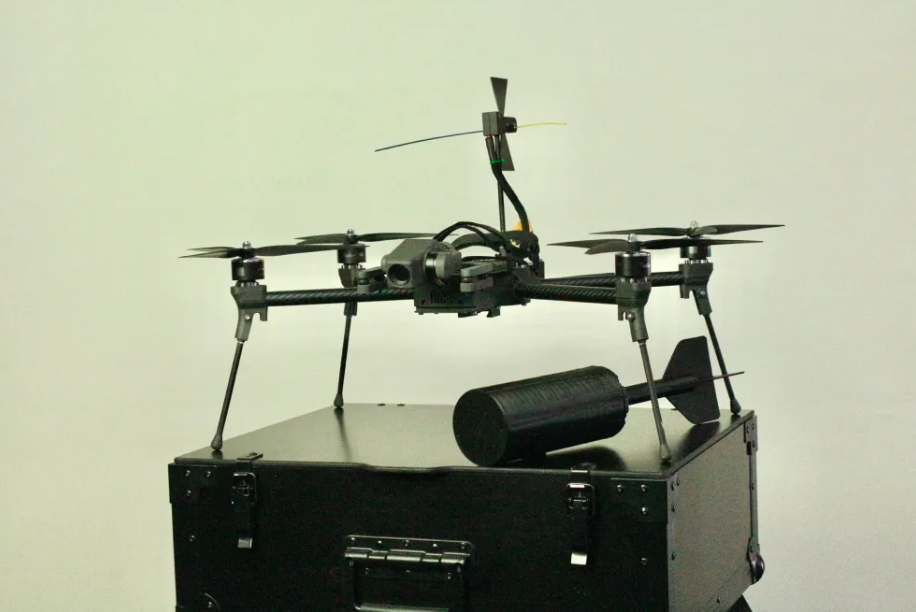
Frontline is a Ukrainian defense tech startup specializing in robotic systems. They develop ECM-resistant drones for reconnaissance and bombing missions, remotely controlled turrets for grenade launchers, and drone control modules. Their focus is on creating scalable and user-friendly solutions to enhance the capabilities of assault units and reduce risks for soldiers on the battlefield.
Frontline: Revolutionizing Warfare with Drones, AI, and Turrets
Founded in September 2023, Frontline is a Ukrainian startup specializing in the development and manufacturing of robotic systems. Their journey began long before the official establishment, with the team working on various projects to support Ukraine in the war that started in 2014.
CEO Yevhen Tretiak describes their evolution from creating Molotov cocktails during the Maidan protests to developing cutting-edge robotic turrets. In the summer of 2023, the four co-founders of Frontline – Yevhen, Pavlo, Oleksii, and Oleksandr – were working at a defense robotics company but aspired to create scalable solutions that could be easily used by any soldier, ultimately enhancing the capabilities of assault units.
They decided to venture out on their own and develop ECM-resistant control modules for drones (FPVs and bombers), requiring fewer resources. They rented a small office and started working on their first prototypes while seeking funding opportunities.
Today, Frontline’s product range includes an ECM-resistant bomber drone with reconnaissance capabilities, a remotely controlled turret for the 40mm MK-19 grenade launcher, and an ECM-resistant drone control module.
They are also developing visual point retention technology for their drone, enabling it to maintain its position even in windy conditions, making it easier to use for dropping bombs, surveillance, or relaying signals.
In the future, Frontline aims to involve people who are not on the frontline, allowing them to perform certain missions remotely.
In the summer of 2024, the company introduced the “Buria” robotic turret for the MK-19 grenade launcher. Weighing 47 kg, it can be deployed manually on a tripod or transported using a logistics platform. Its mobility and compact size allow for transportation even in civilian vehicles. The software component enables convenient targeting using a laptop or tablet from a shelter at a distance from the turret. It also integrates with current state and private situational awareness systems.
Their ECM-resistant control module for drones, “Hertz”, has two control ranges operating simultaneously, pseudo-random frequency hopping throughout the entire operating range, and the ability to place the transmitter up to 100 meters away.
Another development is the “Linza” bomber drone with reconnaissance capabilities, equipped with encrypted video communication and fast channel switching, capable of operating at a distance from the antenna station without losing communication quality up to 100 meters.
Currently, the company is undergoing state codification to receive government orders, allowing them to increase production volumes and eventually enter the international market, launch exports, and open production lines abroad.
However, their primary goal remains to meet Ukraine’s needs. “Mass production will allow us to saturate the Ukrainian front with robots and remove as many infantrymen from the trenches as possible. That’s why we want to modernize the system”.
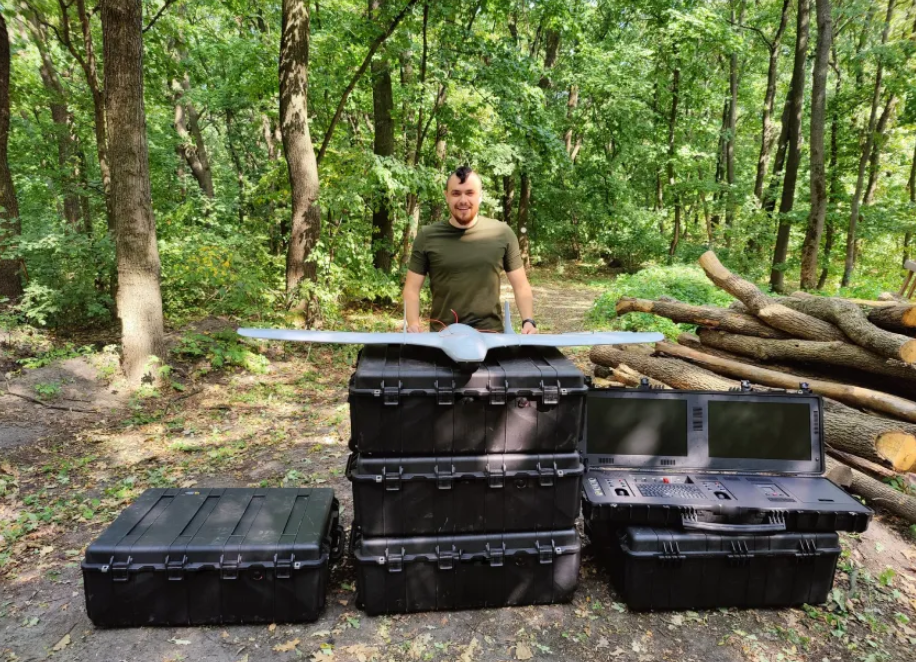
IT Dnipro Community (ITDC) is a cluster of 56 IT companies that has shifted its focus to support the Ukrainian military since the full-scale invasion. They provide technological assistance through projects like “Night Driver” for discreet night-time vehicle movement, “Tactical CommLink Point” for secure communication, and an FPV drone school. ITDC aims to continue supporting the Armed Forces and leverage Ukraine’s position as a testing ground for Defense Tech innovation.
IT Dnipro Community: Pioneering Tech Support for the Ukrainian Armed Forces
Founded in 2016 as a collaboration of six Dnipro IT companies, IT Dnipro Community (ITDC) has grown into a thriving cluster of 56 companies, actively addressing regional IT challenges. Since the full-scale invasion, ITDC has developed a dedicated Military Tech division, providing technological assistance to the Ukrainian Armed Forces.
Initially, their efforts focused on volunteer work, such as relocating specialists and supplying body armor and helmets to the military. As their experience grew, so did the scale of their assistance, organizing fundraising campaigns and providing night vision devices, batteries, and even UAVs.
“Over time, the Military Tech division started to take shape: it wasn’t just about buying and handing over equipment, we realized that we had the expertise and desire to do something more significant”, says Yevhen Hostishchev, Executive Director of ITDC.
ITDC established collaborations with various military units, including the Third Assault Brigade, the 93rd “Kholodnyi Yar” Brigade, a Tactical Aviation Brigade in the Dnipro region, the SBU’s “Alpha” Special Operations Center, the “OK Skhid” communications unit, and Dnipro’s mobile air defense units.
Key projects developed by ITDC:
- Night Driver: A system for discreet movement of vehicles at night, initially using infrared cameras and tablets, later upgraded with night vision goggles and infrared projectors for improved visibility and safety.
- Networks and Communications: Training programs on building secure networks and IP telephony, along with providing equipment for immediate implementation in the field. The Tactical CommLink Point, a portable box for rapid deployment of secure networks with prioritized traffic distribution, was also developed.
- FPV Drone School and Production: Recognizing the growing importance of FPV drones in warfare, ITDC launched its own production of UAVs, including reconnaissance and relay drones. To address the shortage of qualified pilots, they established a dedicated FPV drone pilot school, providing training classes and software simulators.
Looking ahead:
ITDC remains committed to supporting the Ukrainian Armed Forces at least until victory is achieved. They are closely monitoring the evolving nature of the war and exploring emerging trends, such as drones with autonomous guidance capabilities that can continue their mission even after losing communication with the pilot.
Yevhen Hostishchev emphasizes that Ukraine currently serves as a vast testing ground, and Ukrainian developers have taken the lead in the Defense Tech market.
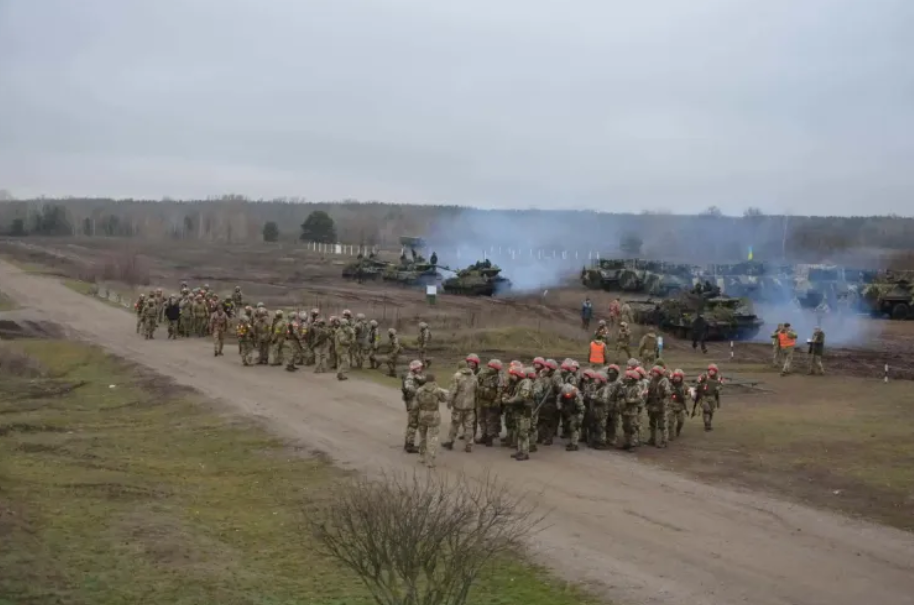
Skiftech, originally a paintball and laser tag company, now specializes in tactical military training simulators. Their system combines hardware and software to provide realistic combat simulations, emphasizing team cohesion and involving various military branches. Skiftech’s solutions are already being tested in the USA, and they see a promising future for Ukrainian Defense Tech on the global market.
Skiftech: From Laser Tag to Military Training Simulations
When Russia occupied Crimea and parts of Donetsk and Luhansk regions in 2014, entrepreneurs in Kharkiv transformed their paintball and laser tag business into a full-cycle manufacturer of rescue systems for the military. This marked the birth of Skiftech, a company specializing in the development of tactical simulators.
“We focus on tactical training, not just firearms training. Because team cohesion matters more than individual shooting experience. Even in laser tag, you couldn’t win if the team didn’t agree on how to move”, says Mykhailo Obod, co-founder of Skiftech.
They emphasize the simultaneous involvement of different branches of the military as a unique feature of their training. “We make it as close to real combat as possible. There’s no such thing as assault troops fighting against assault troops, so medics, assault troops, logistics with tankers, mortarmen with artillerymen all participate – we combine simulators into one ecosystem”, explains the developer.
Skiftech’s system comprises both software and hardware components. The hardware includes devices installed on weapons, equipment, and ammunition to collect data during training using the Orion communication system (developed by Skiftech to create wireless coverage and enable communication and information exchange between the control center and military equipment).
The software part involves data analysis and playback of the training, allowing for a detailed review of each soldier’s actions in specific conditions and identifying gaps in individual training. All information is linked to the combat map, area, or training ground, enabling analysis of troop movements, terrain, firing patterns, targets hit, and regrouping efficiency.
“This is the most realistic training currently available in the world. We don’t train people in classrooms, but on real training grounds. It’s training people who train against other people, not against targets”, says Obod.
The company also utilizes weapon and equipment mock-ups that accurately reflect weight, dimensions, and other technical characteristics. As soon as Western partners supply new weapons, Skiftech develops simulators for training on them.
Skiftech is already providing its solutions for testing in the USA. According to Obod, the American military uses simulators developed back in 2007, while Ukrainian ones are built with approaches from 2024.
“Ukrainian engineers now have a certain passion for working on Defense Tech projects because your development won’t undergo lengthy testing somewhere in America, but will work and help the military immediately. And there will always be demand for what has been tested in real combat, and this will become our major economic sector”, Obod confidently states.
Byne is a Ukrainian startup that offers a “private GPT” platform, enabling secure deployment and use of large language models (LLMs) for defense and other sectors requiring data protection. They aim to become a leading developer of AI-powered intelligence solutions for NATO countries and have already achieved UK defense supplier certification.
Byne: AI Solutions for Defense and Beyond
Byne, a Developer Tools startup co-founded by Borys Nadykto, develops AI-powered solutions for both defense and civilian sectors. They address the specific needs of the security domain, where using large language models (LLMs) like those behind ChatGPT requires maintaining a secure perimeter during information processing. Byne’s platform enables developers to deploy and utilize these models on their own servers within a protected environment, effectively providing a “private GPT”.
In 2022, Byne started as a volunteer project to create secure infrastructure for deploying LLMs for the Ukrainian Armed Forces. Over time, the founders, Borys Nadykto, Andrii Yakovyna, and Denys Budnyk, began collaborating with service companies seeking AI expertise.
Nadykto emphasizes the importance of understanding and managing risks associated with AI, stating, “People also make mistakes. The problem is that unlike working with AI, we know how to manage the risks of human error. With artificial intelligence, people simply don’t understand how it works and at what stage errors should be analyzed”.
Byne’s ambitious goal is to become the first Ukrainian-rooted developer of a specialized platform for intelligence solution engineers in NATO countries. “This is our guiding star, as the use of AI in the military has become highly relevant. We don’t sell ready-made intelligence solutions, but we help build them faster”, says the co-founder.
Byne has already completed its certification as a defense supplier in the UK and is in the process of obtaining membership in procurement frameworks, allowing them to participate in government tenders. Nadykto explains that in the UK, companies cannot bid on tenders without being a member of a procurement framework, administered by large companies or government agencies.
“It’s a long but important process. Even when people in the defense sector only know about supplying weapons to Ukraine, and then a Ukrainian company comes to them and offers an innovative solution, it already changes their perception of us”, Nadykto believes.
He adds that the success of the Ukrainian Defense Tech market largely depends on commercial talent for sales and strategic understanding.
“If we can break through this wall between Ukraine and the West and strengthen our presence abroad, this story will develop. I understand it’s difficult, we need to fulfill defense orders, but it’s worth looking beyond the horizon and thinking about what will happen to us in six, ten, or twelve months”, says Nadykto.

Kolossal and DeepStateMap leverage OSINT to provide real-time battlefield information to the Ukrainian military. They collect and analyze data from various public sources and verify it with on-the-ground intel. Their interactive map offers critical insights into troop movements, equipment locations, and environmental conditions. They are committed to supporting Ukraine’s victory and exploring future applications beyond the current conflict.
Kolossal and DeepStateMap: Real-time Monitoring of the Battlefield
In 2019, Roman Pohorilyi and Ruslan Mykula envisioned a platform for monitoring information. By 2020, they launched a Telegram channel publishing international events, which Pohorilyi describes as a hobby at the time.
As the full-scale invasion approached, the channel started incorporating OSINT techniques to track Russian troop movements.
Today, Kolossal is an integrated OSINT platform for collecting, analyzing, and displaying information about events on the frontline. Part of this data is presented on DeepStateMap, another project by the team.
The name DeepState was chosen based on the concept of the “deep state,” a group of unelected officials influencing government policy. “We discussed various concepts and chose the name Deep State, as the channel was then dedicated to international events, with the idea that maybe one day we could influence society, processes, be known, and bring benefits”, says Pohorilyi.
The Kolossal team, consisting of over 100 people, tracks and collects photos and videos published by Russian troops to analyze positions, equipment locations, and quantities. The Ukrainian army can use the map to check details like weather, terrain, radiation levels, natural disasters registered by NASA satellites, the location of defensive structures, and the consequences of nuclear weapons use, enabling them to plan their own actions.
“We have horizontal connections with the soldiers, and that’s our advantage in that, in addition to OSINT, the public side that is the foundation, there is additional verification. Today it’s difficult to track public moments when you see a video or photo, but it’s impossible to draw any conclusions. We try to confirm, verify, and clarify many points”, explains Pohorilyi.
He emphasizes the life-saving importance of the map, as it’s also used by the State Emergency Service and evacuation services, with whom the company has signed a memorandum.
Pohorilyi acknowledges that the Russians also have a strong OSINT component. “They cannot be underestimated, they are working and developing, but of course, there are noticeable mistakes – at the beginning of the full-scale invasion, they loved to publish where they were, in which landing, what they were storming. At the same time, they have a developed UAV system as part of their reconnaissance”.
DeepStateMap is banned in Russia by the Federal Service for Supervision of Communications, Information Technology and Mass Media, but Russians can access the maps through VPNs.
“For everyone who visits from Russia, we have a pop-up greeting that shows that they can surrender, provides contacts for the Main Intelligence Directorate and the ‘I Want to Live’ project, and to close this pop-up, you need to click the ‘Crimea is Ukraine’ button. So everyone who has visited must click and acknowledge that Crimea is part of Ukraine”, says Ruslan Mykula.
In 2024, Kolossal signed a memorandum of cooperation with the Ministry of Defense for information exchange. This agreement covers the work of the information and analytical components.
The team is currently working towards victory – until the entire map turns green (the color used to mark liberated territories of Ukraine). Only then, according to Roman Pohorilyi, will they be able to determine their further direction.

Mantis Analytics is an AI-powered platform that helps combat Russian disinformation and manage physical and informational risks. It uses AI to gather and filter data, enabling human analysts to respond effectively to threats. The company sees potential for its technology beyond the current conflict, addressing hybrid warfare challenges and expanding into civilian applications.
Mantis Analytics: AI-Powered Management of Physical and Information Risks
Russia’s hybrid warfare tactics combine physical combat with information warfare, aiming to sow discord and create internal enemies. Since the full-scale invasion in 2022, IT volunteers joined the fight against Russian propaganda, eventually launching Mantis Analytics, an AI-powered platform for monitoring the information landscape.
“The idea arose spontaneously”, says co-founder Anton Tarasyuk. “We wanted to contribute to curbing Russian aggression, even if we couldn’t stop it completely. So, several people came together, believing they could technologically enhance our capabilities in the information space”.
This initiative evolved into a startup founded by Tarasyuk, Maksym Tereshchenko, and Ostap Vykhopen. It began with the National Security and Defense Council of Ukraine needing to automate the monitoring of the Russian information space. Now, their platform is used not only by the government but also by businesses for analyzing both informational and physical risks.
How it works:
- Data collection: The first step involves gathering high-quality input data.
- Risk categorization: AI helps determine whether the data relates to informational or physical risks, identifying signals that could be linked to events like the Kakhovka HPP explosion in 2023.
- AI-powered filtering: AI sifts through the vast amount of information to highlight critical messages, enabling human analysts to focus on the most relevant content.
- Human analysis and response: Human experts play a crucial role in verifying AI-generated insights and formulating appropriate responses to information attacks, such as issuing statements, providing explanations to partners, and implementing crisis communication strategies. Mantis Analytics ensures these actions are based on reliable data, obtained quickly and in a timely manner.
Future outlook:
Tarasyuk believes society is still captive to the old concept of war fought with bullets and tanks, but Russia’s hybrid war has demonstrated a different approach, following the so-called “Gerasimov doctrine”: for every kinetic action (bullet or tank shot), there are four non-kinetic (informational) attacks.
“Therefore, there will be plenty of work even after the war against Ukraine ends – there will still be Moldova, Georgia, the process of European integration, and so on. The positive side is that we won’t be left without work; the negative side is that we will also need to work outside of Ukraine”, Tarasyuk states confidently.
He adds that Ukraine is currently experiencing rapid technology testing and adaptation on the battlefield. He is convinced that the market for Defense Tech startups and companies will become part of the country’s post-war economy, as the need for defense will not disappear.
“Moreover, the attitude towards military technologies has changed: developers are finding dual-use applications for their products to extend their projects to the civilian population”, he concludes.
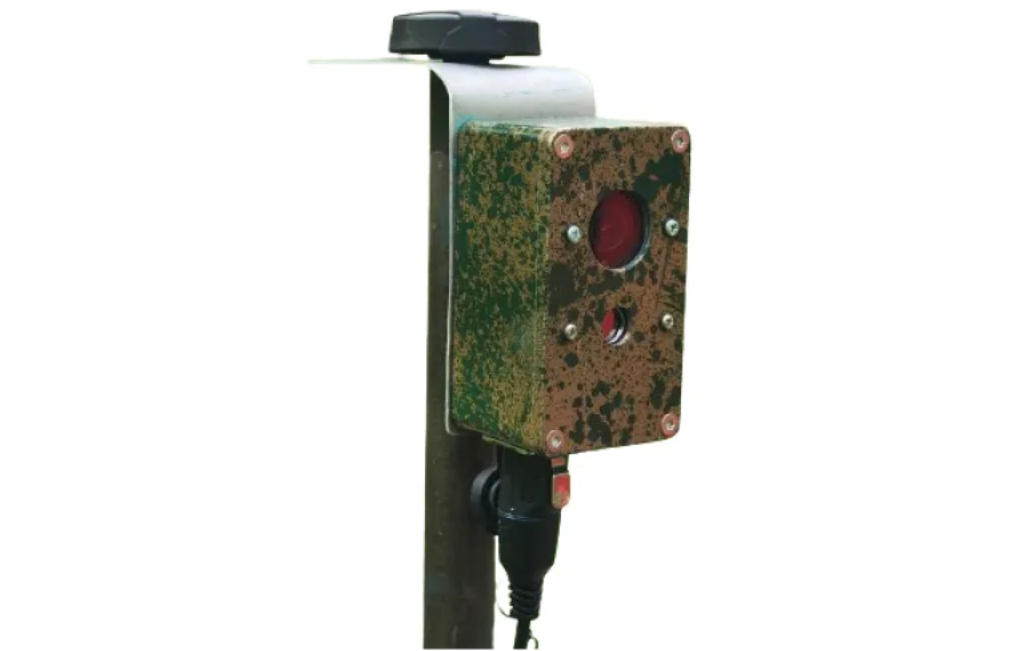
Rcam‘s AI-powered surveillance camera revolutionizes battlefield reconnaissance with its ability to automatically detect and classify enemy movement, providing real-time coordinates. Featuring ECM resistance, passive operation, long-range detection, and a rugged design, it offers 24/7 surveillance capabilities beyond the reach of drones and binoculars. The company is gearing up for mass production in collaboration with a Polish electronics manufacturer.
Rcam: AI-Powered Battlefield Surveillance
Rcam has developed a cutting-edge battlefield surveillance camera that utilizes AI and thermal imaging to automatically detect and classify enemy movement, providing real-time coordinates. The camera increases the volume of continuous reconnaissance data, saves time and resources on constant reconnaissance efforts, and ensures 24/7 surveillance, capabilities that drones and binoculars cannot match.
Key features:
- AI-powered target identification: The camera uses neural networks to classify objects as human or machine and determine their distance.
- ECM resistance: The camera is not susceptible to electronic warfare.
- Passive operation: The system does not emit any radiation, heat, or other waves, making it undetectable.
- Long-range detection: It can detect movement up to 1000 meters during the day and 500 meters at night.
- Rugged design: The camera can withstand falls from three meters, operate in temperatures up to 70 degrees Celsius, and function during heavy rain.
Rcam is currently finalizing the camera’s development and plans to start mass production in the fall, collaborating with a Polish electronics manufacturer to leverage their production capabilities.
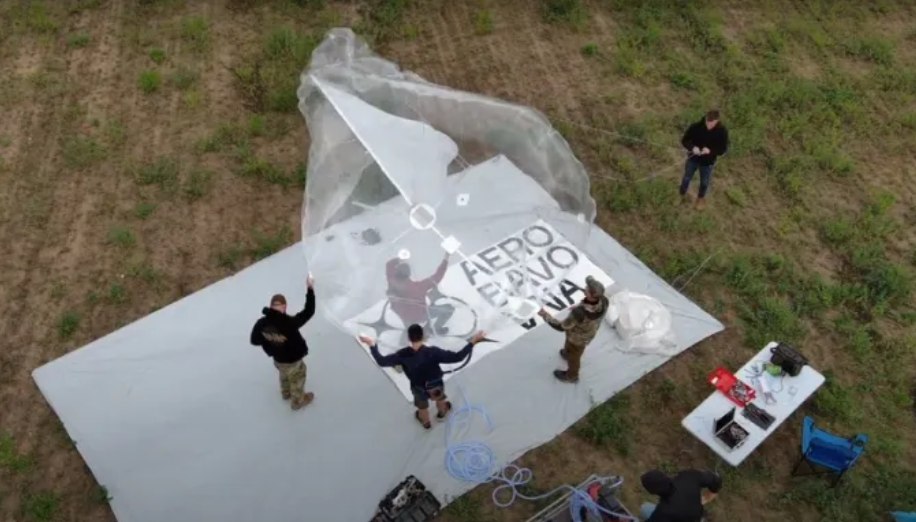
Aerobavovna produces mobile aerostat systems for the Ukrainian military. These helium-filled balloons, carrying payloads like cameras or relays, offer cost-effective and long-duration aerial surveillance and communication capabilities, extending the range of drones and overcoming electronic warfare challenges. The company is scaling up production to meet the increasing demand from various military units.
Aerobavovna: Aerostats for Enhanced Drone Communication
Aerobavovna, a manufacturer of military and civilian aerostats, has shifted its focus from festival advertising to producing mobile aerostat systems for the Ukrainian Armed Forces since 2023.
An aerostat resembles a large white balloon tethered to the ground, carrying a payload such as a camera or a relay, depending on the task. While drones can perform similar functions, aerostats offer practical advantages.
“An aerostat can stay airborne for two days. No drone can fly that long, and the aerostat is more cost-effective. Anything that flies for several hours is already an expensive drone”, says co-founder Yurii Visoven.
Aerostats remain virtually invisible to the enemy, even from a distance of several kilometers, eliminating the need for camouflage. They stay aloft using helium, and a tail-like structure helps them withstand strong winds by adjusting their angle and preventing them from crashing.
Launching an aerostat takes two people and a few minutes. It’s filled with helium, requiring 10 cubic meters or one and a half cylinders per aerostat. The amount of helium depends on the payload. The wind speed during launch should not exceed 15 meters per second, and at the front, it can be launched 2 km from the line of contact.
The aerostat can reach altitudes of up to 700 meters, but there’s no need to raise it above 500 meters. Even at 300 meters, the relay provides a radio horizon of up to 40 km for FPV drones, which typically fly a maximum of 20 km. However, there’s a direct correlation between the relay’s altitude and signal strength: the higher the relay, the better the chances of the signal overcoming electronic warfare.
Aerobavovna plans to increase production scale. While they currently collaborate with a limited number of brigades, the number of requests is constantly growing. After a YouTube channel featured AEROBAVOVNA, they received about 30 requests and currently have around 50 pending requests from various units.

Himera is a Ukrainian defense tech startup that develops secure communication systems resistant to electronic warfare and eavesdropping. Their Himera G1 Pro radio features advanced capabilities like mesh networking, offline map positioning, and long battery life. The company prioritizes security, making their radios tamper-proof and reprogrammable in case of loss. Himera is actively expanding its reach in the US, EU, and NATO partner countries.
Himera: Secure Communication Solutions for Challenging Environments
Founded in 2022 by aerospace entrepreneurs Misha Rudominskyi and Oleksii Oliinyk, Ukrainian Defense Tech startup Himera develops secure communication systems resistant to electronic warfare (EW) and eavesdropping. Their products cater to the needs of police, rescue workers, and the military.
With the full-scale invasion, brigades sought reliable communication systems, primarily Motorola. “We thought it wasn’t too complicated, so within a year, we built the first model – the Himera G1 radio – and now another one, the Himera G1 Pro. And I think this is not the last one”, says co-founder Misha Rudominskyi.
How it works:
- Himera G1 Pro: The upgraded version supports multiple data types, including voice, GPS coordinates, and text messages. It features Blue Force Tracking 3 for offline map positioning and integrates with surveillance and reconnaissance systems through C4ISR.
- EW resistance and encryption: Both radios employ frequency hopping to counter EW and prevent signal interception. They also utilize AES-256 encryption for secure communication.
- Mesh networking: The radios automatically act as relays, extending communication range over long distances and overcoming obstacles like hills and forests.
- Enhanced durability: The G1 Pro boasts improved mechanical characteristics, making it more resistant to harsh conditions.
- User-friendly interface: The new radio has a quick setup screen and additional buttons for ease of use. It can be configured via Bluetooth using a secure Android app on a phone or tablet.
- Long battery life: The G1 Pro offers extended battery life, exceeding 48 hours under standard conditions and potentially lasting even longer in less active communication scenarios.
Security measures:
Himera radios are designed to be tamper-proof. Even if they fall into enemy hands, the most adversaries can do is examine them externally. There are no exposed IP identifiers or possibilities for code extraction. In case of loss, the unit can be reprogrammed within seconds, ensuring continued secure communication.
Future plans:
Himera has an official distributor in the USA and partners in the EU and NATO partner countries. They aim to expand their reach and provide secure communication solutions to a wider audience.
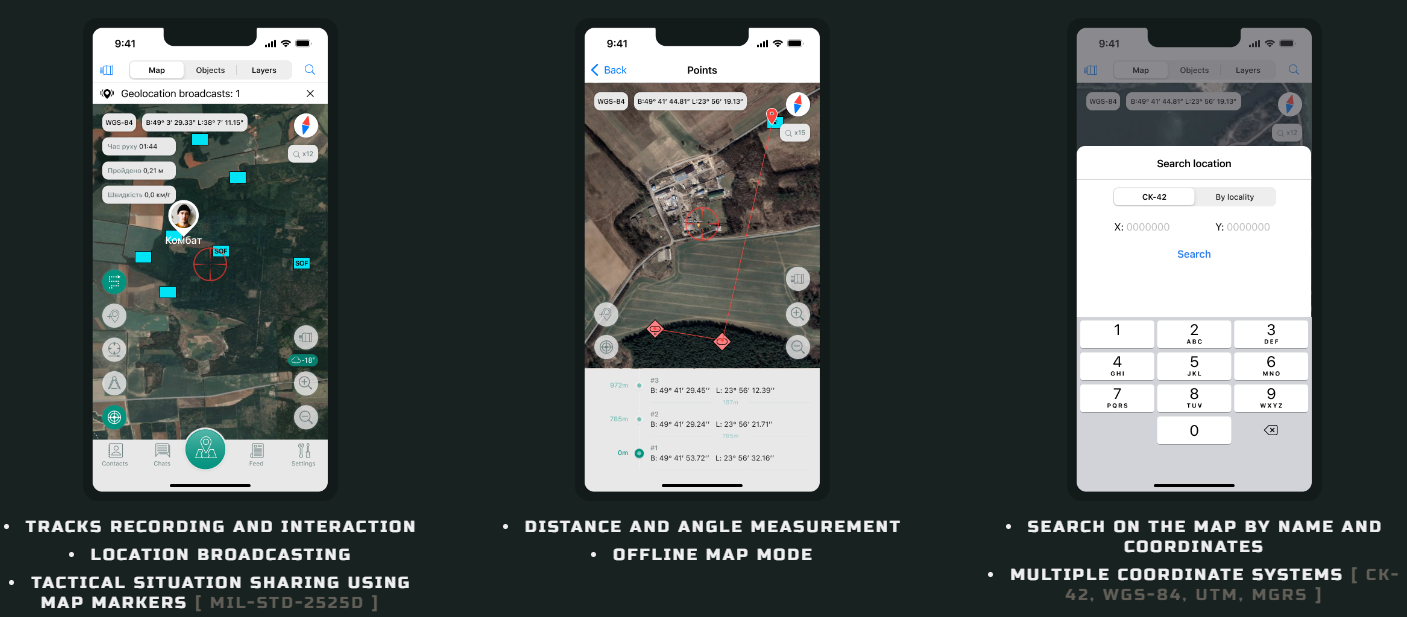
MilChat is a secure messaging app designed specifically for military personnel, prioritizing map-based communication and data protection. It enables real-time location sharing, track recording, and secure messaging with end-to-end encryption. The app is built on the Signal protocol and includes features like emergency data deletion and encrypted local contact storage.
MilChat: Secure Messenger for Military Personnel
Milchat, the first specialized Ukrainian messenger for the military, was created in 2018 by developer Yaroslav Sherstyuk with the support of Noosphere. Sherstyuk’s military and engineering background, including studies at the Military Institute of Missile Forces and Artillery and development of a fire control system, equipped him with the necessary expertise.
Sherstyuk has also developed other military-focused applications, such as “Topic” and “TORO” for all military personnel, “My gun” and “Ukrop” for artillerymen, and “Tactic Map” for both military and civilian use.
The development of Milchat stemmed from Sherstyuk’s curiosity about secure data transmission in the military. The app’s key feature is its map-centric interface, resembling a chat but with a map instead of a chat window and markers on the map instead of text messages for exchanging tactical information.
How it works:
- Map interaction: Milchat allows users to record and interact with tracks on the map, share real-time location using the US military standard MIL-STD-2525, measure distances and angles, work offline, and search by coordinates (supported coordinate systems: SK-42, WGS-84, UTM, and MGRS).
- Security features: The app is built on the Signal protocol for end-to-end encryption and includes additional data protection measures:
- Emergency data deletion from the device
- Encrypted local contact database (registration without phone number, adding contacts via QR code, Nearby, login, or email)
- Control over account access from other devices
- End-to-end encrypted calls
- Automatic message deletion with a timer
- No message history on new devices (read messages are not stored on the server)
- Track recording: Milchat can record tracks during hikes, allowing users to retrace their steps.
Future plans:
Currently, the developer is working on other applications, and Milchat is 50% owned by him.
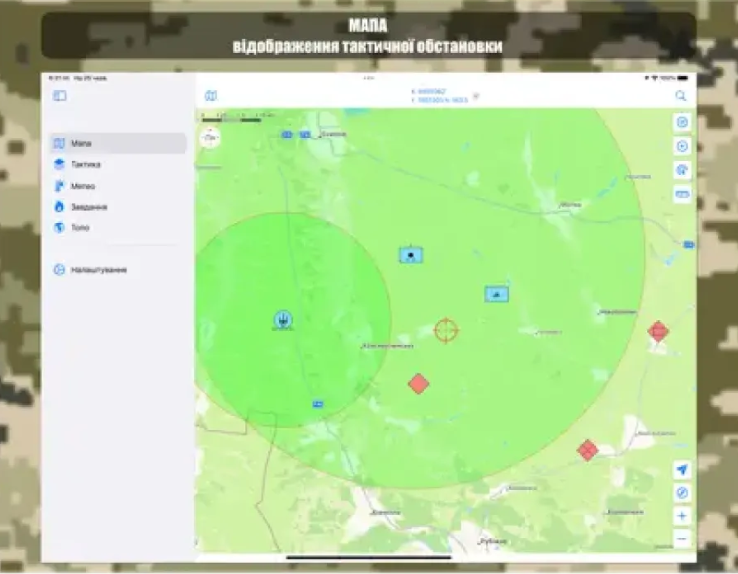
Yaroslav Sherstyuk has developed several specialized military apps, including “Tactic Map” for tactical awareness and navigation, and “My gun/Ukrop” for artillery operations. These apps provide essential tools like map functions, meteorological data, and ballistic calculators, while prioritizing data security and adhering to NATO standards. Sherstyuk is working on further updates but highlights the need for more government support.
Specialized Apps for Artillery, Forward Observers, and Reconnaissance
Yaroslav Sherstyuk, a developer with a military and engineering background, began creating military applications even when button phones were the peak of technology. His portfolio includes several specialized apps: “Topic” and “TORO” for all military personnel, “My gun” and “Ukrop” for artillerymen, and “Tactic Map” for both military and civilian use.
My gun/Ukrop: Designed for artillery, reconnaissance, forward observers, and topogeodesists, these apps (with different names due to marketplace specifics but identical functionality) offer features such as meteorological data, calculation of topogeodetic tasks for target coordinate determination without GPS, and a ballistic calculator for calculating gun aiming angles.
Tactic Map: Created for both military and civilian use, this app allows civilians to mark tactical situations and identify dangerous areas on the map. Volunteers can also use it to organize safe trips to military personnel.
In 2022, the Ukrainian government mandated the transition to the WGS-84 geodetic system and UTM projection for military topographic maps, aligning with NATO standards and ensuring compatibility with partner-supplied weaponry.
How they work:
- Tactic Map: Allows creation of tactical objects and layers according to NATO standards, storage and management of points and objects on the map, support for various coordinate systems (USK2000, WGS84, MGRS, UTM), sharing of layers and objects with other users, and data storage in iCloud.
- My gun/Ukrop: Provides essential tools for artillery operations, including map functionality, meteorological data, topogeodetic calculations, and a ballistic calculator.
Security and future plans:
Sherstyuk assures that the apps and user data are protected from Russian interference, with markers stored in iCloud, which has no known data leaks.
He is currently working on updates, including critical situation sharing, track recording for route saving, and offline map access. However, he notes the lack of government support in his endeavors.
Aerorozvidka is a Ukrainian NGO turned military unit that develops innovative tech solutions for the Armed Forces. Their flagship project, Delta, is a NATO-standard situational awareness system used by a majority of Ukrainian units. They also focus on cybersecurity training, robotic systems, and establishing situational centers. Aerorozvidka views Ukraine’s current situation as a proving ground for Defense Tech and aims to play a key role in the post-war economy.
Aerorozvidka: From Volunteers to Military Tech Innovators
Since 2014, the non-governmental organization Aerorozvidka has been dedicated to supporting Ukraine’s Security and Defense Forces. In 2015, its members mobilized within the Armed Forces and began developing their flagship project, the Delta situational awareness system.
“Delta was the first task the organization took on”, explains Artem Martynenko, Delta’s architect and deputy head of the Ministry of Defense’s Innovation Center. “Then came another task – deploying a camera system along the frontline, because back in 2014-2015, Ukrainians first encountered Russian electronic warfare. Task after task, we decided to transform into a military unit that solves technological challenges”.
Today, Aerorozvidka operates in four key areas:
- C2IS: Developing innovative products for situational awareness, combat management, and AI utilization.
- ISTAR: Implementing NATO-standard processes.
- Change Management: Systematizing robotic technology experience for military training.
- Robotic Systems: Introducing military robotic technologies.
The organization is also actively involved in various projects, including opening situational centers and developing UAV piloting and information hygiene courses (“Cyber Resilience”).
Key Projects:
- Delta System: Built to NATO standards and MIP specifications, Delta tracks troop locations and targets in real-time, collecting data from GPS trackers, radio intercepts, radars, and satellite imagery. It has evolved from a single service with a digital map into a comprehensive system of products, incorporating features like streaming, a mission planning calendar, and an integrated chat for information exchange. Since the full-scale invasion, chatbots like “eVorog” (for civilian reporting) and “STOP Russian War” (for sharing information about explosive devices and abandoned equipment) have been integrated into the system. An estimated 80-90% of units utilize Delta, though the depth of usage varies.
- Cyber Resilience Project: In response to Russian phishing attacks targeting Delta users, this project focuses on providing FIDO security keys for two-factor authentication and conducting cybersecurity training for military personnel.
- Situational Centers: These technological hubs coordinate reconnaissance assets and facilitate joint operations. They collect and analyze data from various sources, including stationary cameras, sensors, UAV streams, satellite imagery, intelligence officers, and partners, feeding it into the Delta system. Eight situational centers are currently operational across Ukraine, with access to data restricted based on location to ensure operational security.
Future Outlook:
Aerorozvidka continues to adapt to the evolving challenges of the war, exploring new technologies like drones with autonomous guidance. They recognize that Ukraine serves as a testing ground for innovation and believe that the Defense Tech market will play a crucial role in the country’s post-war economy.

Kvertus is a Ukrainian company specializing in anti-drone electronic warfare (EW) and signals intelligence (SIGINT) systems. They have rapidly expanded their product line to over 30 offerings, including anti-drone guns, portable protection systems, and stationary defense solutions. They are focused on scaling production and exploring international opportunities while prioritizing meeting Ukraine’s defense needs. Kvertus’s products adhere to NATO standards, making them compatible with allied forces’ equipment and increasing their export potential.
Kvertus: Ukrainian Developer and Manufacturer of Anti-Drone EW and SIGINT Systems
Andrii Znaichenko, the founder of Kvertus, envisioned producing anti-drone equipment as early as 2014, driven by concerns about the military use of drones in his native Luhansk region. Recognizing the potential impact of drones in future conflicts, his team began developing their own anti-drone gun, and in 2017, he officially registered Kvertus.
“Before the full-scale invasion, we understood that drones could significantly influence the battlefield situation, but we couldn’t imagine to what extent”, says Yaroslav Filimonov, CEO of Kvertus. “The demand for our anti-drone guns mostly came from border guards who were intercepting drones smuggling cigarettes”.
How it Works:
Over two years of full-scale war, Kvertus has grown from producing a few dozen guns per month to over 5,000 devices, comprising more than 30 products. These include anti-drone guns, backpacks for protecting groups on the move, portable devices to counter FPV drones and drones dropping ammunition, multi-band stationary systems for protecting critical infrastructure, electronic intelligence complexes, and more. This product line expansion reflects the company’s goal to adapt to the diverse needs and tasks of the military.
The evolution of drones and EW equipment is currently the most dynamic among all military technologies. As soon as EW becomes an obstacle for drones, UAV operators find solutions to overcome it. “It’s a constant race, constant improvement, constant increase in power and technological sophistication of the means”, notes Filimonov.
He adds that EW equipment is now needed everywhere: on vehicles, in trenches, positions, dugouts, artillery crews, and on individuals. “That’s why we intend to scale production to 10,000 devices per month”.
“In addition to the initial need for EW, there’s a constant secondary need because these devices ‘live’ on the front line for an average of two weeks. They are destroyed by shelling, break down, get hit by shrapnel, their antennas fail. So the quantitative need for them is colossal. But it’s constantly changing qualitatively, given the changes in the drone market”, says Filimonov.
Future Plans:
Kvertus is currently considering increasing production abroad. This would allow them to attract more funds in the context of the ban on exporting Ukrainian military products and technologies.
“On the one hand, it’s understandable. We constantly talk about how we lack everything – and suddenly, we start exporting electronic warfare equipment ourselves. On the other hand, the state doesn’t order the quantities we are capable of producing”, says the CEO of Kvertus.
Kvertus products have already received NATO codification. “As Ukraine strives for NATO membership, we immediately undergo standardization and codification according to the Alliance’s standards so that our devices can be integrated into their structures. So the NATO code means compliance with the Alliance’s standards”, says the CEO of Kvertus.
Filimonov adds that other countries are interested in Kvertus’ developments due to the company’s high dynamics of innovation and their implementation into production.
“The production cycle in Europe lasts half a year, a year; what’s currently in their warehouses was manufactured back in 2020, so it doesn’t work in today’s conditions. This applies not only to EW equipment. Foreign demand for our products is a resource for better equipping our Defense Forces with EW equipment. To use it for the benefit of Ukraine, we just need not to be hindered, but instead be given access to foreign components”, Filimonov comments.
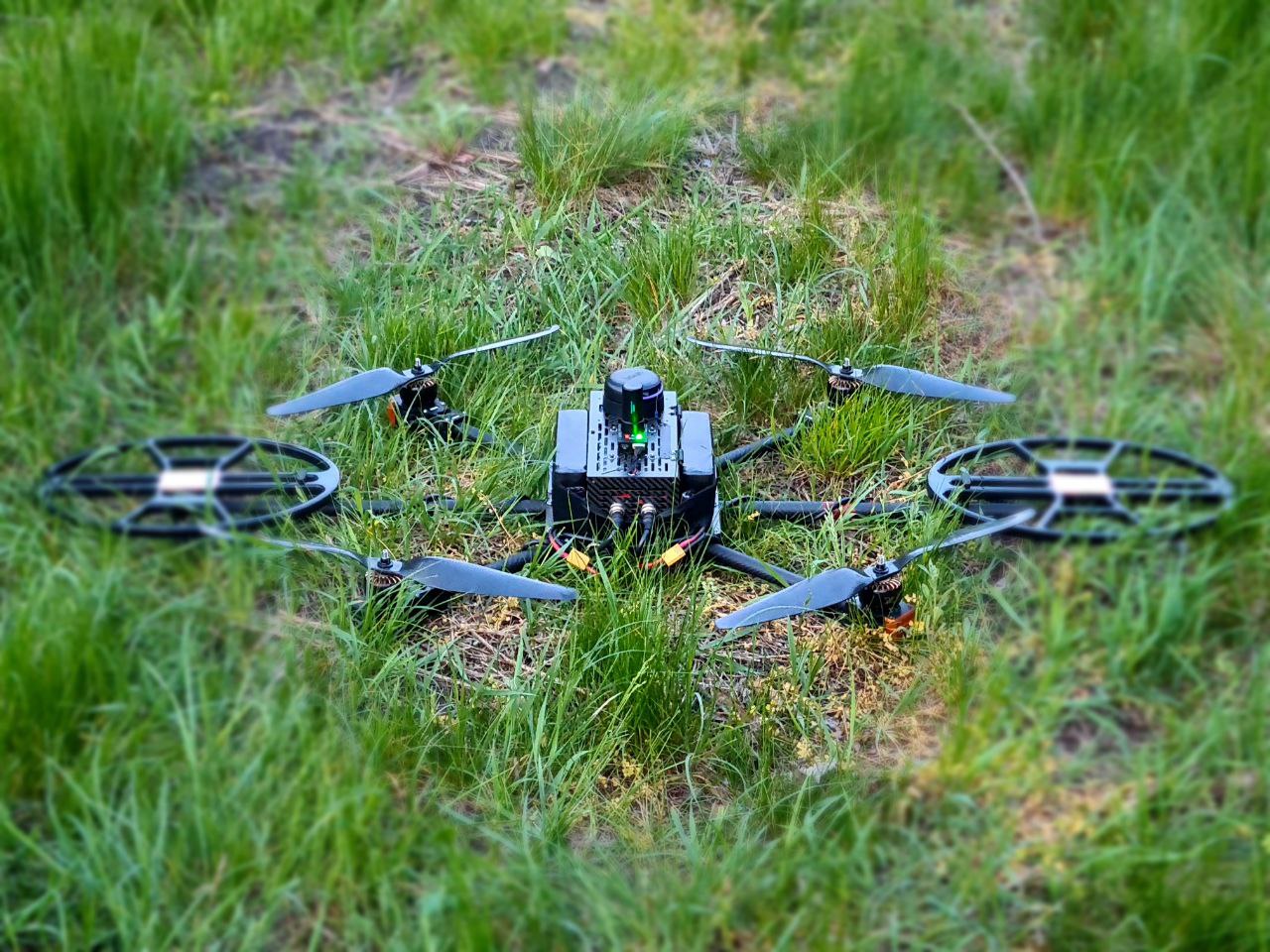
Ailand System, leveraging its expertise in computer vision and robotics, has repurposed its AI-powered drone technology from agricultural pest control to mine detection. Their ST1 drone employs RGB cameras and metal detectors to efficiently scan and identify various types of mines, significantly speeding up the demining process. The company is currently focused on obtaining state certification for mass production, highlighting their commitment to safety and responsibility.
Ailand System: From Pest Control to Mine Detection
Ailand Systems, an IT service company with a decade of experience in computer vision, 3D graphics, and virtual/augmented reality, shifted its focus from pest control to mine detection after the full-scale invasion in Ukraine.
Before the war, Ailand Systems developed the AI-powered quadrocopter RT1 Debugger for the agricultural sector, using mechanical means to eliminate pests without pesticides. “All the technologies we previously worked with are directly applicable to navigation, route planning, and object detection. So robotics became a logical development for us”, says Dmytro Titov, CEO of Ailand Systems.
However, the war changed farmers’ priorities, and Ailand Systems adapted their drones for mine detection, creating the ST1 project.
How it works:
The ST1 drone features a user-friendly interface resembling Google Maps, where operators can set scanning coordinates, clearance depth, and vegetation height. The drone operates autonomously, providing real-time location and trajectory data.
It utilizes two types of sensors: an RGB camera for surface objects and a metal detector for objects up to 15 cm deep. ST1 is four times faster than manual demining and can detect all types of mines, including those with low metal content.
Future plans:
The company currently produces up to 20 drones per month for testing. They plan to launch mass production after obtaining state certification, which they have already applied for. Dmytro Titov hopes to realize this plan as early as this fall.
“Private companies are ready to work even without a certificate, but we don’t encourage them to do so because we are interested in undergoing state verification by an independent tester. If a kamikaze drone hits the target – that’s good, if it doesn’t – it’s okay, no luck. But if our drone doesn’t find a mine and someone gets blown up on it – that’s a completely different level of responsibility”, says the CEO of Ailand Systems.
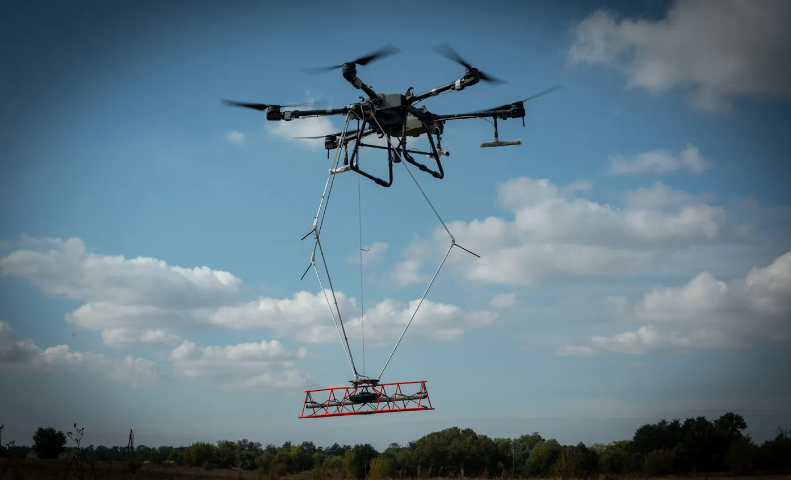
The Postup Foundation is addressing the critical issue of landmine clearance in Ukraine with its MinesEye project. They’ve developed a drone-based system with a magnetometer for contactless detection of mines, even in challenging terrain with dense vegetation. They aim to launch mass production and explore robotic solutions for mine disposal.
The Postup Foundation: Revolutionizing Mine Detection and Clearance
The Postup Foundation was established in 2022 by Ukrainians residing in Poland and Polish citizens in response to Russia’s full-scale aggression. Initially, they focused on delivering aid from EU countries, ranging from radios to body armor.
“Over time, we saw a growing need in the area of demining, so in the summer of 2022, we decided to shift our focus to this area. We conducted research, talked to sappers, and found that the state was using technologies and procedures that were created many years ago”, says Vlad Kozak, founder and manager of the MinesEye project.
How it works:
According to Kozak, a mechanical demining machine can clear an average of 0.5 hectares per day, costing over 500,000 euros. Moreover, robotic systems can be damaged by anti-tank mines, and repairs are expensive. Mechanical demining also renders the soil unusable due to contamination with debris and chemicals.
In response, the foundation launched the MinesEye project for contactless detection of mines and explosive objects. The team developed a drone based on Pixhawk (an open-source flight controller project) with a German magnetometer.
“The results didn’t impress us – small metal objects were lost in the noise due to the drone’s background. So we used external equipment to increase the distance between the drone and the magnetometer, as well as a larger agricultural drone that could lift it. After the first tests, we found that the background dropped from 40 nT to 2 nT, which allowed us to detect TM-62 mines at a depth of 50 cm underground”, Kozak notes.
As of August 2024, the suspension system is integrated for operation on DJI Agras T10/T16/T20/T30 drones. It’s based on the concept of micro-shooting to search for small objects up to a few centimeters in size made of ferromagnetic metals, even in vegetation up to two meters high.
Vlad Kozak highlights additional, non-obvious problems faced by sappers: “From a technical point of view, the biggest problem is vegetation. The land quickly becomes overgrown with weeds, making it difficult even for mechanized systems to get through. Detection will be even more challenging”, he says.
Another problem is plastic mines, which Russia uses despite the ban – they are difficult to detect.
Future plans:
The team is currently testing their development for mine detection, aiming to launch it into mass production and use.
After that, they will seek solutions for unmanned disposal of explosive objects.
“Currently, there are two methods for neutralizing mines – a sapper with a metal detector or a mechanical demining machine, after which a sapper still goes there and checks if everything has been cleared. We want to robotize this process as well”, says Vlad Kozak.
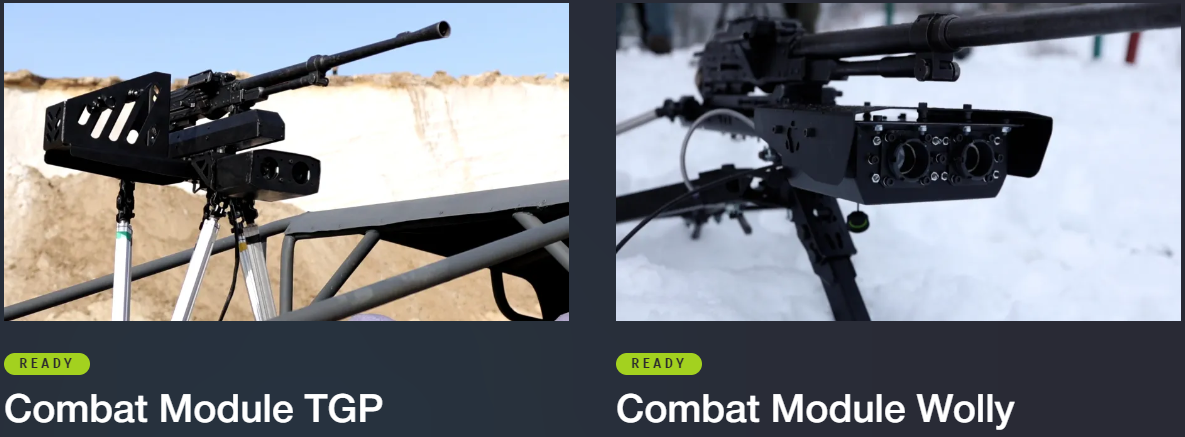
DevDroid develops robotic remote-controlled weapon systems with AI target recognition, enhancing soldier safety on the battlefield. Their combat turrets, like the TGP and Wolly, enable remote firing from up to 1000 meters. They’re lightweight, mobile, and modular, prioritizing human life over equipment. Future plans include larger caliber support and ground robotic complexes.
DevDroid: Remote-Controlled Weaponry for Enhanced Battlefield Safety
Ukrainian arms company DevDroid is on a mission to “implement advanced technologies in the defense sector”. They specialize in developing robotic remote-control systems and intelligent AI algorithms for ground and aerial target recognition. They have already created and supplied the Ukrainian Armed Forces with the TGP and Wolly combat modules for remote firing from a safe distance of up to 1000 meters.
The idea originated from discussions with the military and market analysis after the full-scale invasion began in late 2022.
“We understood who among the developers was working on what, what problems existed, and what solutions were being sought. Accordingly, we saw a problem with trench warfare – in this phase of hostilities, we were losing the most soldiers, as the Russians were developing their weapons, particularly FPV drones”, co-founder Oleh Prots told AIN.UA.
The company started looking for a solution for machine gunners that would allow them to fire effectively without risking their lives. “That’s how the idea of making a remotely controlled turret was born”, says Oleh Prots.
How it works:
The combat turret can operate in two modes: remotely via Starlink (allowing control even from an office in Kyiv) or via a cable connection (with the operator within 1000 meters). The machine gunner places the turret in a firing position outside the trench. The operator can fire remotely using a tablet and gamepad.
The founder says their turret differs from alternative developments in that the combat module weighs 30 to 45 kilograms with a loaded machine gun, making it quite light and mobile. Also, its modular design allows for the purchase of only the turret itself as part of the complex in case of loss, while the control module remains with the operator, making the turret expendable. The person remains at a safe distance from it.
Artificial intelligence is also integrated into the development – the system itself identifies the target, signals about it, and tracks it; the machine gunner only needs to confirm the target and press the button.
“We have enough capacity to produce from 50 to 250 such units per month. It all depends on funding. Currently, we have two contracts with the state. Accordingly, we can develop and increase production – there is room for scaling”, notes the co-founder of DevDroid.
Currently, the company, according to Oleh Prots, is fulfilling requests within Ukraine but sees interest from a foreign audience – mainly because all developments are tested in real-time directly on the battlefield. However, DevDroid is not yet planning to enter the international market.
“We even already have a case where one turret was destroyed – and we are happy about that because we were able to save one life. The product was damaged, not the soldier – so the development works”, Oleh Prots shares.
He is confident that the projects of the Ukrainian Defense Tech market can be adapted for civilian needs after the war or enter the international military weapons market.
What’s next:
The company is currently making changes to allow for a larger caliber to be mounted on the module (the turret currently works with a PKT machine gun). There are plans to work with the MK-19 grenade launcher, and work with the Browning machine gun is already being tested.
In addition to turrets, in the fall of 2024, the company plans to release a series of ground robotic complexes called Droid – turrets mounted on tracked and wheeled platforms with 7.62 and 12.7 NATO standard calibers, which will work with the Starlink terminal: the operator can arrive at the position, work, and leave it.
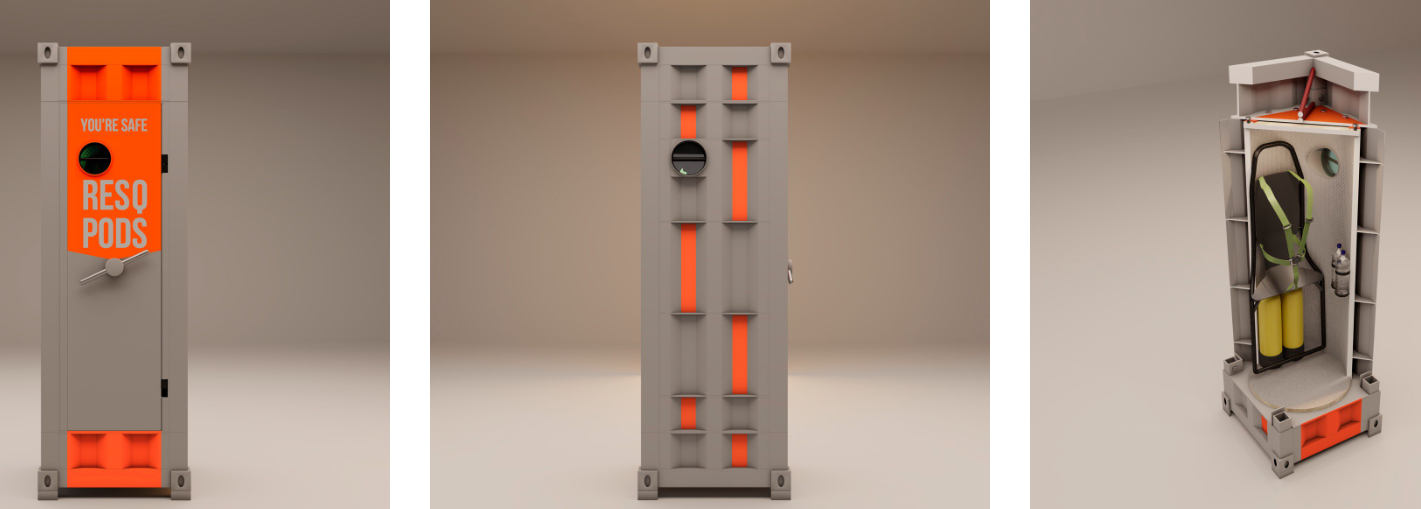
Resq Pods develops life-saving capsules designed to protect individuals during emergencies like missile strikes. These durable capsules can withstand building collapses and are equipped with ventilation, communication, and survival supplies. The company is working with the government to standardize shelters and plans to expand its product line and enter the international market.
Resq Pods: Life-Saving Capsules for Protection Against Missile Strikes
Deep Tech company Resq Pods, with the motto “Life is the main value”, develops and manufactures safety solutions for individual protection in emergencies, particularly during missile strikes. Founded in 2023, the startup, co-founded by entrepreneur Kyrylo Meshkovskyi, unveiled its life-saving capsule for individual protection at the Disasters Expo Europe in Frankfurt in 2024.
How it works:
The rescue capsule, or “pod”, is a double-walled metal structure filled with a special polymer. It can withstand the collapse of a multi-story building, allowing a person to safely await rescue inside.
“The first step is to develop a capsule for one person. It’s a lightweight but durable object that can be placed anywhere. This stage is a B2B solution. Our clients today are not individuals, but businesses and the state. For example, the product can be placed at an enterprise for a person who, due to the specifics of their work, cannot leave their post”, explains Kyrylo Meshkovskyi.
The current capsule, measuring 75×75 cm, with a height of 220 cm and a weight of 400 kg, is designed considering the architectural features of buildings and is suitable for placement inside residential and non-residential premises. The team of 16 specialists can manufacture one such capsule in 5 days.
The capsule is equipped with features to address human physiological needs:
- Ventilation system: Ventilation holes and two filters provide air exchange and purify the air from smoke and dust.
- Automated system: Analyzes carbon dioxide and smoke levels, automatically activating the ventilation system in critical situations (developed by Ajax upon request).
- GPS beepers: Signal the capsule’s location to rescuers. “We are already thinking about a program that we can offer to the State Emergency Service to quickly find people in capsules under the rubble”, adds Kyrylo Meshkovskyi.
- Radios: For communication with rescue services and search teams.
- Supplies: Food, water, and a bio-toilet to sustain a person’s life.
Future plans:
Each capsule variation undergoes testing, modernization, and necessary trials. The fourth iteration has withstood falls from the second floor, explosions totaling 40 kg of TNT equivalent, and fire and high-temperature tests.
The project has received government support, with the team invited to participate in developing legislation and standardizing shelters. Resq Pods is in talks with the State Emergency Service and the Ministry for Strategic Industries to explore the use of their development.
In the near future, Resq Pods plans to launch mass production of capsules, develop family-type capsules with inclusive approaches, create separate security solutions for data centers, and produce school desks adapted to protect children in schools.
“It will be a regular desk, but its legs and inner walls will be made of a special lightweight but durable material that we are currently testing – so that such a desk can withstand a heavy load”, says Kyrylo Meshkovskyi.
There are no discussions yet about mass sales for private apartments, as the condition of each building needs to be assessed to ensure it can withstand the capsule.
At the same time, the team aims to expand the project’s boundaries and enter the foreign market. According to the entrepreneur, the company is already in talks with Turkey, the USA, and the Baltic countries.

Armiya+ is a mobile app launched by the Ukrainian Ministry of Defense to streamline military bureaucracy. It offers features like electronic military IDs, report submission and tracking, surveys, and a knowledge base. The app aims to digitize paperwork and improve efficiency, with plans to add more services like medical records and salary information in the future.
Armiya+: Streamlining Military Bureaucracy
In August 2024, the Ministry of Defense launched the “Armiya+” mobile app, a service for military personnel providing access to documents and services, including standardized report templates that can be signed and submitted online.
“The Ministry of Defense is creating an app for the military. I often hear complaints from soldiers about excessive paperwork – filling out paper journals, endless reports. Our solution is to digitize everything as much as possible”, said Ukrainian Defense Minister Rustem Umerov.
The app is already available on Google Play and the App Store. Authorization is possible through BankID, and the necessary information is verified by the “Oberig” registry.
How it works:
Currently, the app offers the following features:
- Army ID: An electronic military profile on a smartphone that confirms the status of a military person.
- Electronic reports: The ability to submit reports from anywhere and track their status. All you need is an internet connection and a few minutes to fill them out.
- Surveys: An opportunity to express your opinion on military development issues.
- Knowledge base: Training courses and programs related to the military sphere.
“During one of our brainstorms, it became clear that the main thing revolving around a soldier’s life is the report. Anything – a task, leave, receiving assistance, etc. – requires a report, and it was always written on paper. At the same time, the most common question from the military remains ‘how to write this report?’ We live in the 21st century, it’s been possible to template this and create a simple form where you just need to fill in a few fields. So we realized that the first function should be an electronic report”, says Deputy Minister of Defense for Digital Development, Digital Transformations, and Digitalization, Kateryna Chernogorenko.
Moreover, a paper report has no time limit, so a commander can take a long time to respond to it. A digital report allows you to control the status of the report – the commander must either confirm it or explain the reason for refusal within three days.
Future plans:
In the next version of the app, developers plan to add a soldier’s medical card, salary information, and a countdown to leave days.
“In the future, we plan to create a full-fledged ecosystem of services around the military”, says Kateryna Chernogorenko.

yePPO is a mobile app that enables civilians to report enemy missile sightings to Ukrainian Air Defense, enhancing their ability to detect low-flying threats. The app automatically collects and transmits location data to the command post, improving targeting accuracy. It has been downloaded over 400,000 times and is part of a broader initiative by Odesa volunteers to develop various defense tech solutions.
yePPO: An App Empowering Everyone to Save Lives
“yePPO” is a mobile application available on iOS and Android that allows users to report sightings of enemy missiles to the Ukrainian Air Defense Forces.
Developed initially as a volunteer initiative and now maintained by the Technar Design Bureau within the “Odesa Defense 2.0” public organization, the project aims to provide the Air Defense Forces with more sources of information about missile trajectories.
How it works:
The idea was born as a response to a problem: the Air Defense system detects aerial targets using a network of radars that should cover the entire country, but cruise missiles fly at low altitudes. While a target at 400 meters can be detected from a distance of 100 km, the detection range for a “Kalibr” missile is significantly reduced. This creates a need to increase the number of radars.
“We thought: what can replace a radar? The answer is simple: eyes and ears. A cruise missile flies low and loud. Anyone can see, hear, and sometimes even photograph it in flight. And if ten people who saw a missile fly overhead quickly transmit this information to the Air Defense headquarters, the anti-aircraft gunners will know where it is now. And if there are not ten such people, but a hundred or a thousand, the targeting will become much more accurate,” said Hennadii Suldin, one of the app’s developers.
Initially, the team launched “yePPO Sposterihach” (“there is Air Defense Observer”). How it worked: if a missile or any other aerial target flew over a person, they had to open the app, point their phone in the direction of the missile’s flight, and press a button. The program would then automatically collect the data and plot it on a map, and this information would be automatically received by the Air Defense command post.
Currently, the app has over 100,000 downloads on the Google Play Market.
Future plans:
This is not the team’s only development. Odesa volunteers have also developed the “Sova” project for nighttime driving of trucks without lights or even dimensions, mounts for TVs on portable anti-aircraft missile systems, “Poloz” devices that illuminate drones at night, the “Valli” electro-optical sight for the “Strela-10” anti-aircraft missile system, and are implementing VR training for Air Defense.
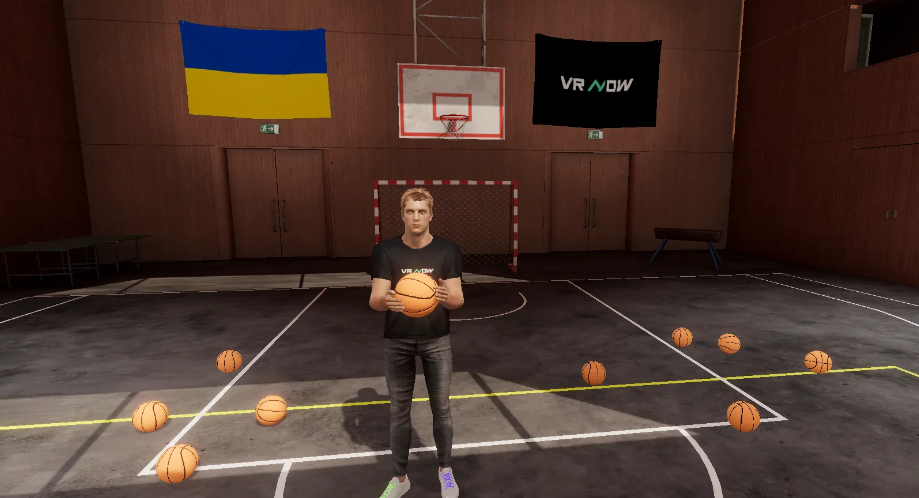
ADVIN Ukraine has developed VRNOW, a VR simulator for rehabilitating patients with movement limitations and phantom pain due to amputations. The system uses sensors and trackers to create a realistic virtual environment where patients can interact with their virtual limbs, perform exercises, and engage in cognitive tasks. This gamified approach helps patients regain motor skills, manage pain, and improve their overall well-being. ADVIN is actively expanding the platform’s capabilities and plans to export it to the EU.
ADVIN Ukraine: VR Therapy for Military Rehabilitation
ADVIN, a leader in the augmented and virtual reality market, has implemented over 250 AR/VR/3D projects for Ukrainian and international brands in its seven years of operation. The company focuses on three main areas: Augmented Reality, Virtual Reality, and Production (creating 2D/3D content, 360-degree virtual worlds, 2D animation, infographics, motion videos, and doodle animation).
With the onset of the full-scale invasion, ADVIN launched an impact project for military rehabilitation. In the spring of 2022, the team began developing the VRNOW VR simulator for patients with movement limitations and pain syndromes resulting from amputations.
“We involved rehabilitation medicine specialists as consultants for the development of the simulator, as the team itself consists only of technical specialists. And so, in the spring of 2022, we started developing software for rehabilitation and combating phantom pain”, says CMO of VRNOW, Valerii Soroka.
By the end of 2023, the company received a medical certificate of conformity from the Ministry of Health, allowing medical institutions to officially use the simulator.
How it works:
The VRNOW simulator is an integrated virtual reality system that includes hardware and certified software.
“Our simulator is not just virtual reality glasses, it’s a complex of sensors and trackers that are installed on the patient’s body, with the help of which a three-dimensional virtual space is built. In fact, we recreate the human skeleton, transferring it from the physical world to the virtual one”, says Valerii Soroka.
The software part consists of two blocks. The first is the doctor’s office, where they can keep records of their patients, track their completed exercises, and achieved results. In this same office, the execution of exercises for each muscle group is activated. The doctor sees everything on their screen that the patient observes in the virtual environment.
The second block is the virtual environment itself, written using Unity and Unreal Engine technologies.
The team uses Valve Index virtual reality glasses, eight HTC trackers per patient, and computers with powerful graphics cards, at least a GeForce RTX 4060. Advin equips the rehabilitation room “turnkey” and trains doctors. Among the requirements is that the room should be at least 20 square meters, contain a computer desk, and have enough space for the patient to move around.
According to Valerii, when a person puts on the glasses, they find themselves in specially designed environments, created with the help of psychologists and PRM specialists, where they see themselves – an avatar they can identify with.
“It’s important to understand that we provide the person with a picture realistic enough that it’s not perceived as a game. That is, the person from the office simply enters another location where they see their limbs, which they interact with in virtual reality”, comments the product director of the project.
Valerii highlights two main components of the project. The first is the occupational therapy part. For example, a person finds themselves in a kitchen (currently, the team has developed four environments: a kitchen, an exercise room, a training room, and a gym). Under the guidance of a doctor, they have to perform cognitive tasks – cook something for themselves or arrange products.
The second part is the Virtual Limb Mode. This is the ability to actually “grow” a limb – the arm/leg becomes functionally active, and the patient can perform exercises.
“When a person is in virtual reality, they have their avatar in the same proportions as in real life. We place sensors at the end of the amputated arm. The patient puts on the glasses and sees the end point of the limb, which they need to take with their healthy hand and extend it to the distance where they feel the arm. That is, in fact, the person ‘grows’ it back. Then they reproduce every action of the healthy hand, for example, moving their fingers – this is the same method of mirror therapy (the patient performs movements with the healthy limb and looks at its reflection in the mirror – creating the illusion that the affected limb is moving like a healthy one) to overcome phantom pain”, explains Valerii.
After that, the person performs basic exercises – throwing a ball or picking up an object. “That is, the person is no longer focused on the fact that there is no hand, but on the need to perform the exercise and get points for it – so the focus shifts to achieving the result”, explains Valerii.
The sensors placed on the person’s body allow the doctor to see if the patient is performing the exercise correctly. If patients perform the exercise incorrectly, thanks to the gamified process, they will not receive such a high score at the end of the session.
Future plans:
Currently, the company cooperates with private and state clinics on a commercial basis and also plans to export the development to the EU.
There are plans to add new environments: a supermarket, a river where you can swim, and a garden. Separately, the team will expand the analytical information collected from motion sensors to better analyze the success of the rehabilitation process.
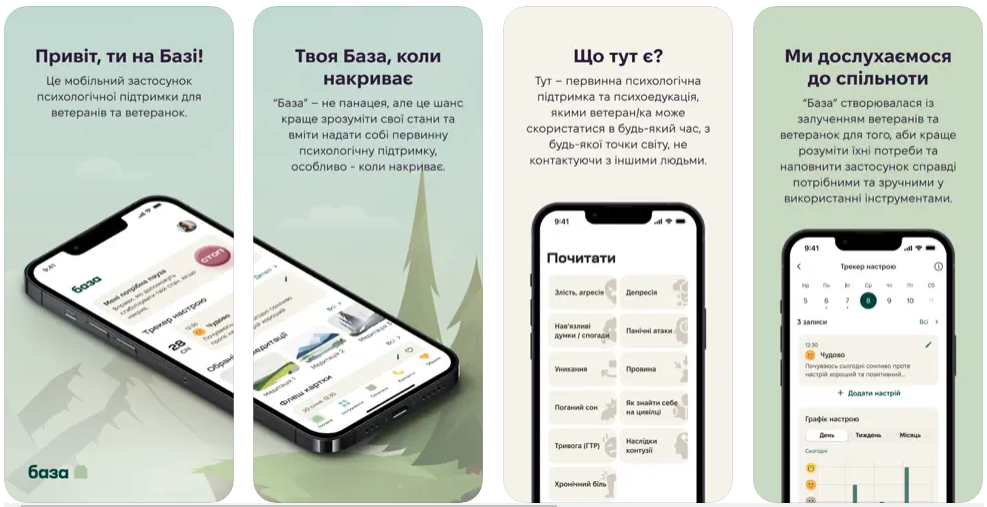
“Baza” is a mental health support app designed for veterans, providing self-help tools based on cognitive-behavioral therapy and other evidence-based methods. Features include grounding techniques, a mood tracker, meditations, and resources for coping with war experiences. The app also offers access to qualified psychotherapists and educational materials.
Baza: Mental Health Self-Help in Your Pocket
“Baza” is a psychological assistance and mental health support app designed for veterans.
It all started in 2015 with the creation of the public organization “Vilnyi Vybir” (Free Choice). Until 2019, the team mainly provided consultations to veterans, military personnel, their families, and families of the deceased and missing.
“But in 2019, we saw research showing that veterans are reluctant to seek psychological support, yet 96% of military personnel believe that their comrades need help. This discrepancy indicates that people don’t want to talk about their problems, but they recognize them”, says Alina Viatkina, a veteran and project manager.
Being a veteran herself, Alina understands why this happens. So the team started looking for ways to help people at the stage when they don’t want to communicate. Thus, in 2023, the “Baza” app was launched, developed with the support of the IREX Veteran Reintegration Program.
How it works:
“Baza” positions itself not only as a self-help app but also as a comprehensive tool with exercises based on cognitive-behavioral therapy techniques and other evidence-based methods.
These include:
- Grounding and relaxation techniques: Exercises to regain self-control, connection with reality, and calmness.
- Mood tracker: Tracks mood and thoughts, functioning as a diary. The tool identifies patterns and trends in moods and their impact on well-being.
- Meditations: For relaxation and mental state stabilization.
- Tools for working with war experiences: Such as Trigger Discrimination and the Circle of Responsibility.
The app also has additional features:
- Crisis button: A quick response function to regulate the state when “overwhelmed”.
- Thought recording: To ease the emotional state, express feelings, and analyze thoughts and beliefs.
- Individual plan: Users can save favorite exercises and create their own daily self-help plan with the set of tools that suit them best.
The founders note that the app can also be useful for civilians, as it contains educational materials about mental health, anxiety, the consequences of mild traumatic brain injury, chronic pain, sleep problems, depression, and PTSD.
Furthermore, the app provides contacts for veterans and the opportunity to ask questions to qualified psychotherapists.
“Our psychologists receive messages through the app’s admin panel and process the questions. These are specialists from the ‘Vilnyi Vybir’ public organization. Currently, there are 40 therapists who have specialized education and use evidence-based psychotherapy methods. The organization also has its own quality control: we check our specialists, and only they are allowed to answer in the app, no one else can be involved”, says Alina Viatkina.
According to her, “Baza” has been downloaded by about 35,000 people in total on both iOS and Android platforms. However, it’s impossible to say the exact number of veterans and military personnel, as the app allows for anonymous registration.
The developers emphasize that the “Baza” app does not replace professional psychotherapy but only offers to understand one’s state and learn to provide primary support to oneself.
Future plans:
Despite the development of various IT solutions, Alina Viatkina adds that military personnel and veterans lack a veteran policy and systematic coordination within the field.
“When a person is discharged from service, they don’t have a roadmap and understanding of where and to whom to turn. We, as public organizations, know among ourselves who deals with which requests, so we can direct the military. But it’s the task of the Ministry of Veterans Affairs to build a system”, notes the project manager.
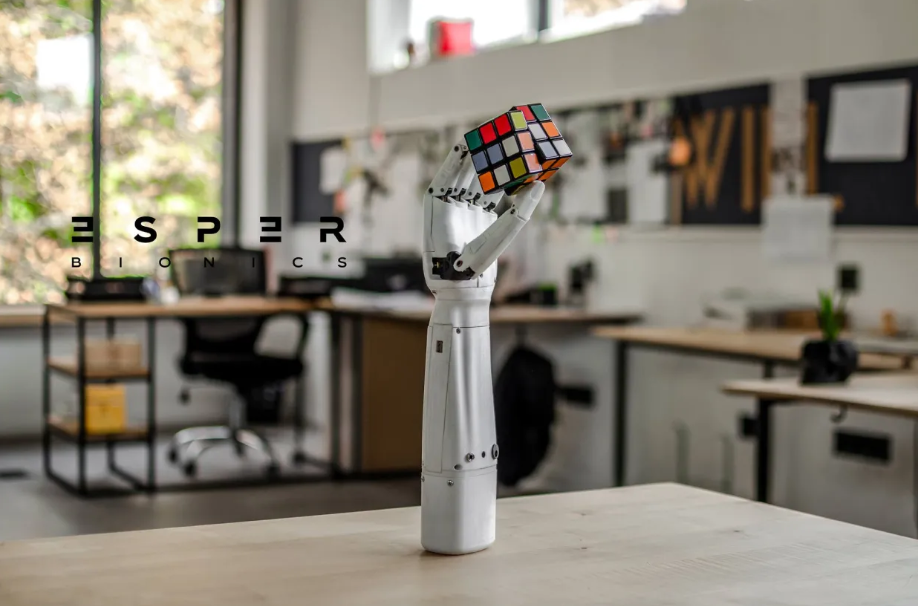
Esper Bionics develops technologically advanced bionic limbs, notably the Esper Hand, which has received widespread recognition for its innovative design. Their prosthetic hands utilize myosensors for intuitive control and a dedicated app for customization, prioritizing a user-centric approach. The company is actively expanding production and exploring new control systems and prosthetic legs.
Esper Bionics: The Bionic Limb Featured on TIME’s 200 Best Inventions List
Founded by Ukrainians, Esper Bionics produces technologically advanced bionic limbs. The company’s innovative robotic hand even graced the cover of TIME magazine as one of the 200 Best Inventions of 2022.
How it works:
The artificial limb produced by Esper Bionics consists of a stump socket and a prosthesis. The stump socket attaches to the residual limb, and myosensors within it help receive signals from the brain and transmit them to the prosthesis, enabling the user to move the limb.
In essence, the stump socket acts as an intermediary between the artificial and biological parts of the arm. It’s custom-made for each patient in specialized clinics, where it’s also fitted. According to Bohdan Diorditsa, Head of Strategic Relations at Esper Bionics, even the most advanced 3D scanners and expensive 3D printers can’t create sockets better than those made by prosthetists.
Metal parts, like phalanges, are manufactured on a three-axis CNC milling machine with numerical control, which is also programmed in-house. Most parts are made from aircraft-grade aluminum, bronze, and stainless steel.
The company manufactures most parts, such as the lead screw nut bracket for the platform, themselves; some are ordered from abroad. For example, the motors for the prosthesis come from Sweden.
A dedicated Esper Bionics app allows users to change the control scheme or adjust the sensitivity of the myosensors. If a person’s residual limb increases in volume in the morning, the sensitivity can be reduced. Conversely, if it decreases in size in the evening and the skin doesn’t fit perfectly against the myosensor, the sensitivity can be increased for better signal performance.
Myosensors are sensors that read the body’s voltage, create biopotential, and transmit signals to the control device. They are part of the stump socket and are placed where the most muscle activity is detected in the residual limb. However, the signal from muscle contraction is weak. Therefore, the myosensors and software in the hand use special filters to amplify the signal and filter out “noise” generated by other electronic devices. Two myosensors are enough to control the hand.
The app also allows users to customize grips – gestures they can make with their fingers. For example, the “rock on” sign at a concert, extending the index finger to scroll through a news feed on a smartphone (tap grip), or shaping the hand to comfortably hold a pen (pen grip). The fingers form a bottle grip when holding round objects.
“In cases of traumatic, not planned amputation, the muscles are often damaged, and the residual limb is not perfectly shaped. Therefore, users need to relearn how to tense different muscles. So for people who are just starting to master the robotic hand, we recommend starting with the simplest control scheme so they can learn to tense two muscle groups in isolation”, says Bohdan Diorditsa.
If a person doesn’t plan to use certain gestures, they can temporarily disable grips in the app. Then the fingers won’t be able to bend into that combination. If needed, the grip can be reactivated at any time. Currently, there are 18 combinations available in the app.
The prosthesis’ finger phalanges can withstand a weight of up to 12 kg. The hand itself can withstand up to 30 kg – enough for push-ups, for example.
Regarding hand size, it’s more or less universal: there’s a large and a small size. The latter is suitable for women and men of small stature, as well as teenagers.
Future plans:
The company currently produces about 15 robotic hands per month but plans to increase production due to high demand. They are also considering developing a prosthetic leg.
Another goal is to work on an alternative control system that would allow for faster and more effortless signal transmission.
“A person transmits a signal through sensors to the hand. The prosthesis has to ‘understand’ them and assume a certain position. Then the artificial limb presses on the interface created for a biological hand. There are many intermediaries in this algorithm, but this is how the prosthesis works. We plan to develop an alternative control system that involves a conditional keyboard of myosensors and is designed for a person with an amputation”, says Dmytro Hanush, Head of Marketing.
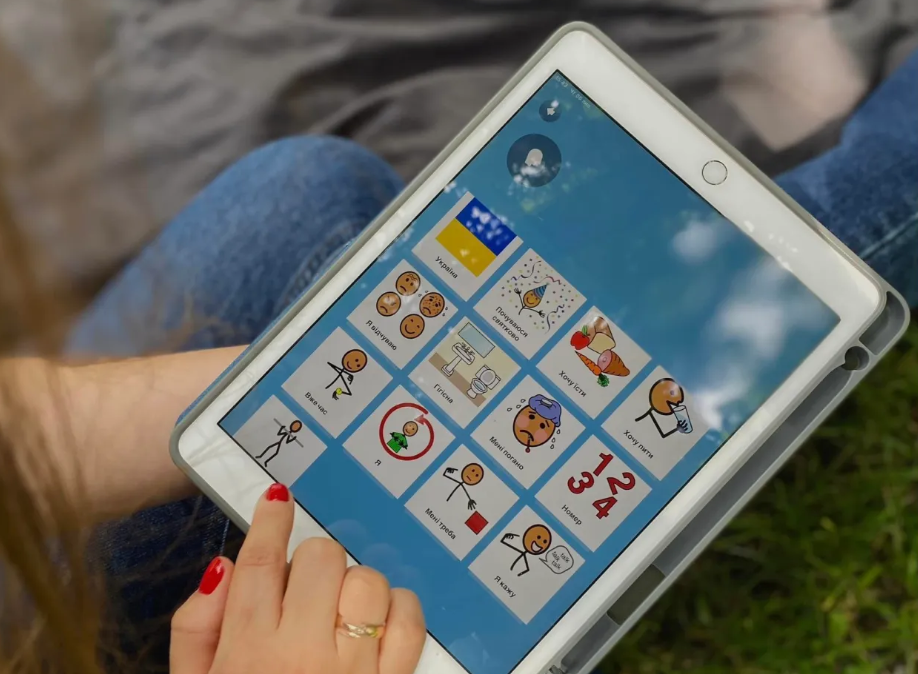
The NGO “Hovory!” developed two apps, Tippy Talk and Ya Kazhu, to facilitate communication for individuals with speech impairments. Tippy Talk uses images for communication, while Ya Kazhu enables text-to-speech functionality. These tools have proven invaluable for veterans, refugees, and civilians with communication disorders, promoting social inclusion and empowering individuals to express themselves.
Tippy Talk & Ya Kazhu: Apps Fostering a New Communication Culture
The core mission of the NGO “Hovory!” (Speak!) is to enable social inclusion for everyone, regardless of their circumstances. They achieve this by uniting IT specialists, civil society, doctors, artists, educators, and the media to develop and implement digital tools for inclusivity.
How it works:
- Tippy Talk:
Tippy Talk is a digital tool for augmentative and alternative communication (AAC), enabling nonverbal individuals with communication disorders to express themselves using images. The first version of the app was developed in 2021 for children with autism, commissioned by an American client.
“When our team completed the first iteration of the product, everyone was impressed because no one had experience working with a social theme before. After that, we were thinking about how we could reward ourselves, but the best way to celebrate is to make the product available to Ukrainians as well”, says Yurii Popovych, co-founder of “Hovory!” and a military serviceman.
Thus, the app became available not only in English but also in Ukrainian. The project was paused at the beginning of the full-scale invasion but was later revived, recognizing its increased relevance. Among people with autism spectrum disorder, Down syndrome, intellectual disabilities, and speech delays are refugees who can use the English version of the app abroad, as well as military personnel and civilians remaining in Ukraine who may have suffered traumatic brain injuries, strokes, or aphasia.
Tippy Talk can be used as a speech generator, where the user constructs a phrase that the app voices, and as a messenger for communicating with parents, relatives, teachers, and friends.
- Ya Kazhu (I Speak):
The “Ya Kazhu” app is an organic continuation of Tippy Talk. Initially, it was built around one person – six-year-old Daryna, who has speech muscle impairments. The girl used Tippy Talk to communicate with her family, but it wasn’t enough for school.
“Tippy Talk performs the function of communication, but not fast communication. During a brainstorm on what we could do, we remembered how Google Translate works – you write text, and the program, in addition to translating it, voices it. We built the app based on this principle, but without the translation functionality”, says Yurii Popovych.
Natalia Tsap, coordinator of the Tippy Talk Military project, notes the difference between the apps: Tippy Talk is communication through pictures, and it also has a messenger option that allows sending cards to other users, which are displayed for them in text or voice form. “Ya Kazhu” is “fast communication”, communication through text and voicing.
“There are three levels of the patient’s condition – mild, moderate, and severe. Most often, Tippy Talk is used in severe conditions when people cannot type but can identify some pictures. When it comes to ‘Ya Kazhu’, it is used by people who can identify text”, says Natalia Tsap.
420 specialized professionals, including speech therapists, occupational therapists, and speech-language pathologists, participated in the piloting and implementation of the “Ya Kazhu” app. The app has no restrictions on the number of characters used or sentences saved – you can say one phrase or voice several paragraphs. In addition, the program allows you to save and sort phrases into thematic folders. Also, favorite or frequently used phrases can be marked with stars – so they get into a separate “Favorites” folder for quick communication.
Future plans:
Currently, 79 military personnel use Tippy Talk in one way or another, and according to Natalia Tsap, this number is constantly increasing. As for the “Ya Kazhu” app, it has 278 downloads on the Play Market and 211 on iOS.
“In fact, with the help of such programs, dignity is returned to a person when they become a subject to whom people speak, not an object about whom people speak. A person can independently express their opinion or ask for something”, says Yurii Popovych.
In future releases of “Ya Kazhu”, Yurii Popovych says the team plans to upload template phrases into the program so that people don’t have to create everything from scratch on their phones but can create folders on their computers.
This article is based on materials from Ain.ua