Operating from the private sector, the former digital transformation and defense lead launches a venture and engineering ecosystem at IT Arena in Lviv, aiming to replace frontline personnel with autonomous systems and ground robotics.
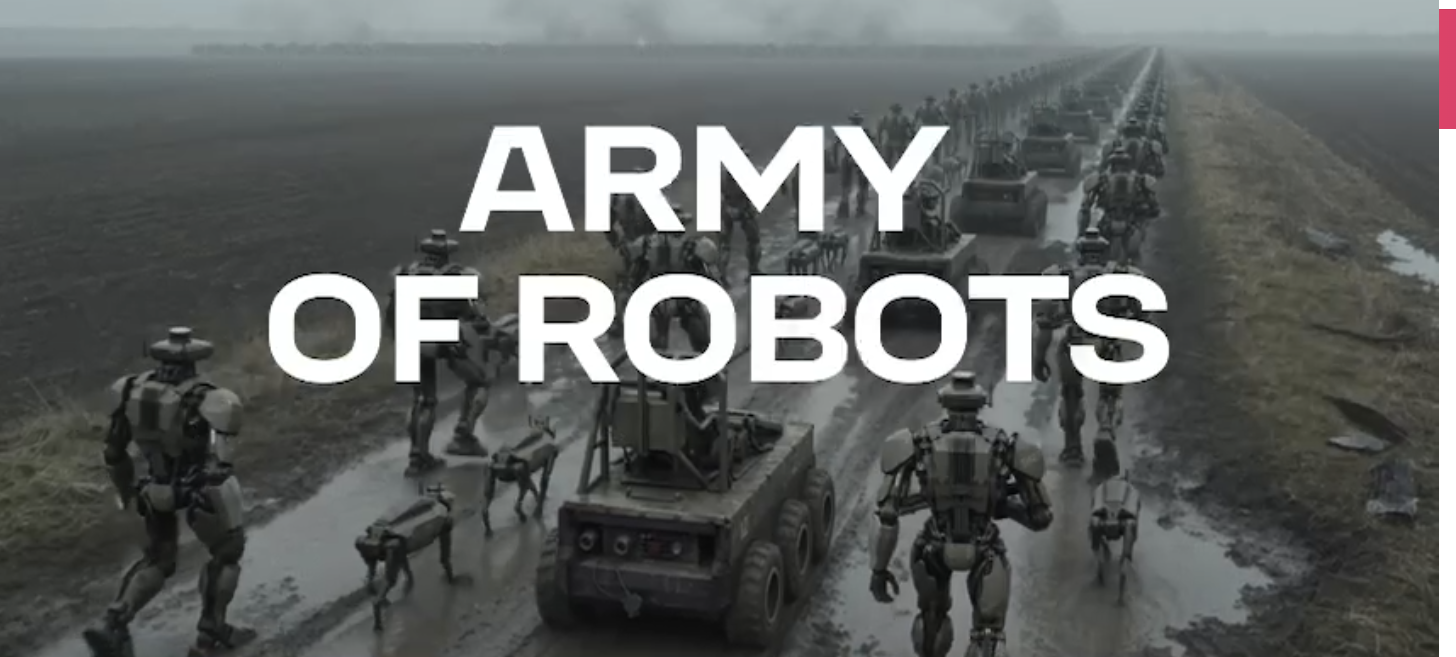
The operational dynamics of modern technological warfare are reaching an inflection point. While small unmanned aerial vehicles (UAVs) fundamentally altered combat doctrine over the past four years, the lifecycle of technological advantage has compressed dramatically. As russian forces have accelerated their capacity to copy, iterate, and mass-produce frontline innovations, sustaining asymmetric battlefield superiority requires an immediate paradigm shift toward full-spectrum autonomy, sensorization, and ground robotics.
Stepping into the private sector as an independent technological operator, Mykhailo Fedorov has officially launched the Army of Robots.
Unveiled at the IT Arena conference in Lviv following high-level discussions with the Lviv IT Cluster, the initiative is structured not as a single hardware manufacturer, but as an agile defense-tech ecosystem designed to accelerate autonomous systems, sensor networks, and robotic platforms to systematically remove human soldiers from the line of fire.

The Evolution: Transitioning from Drone Warfare to Ground Autonomy
The initiative directly mirrors the foundational blueprint of Ukraine’s historic Army of Drones program launched in 2022. That effort transformed an ad-hoc, volunteer-led drone landscape into a full-scale industrial defense vertical that today encompasses more than 700 active domestic UAV manufacturers and accounts for over 95% of frontline strike operations.
However, as Fedorov underscored during his address in Lviv, aerial supremacy is no longer sufficient on its own. The primary strategic challenge is the speed of adversary adaptation: russian defense manufacturing has shortened the timeline required to launch and scale counter-technologies at the front. Consequently, Ukraine’s priority is not merely developing isolated technological breakthroughs, but navigating the entire lifecycle – from initial field testing to industrial-scale battlefield deployment – substantially faster than the enemy.
“Our challenge as a country is to find a way to defeat russia in the new technological cycle”, Fedorov stated. “The next big transition is from the war of drones to mass robotization, sensorization, and autonomy”.
The Doctrine: Sensor-First, Machine-Forward Engagement
At the core of the Army of Robots is a doctrine prioritizing the preservation of human life through a strict sequence of operational engagement:
Sensor Integration: Reconnaissance arrays and distributed sensors identify and verify threats in the sector.
Robotic Maneuver: Unmanned platforms deploy into designated danger zones before human personnel are exposed.
Multi-Role Execution: High-survivability ground platforms and humanoid robotics assume critical high-risk mission profiles, including combat casualty evacuation (MedEvac), forward ammunition delivery, automated mining and demining operations, position defense, and precision kinetic strikes.
Fedorov emphasized that the ultimate operational objective is to ensure that machines fight in place of people, taking over the most hazardous tasks across active frontlines.
Ecosystem Architecture: Venture Capital, Military Testing, and Rapid Scale
Rather than functioning as a centralized state agency, the Army of Robots is built as a venture and innovation platform operating at the intersection of capital, engineering, and rapid feedback loops with combat units. The platform will operate across four core pillars:
Targeted Capital Deployment: Direct investments into high-potential defense tech startups and specialized robotics teams.
In-House R&D: Launching internal technological ventures focused on autonomy, edge computing, and extreme-environment robotics.
Frontline Co-Development: Testing robotic systems directly in combat conditions alongside active military units to eliminate development lag.
Rapid Industrial Scaling: Providing the manufacturing and supply chain infrastructure necessary to scale verified prototypes into mass production.
This push reflects Fedorov’s broader framework for technological warfare – AIR. LAND. ECONOMY. -focusing on maintaining technological leverage across all operational domains.
Sourcing Tech Talent and Ecosystem Leadership
Delivering an explicit call to Ukraine’s commercial IT sector, software engineers, and product teams, Fedorov urged the industry to pivot its engineering capacity toward defense autonomy, machine vision, and robotic control systems.
As part of its initial rollout, the Army of Robots has opened public scouting for:
Defense Tech Startups and Engineers actively building robotic and autonomous solutions capable of altering battlefield dynamics.
Chief Technology Officer / Tech Lead to oversee system architecture, technological integration, and strategic engineering across the ecosystem.
Founders, engineering teams, and defense-tech specialists can apply directly through the official initiative platform at thearmyofrobots.com/en.