Ukraine is attempting a regulatory high-wire act that challenges the conventional wisdom of Western technology governance: pioneering an aggressive, deployment-centric artificial intelligence model to survive an ongoing invasion while simultaneously preparing its legal framework for eventual European Union integration.
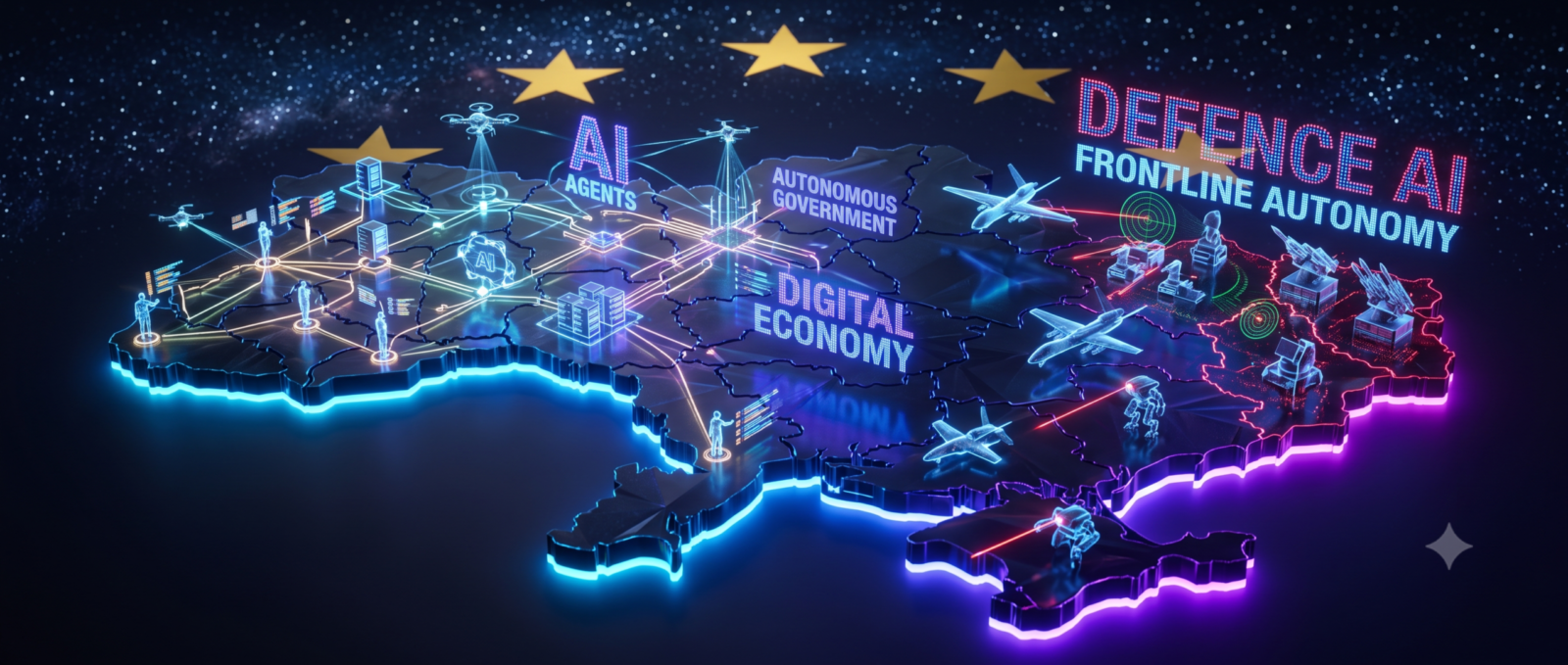
A newly released country report in the Berlin-based AIRe: Journal of AI Law and Regulation (published by Lexxion Publisher) pulls back the curtain on Kyiv’s Draft AI Strategy up to 2030. Authored by AI governance and compliance expert Taras Kovalchuk, the analysis highlights a striking paradox: Ukraine is bypassing strict, precautionary regulations in favor of rapid, real-world tech adoption across the economy and defense sectors—even as it navigates severe, wartime infrastructural limits.
Deployment-First Over Precautionary Regulation
Unlike the European Union’s heavily bureaucratic, risk-mitigation approach codified in the EU AI Act, Ukraine’s strategy prioritizes immediate utility. Driven by wartime necessity, the national roadmap outlines an ambitious transformation toward an “AI-agent-driven state” by 2030, with a heavy emphasis on building a robust Defence AI infrastructure.
By prioritizing rapid scaling over restrictive early-stage compliance, Kyiv aims to accelerate the deployment of autonomous systems, electronic warfare, and public sector automation. However, this “adoption-first” logic sets up an inevitable future conflict: to achieve its long-term goal of EU accession, Kyiv must eventually reconcile its current regulatory permissiveness with the strict risk-management frameworks required by Brussels.
The Infrastructural Bottleneck
The report underscores that Ukraine’s ambitions face critical, real-world headwinds. To achieve the 2030 targets, the country must overcome several steep challenges:
Computational Limits: The strategy requires an extraordinary, multi-fold increase in peak computational capacity to process complex machine learning models.
Enterprise Adoption: A massive jump in enterprise AI adoption rates among domestic businesses is necessary to scale these technologies beyond government initiatives.
The Energy Deficit: These energy-hungry technologies must be deployed amid ongoing, severe power deficits caused by war damage to the national grid.
Global Context and Digital Access
To spotlight Ukraine’s unique approach and foster international dialogue around tech governance, Lexxion Publisher has opened complimentary digital access to its entire Country Reports section from the latest issue (AIRe 02/2026). This allows legal practitioners, tech executives, and venture capitalists to view the analysis of Ukraine side-by-side with critical regulatory updates from regions including Japan, South Korea, the United Kingdom, Australia, and the European Union.
A Blueprint for Post-Bureaucratic Tech?
The future of Ukraine’s tech sector now hinges on a critical question: Can a nation build a cutting-edge, AI-driven state while operating under severe energy constraints and a ticking clock for EU harmonization? If successful, Ukraine’s wartime pragmatism may offer a lean, deployment-first blueprint that challenges the West’s heavily regulated approach to emerging technologies.