As Russia escalates its air terror against Ukrainian cities, Ukraine’s defense-tech sector and European partners are co-developing the continent’s next-generation missile defense system.
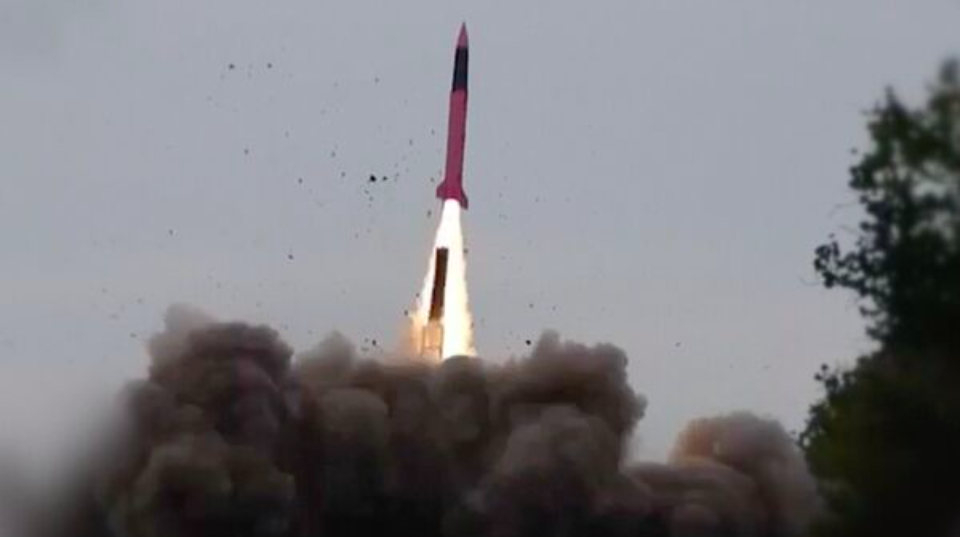
Following heavy enemy aerial attacks in June and a series of massive missile strikes throughout July, Ukrainian defense innovators are accelerating long-term counter-measures. Rather than relying solely on foreign air defense supply chains, Ukraine’s deep-tech sector is actively partnering with European nations to design and build indigenous anti-ballistic solutions – establishing a combat-proven shield designed to defend both Ukraine and continental Europe against Russian aggression.
At the forefront of this initiative is Ukrainian defense contractor Fire Point, which has disclosed updated timelines and refined technical specifications for its anti-ballistic missile system, Freya, and its interceptor missile, the FP-7.x.
Accelerated Timeline: The Freya System
In an interview with Janes, Fire Point Technical Director Iryna Terekh confirmed an accelerated development schedule for the Freya anti-ballistic system. Fire Point now targets its first live ballistic target interception test by July 2027.
This revised roadmap updates earlier projections outlined in April by Chief Designer Denys Shtilerman, who had previously estimated the initial interception test would occur by the end of 2027.
Under the updated specifications, the FP-7.x interceptor is expected to reach a maximum speed of 2,200 m/s – a notable increase over earlier baseline estimates of 1,500 to 2,000 m/s. The missile is engineered to engage ballistic threats at an altitude of 20 to 25 km and across an operational range of up to 80 km.
This operational push is reinforced by the formation of the Anti-Ballistic Coalition, which brings together nine European nations: Denmark, France, Germany, Italy, the Netherlands, Norway, Spain, Sweden, the UK, alongside Ukraine. The coalition facilitates joint research, development, and engineering activities, directly integrating serial components from European manufacturers into the Freya architecture.
Technical Roadmap: High-Explosive to Kinetic Hit-to-Kill
The FP-7.x interceptor – developed from the FP-7 platform (which itself builds on the 48N6 air-defense foundation) – is tailored specifically for high-speed, high-altitude ballistic interception.
Currently, the FP-7.x relies on a high-explosive fragmentation warhead as its primary defeat mechanism. Near-target detonation is designed to damage and deflect incoming ballistic missiles, placing its current baseline capabilities in a tier similar to the PAC-2 GEM-T interceptor used in Patriot air defense batteries.
Fire Point is also planning the eventual integration of kinetic hit-to-kill technology. Direct physical collision – used in systems like Lockheed Martin’s PAC-3 MSE or MBDA’s Aster 30 – allows an interceptor to completely destroy a ballistic missile and its payload in flight. Implementing hit-to-kill capabilities will require adding a lateral divert-control thrust system to enable precision mid-air maneuvers.
Tech Resilience Beyond Individual Leadership
Ukraine’s defense-tech ecosystem has developed structural durability that extends beyond political cycles. The recent resignation of Mykhailo Fedorov, Ukraine’s digital-focused Minister of Defense – a key figure widely respected by frontline tech units, software engineers, and startups for accelerating digital transformation – serves as a test of organizational stability.
The sector’s momentum demonstrates that Ukrainian defense technology is powered by distributed talent, institutional continuity, and strong international partnerships. As deep-tech integration accelerates, European defense leaders increasingly recognize that consolidating around combat-tested Ukrainian innovations is critical to building a sovereign, resilient security framework capable of deterring any future aggression.
Source: DEFENSE EXPRESS