The battlefield evolution of FPV drones has reached a new inflection point: the rapid adoption of fiber-optic spooling. By tethering drones via ultra-thin physical cables, operators circumvent electronic warfare (EW) and signal jammers entirely, transmitting unjammable HD video and telemetry. This shift has rendered traditional RF jamming architectures partially obsolete, leaving military and critical infrastructure positions exposed to precision strikes.
To close this vulnerability, Ukrainian defense engineers are developing kinetic and mechanical countermeasures directly on the tactical perimeter. As originally reported by Defense Express, Ukrainian developer Design Bureau Logika has introduced Chagarnik – an automated deployable barrier engineered specifically to detect and mechanically neutralize fiber-optic tethered FPV drones.
Unlike static anti-drone nets or passive fencing, Chagarnik acts as an active, automated defensive perimeter capable of running autonomously or as a node within a broader tactical grid.
Detection to Physical Interception in Under One Second
Chagarnik operates as a continuous, closed-loop system structured around three automated stages: Detection → Identification → Kinetic Interception.
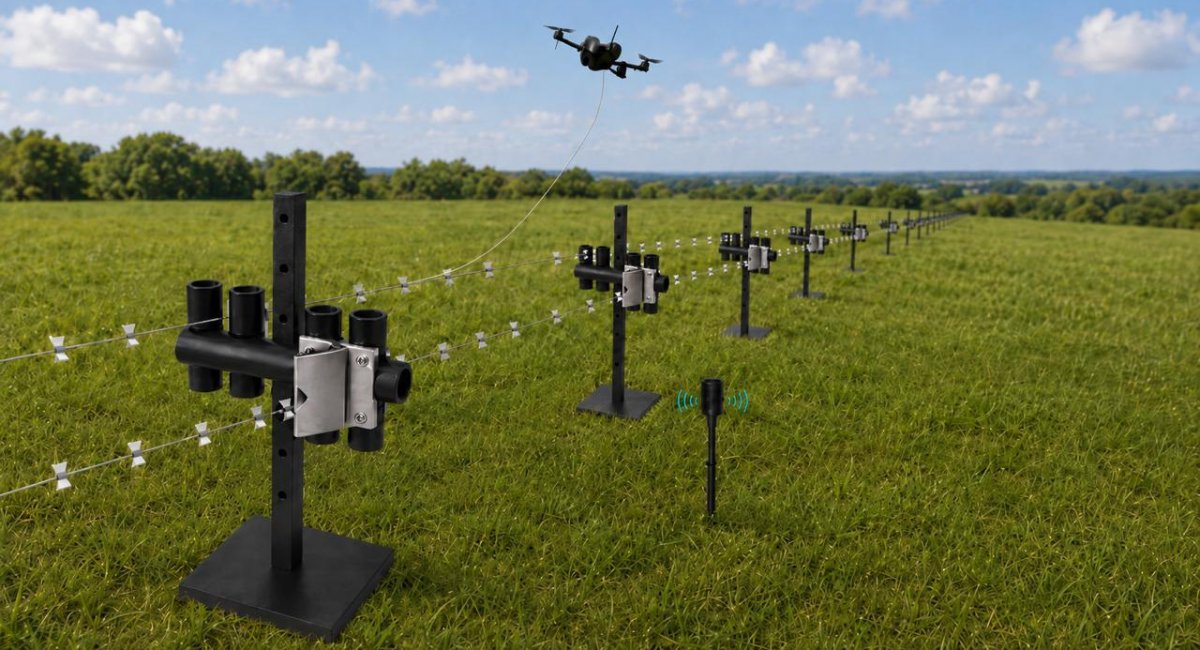
Acoustic Detection & Signature Identification: The system listens for the distinct acoustic footprint produced by incoming FPV drone motors and prop profiles, instantly flagging an approaching threat.
Automated Activation: Upon signature verification, the system triggers an active moving barrier.
Mechanical Disruption: The barrier deploys a moving mechanical contour equipped with specialized catchers. As the tethered drone approaches or passes over, the catchers snag the fiber-optic line, snapping it mechanically.
The system clocks a reaction time of under 1 second, with field specifications indicating a ≥95% probability of severing the fiber line upon contact. Severing the glass tether instantly blindfolds the drone operator, cutting control input and terminal-guidance telemetry.
Software-Defined Defense: Native “Kropyva” Integration
A critical feature separating Chagarnik from improvised physical fencing is its software-centric integration. The hardware is connected directly into Kropyva, Ukraine’s widely fielded situational awareness and tactical management software.
Dual-Mode Control: Operators can monitor barrier status, calibrate sensitivity parameters, and control actuation either fully automatically or via remote manual override on standard military tablets.
Unified Sensor Grid: By routing acoustic sensor data and barrier status directly into Kropyva, Chagarnik doubles as an early-warning perimeter sensor, feeding tactical intelligence back into local command networks.
Modular Architecture and Field Scalability
Engineered for austere battlefield environments, Chagarnik is designed for 24/7 continuous operation across varying weather conditions, including heavy rain, high dust, and wind. Its modular architecture supports rapid field repairs and dynamic scaling:
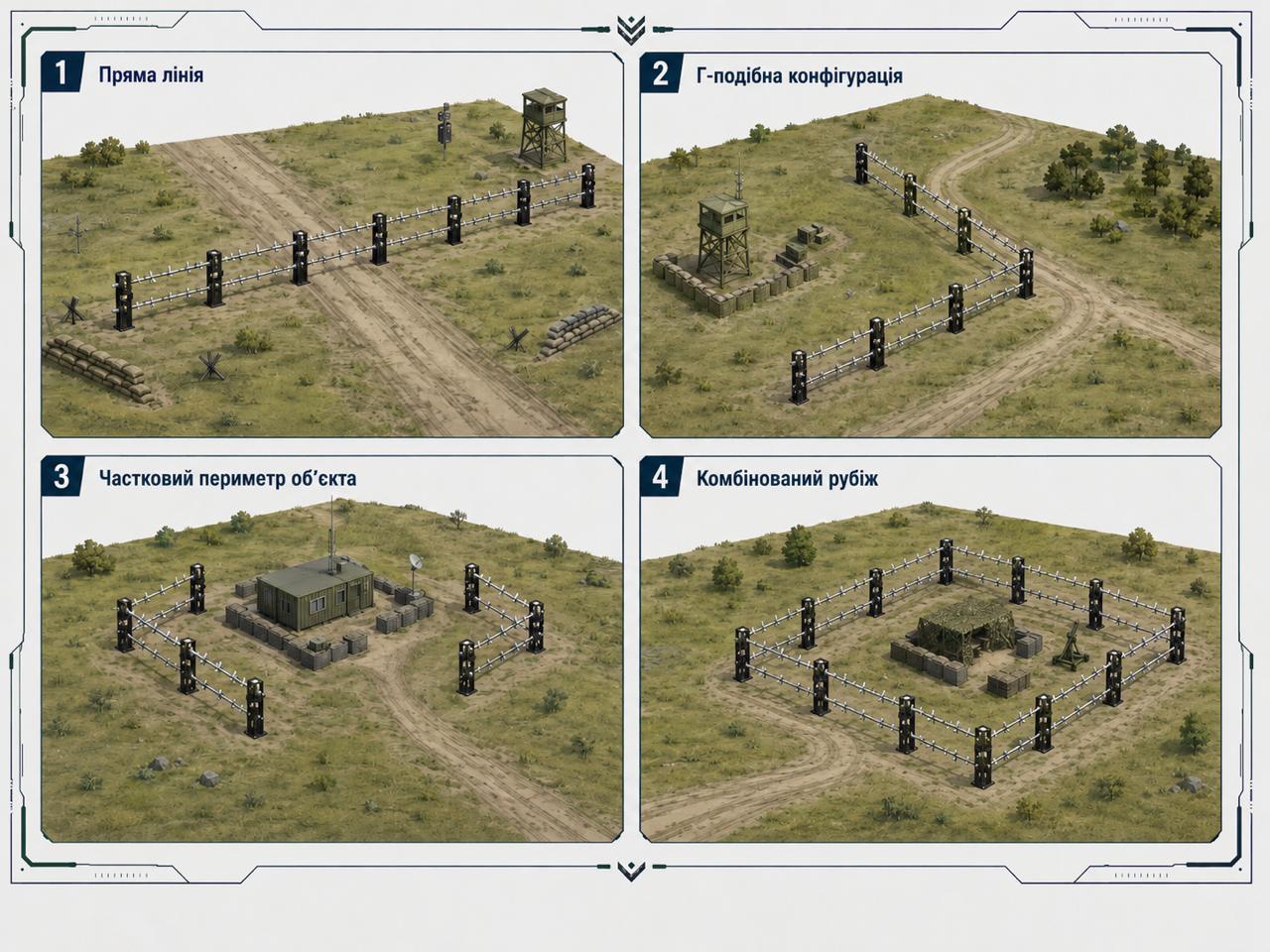
Single-Kit Perimeter: One deployable kit protects 100 meters in a linear setup, or 50 meters per vector in angular deployment configurations (90° to 180°).
Grid Scalability: Multiple units can be daisy-chained to form an integrated defensive perimeter spanning up to 1,000 meters.
Beyond safeguarding frontline infantry dugouts, firing points, and command posts, the modular footprint is designed for dual-use applications – offering targeted physical protection for energy substations, industrial hubs, and logistical chokepoints frequently targeted in the gray zone.
Key Technical Specifications
System Reaction Time: < 1 second
Tether Severance Rate: ≥ 95% on physical contact
Single Kit Coverage: 100 m (linear) / 50 m per side (angular 90°–180°)
Maximum Chain Range: Up to 1,000 m
Control Architecture: Automated / Remote via Kropyva integration
Operational Readiness: All-weather, continuous 24/7 deployment
Developer: Design Bureau Logika
As unjammable wire-guided aerial threats demand a return to physical and mechanical defenses, software-integrated hardware like Chagarnik demonstrates how modern engineering can automate localized defense against the next wave of autonomous and tethered warfare.