The defense tech ecosystem backed by Sigma Software, KSE, and Buntar Aerospace is accepting applications through October 30, 2026.
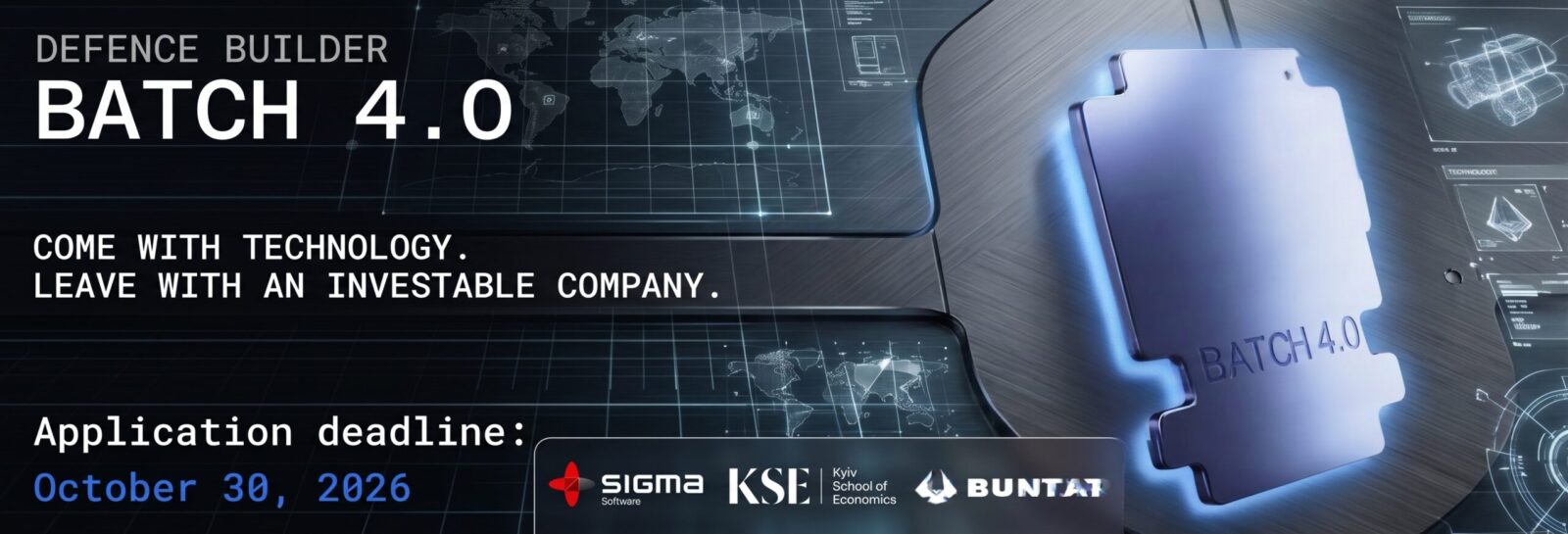
Defence Builder, a full-cycle Ukrainian defense tech ecosystem, has launched recruitment for its fourth accelerator cohort. Applications for Batch 4.0 close on October 30, 2026, with the four-month hybrid program kicking off in November.
The premise is straightforward: take engineering teams with functional prototypes (TRL 4+) and put them through direct military trials, unit economics stress tests, and procurement pipelines until they are institutional-grade companies (TRL 6–7).
The Numbers
Operating since 2024, the accelerator reports a selective 7.24% acceptance rate across its history:
24 portfolio companies graduated or active;
$130M+ combined valuation across all cohorts;
$650K+ in direct grants distributed;
30+ frontline military units running operational hardware and software trials;
$60M+ raised historically by the mentors and founders inside the room.
The ecosystem itself is backed by Sigma Software Group, Kyiv School of Economics (KSE), and Buntar Aerospace. The leadership team includes:
Daria Yaniieva, PhD, President of Defence Builder (Forbes 30u30, ex-head of a European CVC);
Dr. Tymofiy Mylovanov, President of KSE, Associate Professor at the University of Pittsburgh, and Ukraine’s former Minister of Economy;
Valery Krasovsky, Co-Founder and CEO of Sigma Software Group;
Ivan Kaunov, Co-Founder & CEO of Buntar Aerospace;
Michael Shneider, CEO at KSE;
Anton Tokarev, Growth & AI R&D Lead (ex-MBB & Big 4).
The Four-Month Squeeze
The program is built around four operational tracks designed to eliminate amateur mistakes in hardware scaling:
Product & R&D: Direct work with engineers and integrators who build military hardware at volume. Technical teams sign off on verified production roadmaps.
Validation & Procurement: Direct field days with end-users across 30+ operational brigades and structured demos with General Staff procurement officers.
Capital & Legal: IP structuring, clean cap tables, export compliance, and pricing models that stand up to institutional due diligence.
Production & International Channels: Assembly scaling, component replacement, and initial export pathways beyond the Ukrainian domestic market.
Teams also receive targeted NATO workshops (covering EU and US institutional frameworks) and 1:1 sessions with prime defense CEOs and procurement leads.
7 Hardware & Software Target Priorities
Batch 4.0 is selecting 10 companies globally. Full platforms, discrete subsystems, edge compute, and modular components are all eligible across seven operational priorities:
Air Defense & C-UAS: Multi-sensor detection, localized protection, interceptor guidance, and countermeasures against guided aerial bombs (KABs).
Resilient Comms & Navigation: Stationary and airborne relays, multichannel links, and alternative positioning capable of surviving severe EW jamming.
Rapid Response Systems: Automated target allocation, sensor-to-shooter data integration, and persistent remote observation.
Autonomous Systems: Edge AI processing, terminal guidance, optical tracking, laser designation, and degraded-mode failsafes for strike and reconnaissance assets.
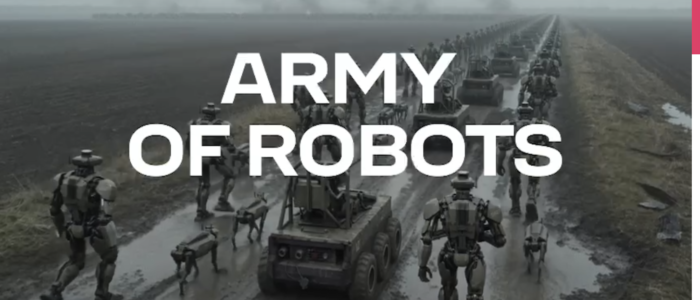
Robotics & Human Support: Specialized UGVs, remote repair platforms, system recovery gear, and physical support exoskeletons.
Next-Horizon Tech: High-density energy systems, directed-energy prototypes, and autonomous multi-sensor arrays.
Components & Subsystems: Flight controllers, secure radios, propulsion units, actuators, and diagnostic hardware ready to drop into existing operational platforms.
Concrete Proof: Recent Cohort Exits
WingTech (Batch 1.0): Secured its first state defense contract, reached three Army Corps, and closed $370K in bridge financing.
BlueShadow: Developed the BlueDragon offshore C-UAS interceptor, signed 10 MOUs with manufacturers, locked in an operational MOU with the National Guard of Ukraine, and landed grant funding from the Danish Maritime Fund.
Telearmy: Tested its modular remote-driving systems across 80+ military stakeholders, locking in manufacturer contracts and commercial partnerships in Germany and the United States.
Fremen (Batch 1.0): Shifted from an early lab concept to field testing (TRL 2 to TRL 6), securing formal Letters of Intent from frontline brigades.
Terms and Timeline
Applications Close: October 30, 2026
Cohort Size: 10 selected companies
Format: 4 months, hybrid, ~2 one-hour workshops weekly plus milestone execution
Languages: English and Ukrainian
Financing: An initial grant plus performance-based partner capital, followed by introductions to a network of 100+ vetted defense tech VCs
Post-Graduation: Dedicated portfolio manager, continuous access to international defense delegations, and follow-on capital opportunities through the Defence Builder Fund
Founders with working hardware or code at TRL 4+ can submit non-classified materials directly via the Defence Builder Batch 4.0 Portal.