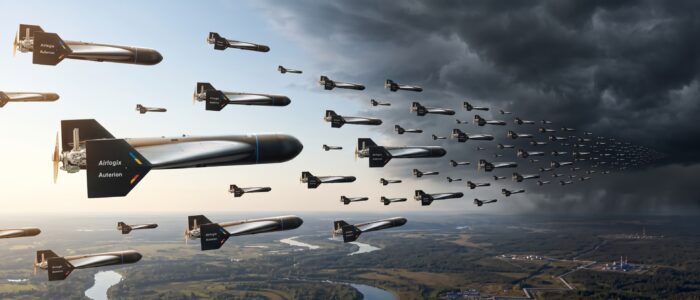
In a world-first, Ukrainian forces are deploying AI-controlled drone swarms on the battlefield, marking a pivotal shift in military technology where machines autonomously decide the optimal moment to strike.

A new chapter in the history of warfare is being written in the skies over Ukraine. As reported by The Wall Street Journal, Ukrainian troops have moved beyond human-in-the-loop drone operations to deploying intelligent swarms that coordinate and execute attacks on Russian positions with a startling degree of autonomy. This isn’t a theoretical test; it’s a battlefield reality that has been deployed over a hundred times by a single unit in the past year.
At the heart of this technological leap is software developed by the Ukrainian company, Swarmer. Their system allows a group of drones to operate as a cohesive unit. In a typical mission, a human operator designates a target area, such as an enemy trench. From there, the AI takes the helm.
TechUkraine has been following Swarmer’s rapid ascent. We previously reported on the company securing a significant $2.7 million in seed funding to fuel its mission of revolutionizing modern warfare through its autonomous, coordinated drone swarm technology, a promise they are now demonstrably fulfilling on the battlefield.
A reconnaissance drone charts the optimal course while two accompanying strike drones, laden with explosives, follow its lead. The critical distinction from previous drone usage is what happens next: the strike drones themselves determine the precise timing and sequence of their attack to maximize effectiveness, without direct, real-time commands from the operator for the final action.
This represents the first known regular use of autonomous swarm technology in combat, placing Ukraine at the forefront of a disruptive wave in military innovation. While current operations typically involve small swarms of three to eight drones, the technology has been successfully tested with groups of up to 25, and the company is preparing for trials involving a formidable swarm of 100 drones.
The application of this technology began approximately a year ago with mine-laying operations and has since evolved to include direct strikes against Russian military personnel, equipment, and infrastructure.
The Ethical Frontier
The deployment of AI that makes life-or-death decisions on the battlefield inevitably crosses a significant ethical threshold. The prospect of machines deciding when and how to engage human targets has long been a subject of intense debate among military analysts, ethicists, and international lawmakers.
Addressing these very concerns, Serhii Kupriienko, CEO and co-founder at Swarmer, outlines the company’s position: “Our approach to drone autonomy prioritizes transparency and dependability, adhering to the core principles of Ethical AI. Our values and strategic vision sets us apart from those aiming to misuse modern intelligence and technology”.
Despite this commitment, the delegation of the final strike decision to the drones’ algorithm marks a gray area that pushes the boundaries of autonomous warfare. This development raises profound questions about accountability, the laws of armed conflict, and the future role of human judgment in combat.
The rise of these systems is a clear signal that the age of AI-driven warfare is no longer a distant sci-fi concept but a present-day reality. As Ukraine continues to innovate out of necessity, its pioneering use of autonomous drone swarms is setting a precedent that will undoubtedly be studied and replicated by militaries across the globe, forcing a global conversation about the rules of engagement for a new generation of intelligent weapons.
Source: WSJ; MILITARNYI