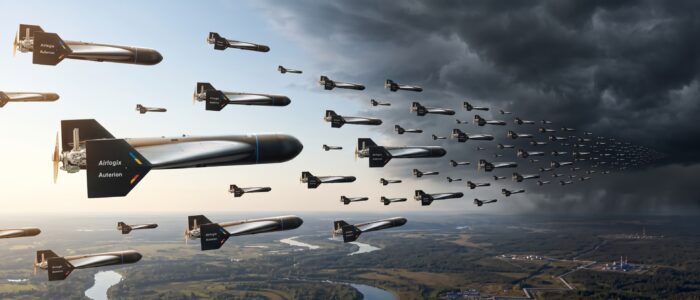
As the full-scale invasion enters its fifth year, the tactical airspace over Ukraine has reached a tipping point. The rapid proliferation of “drone interceptors” – low-cost FPVs designed to ram or shoot down reconnaissance wings—has fundamentally altered the battlefield’s financial logic. Previously “untouchable” scouts are now being treated as primary targets, forcing a shift from high-end, long-life assets to scalable, cost-effective solutions.

Vyriy Industries has responded to this shift with SOKIL (Falcon), a lightweight reconnaissance UAV designed to provide frontline intelligence at a fraction of the cost of traditional systems.
The Unit Economics of Survival
In 2026, the primary threat to reconnaissance is no longer just high-end air defense, but $500 interceptors. This creates a severe economic disparity for the defender. SOKIL aims to rebalance the scales by reducing the cost of a single aircraft to 172,000 UAH (approximately $4,000).
“Boards with the same characteristics today cost more than $10,000 per unit. That’s a minimum; on average, it’s $15,000–$20,000”, says Roman, a flight instructor at Vyriy Industries. “But to a $500 interceptor, it makes no difference how much your drone costs”.
By slashing the price per unit, Vyriy Industries allows military units to perform “routine” reconnaissance in high-threat environments where the risk of losing a $20,000 platform would be operationally prohibitive.
Tactical Resilience: Navigation Without GPS
A key technical hurdle for low-cost drones in 2026 is the saturation of Electronic Warfare (EW). To maintain a low price point while ensuring survival, SOKIL bypasses expensive, jam-resistant satellite antennas (CRPA) in favor of a radio beacon navigation system.
The system utilizes a network of compact, low-cost ground beacons deployed near the operator. The drone triangulates its position based on the signal arrival time from these beacons, allowing it to function accurately even when GPS signals are completely suppressed by enemy EW. This makes SOKIL specifically optimized for the “zero line” where signal jamming is most intense.
Technical Specifications & Capabilities
| Metric | Specification |
| Operational Radius | 50–60 km |
| Flight Endurance | 2.5 hours (up to 3 in ideal conditions) |
| Max Speed | 130 km/h |
| Launch Method | Hand-launch (no catapult required) |
| Optics | 30x Zoom, 340° rotation, stable image from 1,100m altitude |
| Unit Cost | ~$4,000 |
Strategic Role: Asset Optimization
The SOKIL complex – which includes three aircraft and a specialized ground station – is priced at 1 million UAH and is currently available via the Brave1 marketplace.
The platform is not intended to compete with Ukraine’s high-end, deep-reconnaissance UAVs. Instead, it serves as a tactical “buffer”. By handling routine surveillance and artillery correction at the front, SOKIL absorbs the brunt of enemy interceptor attacks, preserving more sophisticated, expensive assets for strategic missions deep behind enemy lines.
Current combat data confirms the platform’s efficacy, with successful missions recorded at depths of 52 km and target acquisition for strike drones at 40 km. As the war of attrition continues, the ability to maintain a continuous “eye in the sky” will depend less on the complexity of the sensor and more on the sustainability of the supply chain.
Source: Militarnyi