For the past two years, the war of attrition in Ukraine’s skies has been defined by a numbers game: cheap, mass-produced kamikaze drones targeting critical infrastructure versus expensive, finite air defense missiles. However, as the threat evolves with the introduction of faster, jet-powered loitering munitions, the traditional counter-unmanned aerial vehicle (C-UAV) playbook is hitting its operational limits.
To bridge this critical security gap, the Ukrainian defense tech sector is pioneering a new class of specialized, high-speed interceptor drones. Fueled by artificial intelligence and tailored kinetic propulsion, these platforms aim to neutralize high-speed aerial threats at a fraction of the cost of conventional air defense systems.
General Chereshnya and STRIX Form Strategic Alliance for Jet-Drone Defense
In a major consolidation within the domestic defense tech sector, the prominent Ukrainian development team General Chereshnya and technology center STRIX have announced a strategic partnership. According to information reported by LIGA.net, this joint venture is specifically focused on scaling countermeasures against advanced aerial threats, including jet-powered strike drones.
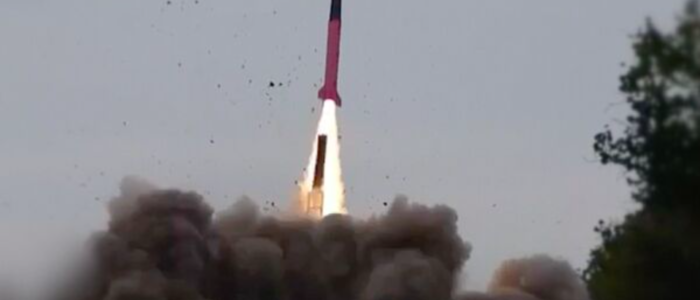
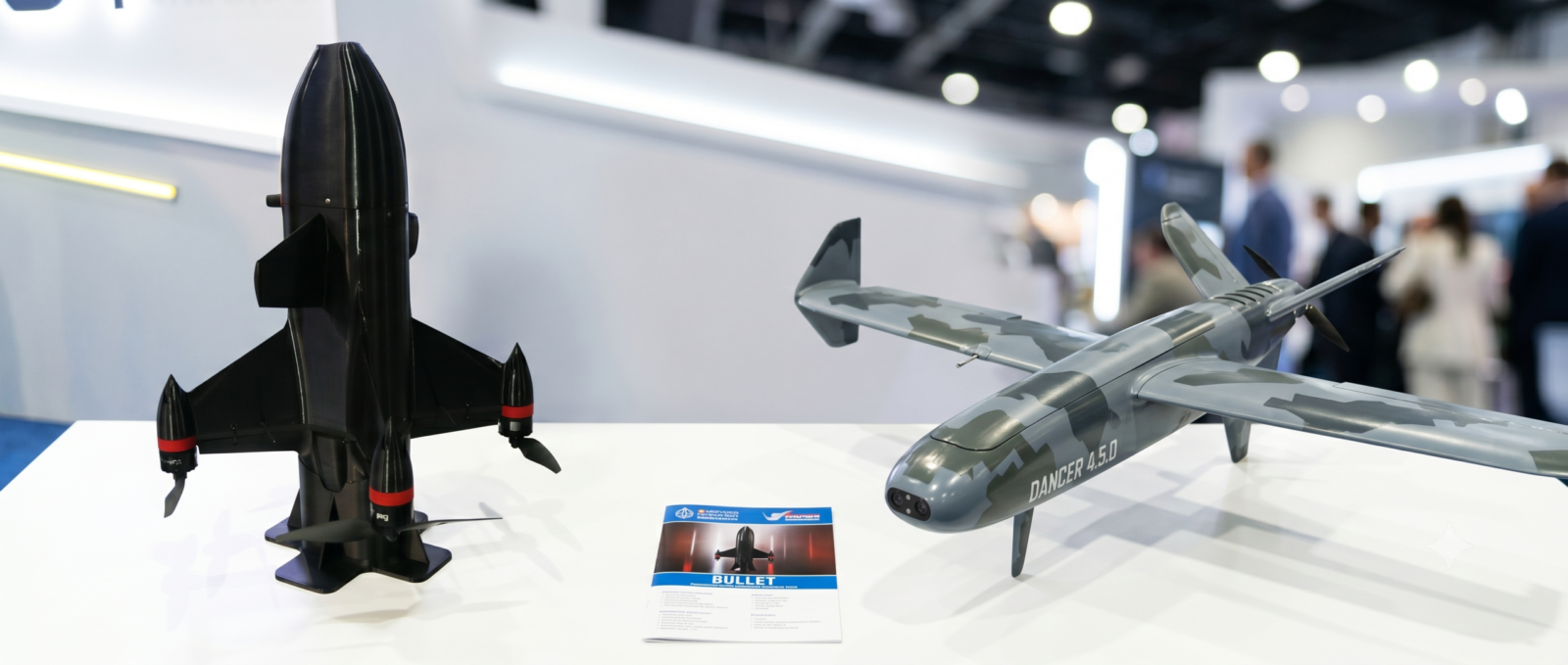
The partnership leverages artificial intelligence and cutting-edge kinetic solutions. The technical anchor of this new product line is the General Chereshnya BULLET, which integrates a proprietary kinetic accelerator developed by STRIX.
Key elements of the partnership include:
Proven Foundation: The underlying STRIX kinetic technology successfully passed field testing a year ago and is now being integrated into dedicated interceptor airframes.
Target Spectrum: The system is engineered to counter a wide range of strike UAVs, explicitly targeting all modifications of “Shahed” loitering munitions as well as the high-speed, jet-powered “Geran-4” drones.
AI Integration: The collaboration will focus heavily on deploying AI-driven guidance systems to counter the growing volume of high-speed enemy assets that evade traditional, slower FPV defenses.
Dancer 4.5.0: The 450 km/h Interceptor with a 3:1 Efficiency Ratio
Simultaneously, Ukrainian defense manufacturer Yartura has unveiled its own answer to the jet-drone challenge: the Dancer 4.5.0 unmanned aerial system. As detailed in a report by LIGA.net, the system was built from the ground up to address the increasing velocities of enemy kamikaze drones attacking Ukrainian cities.
According to technical specifications published on the official Yartura platform, the Dancer 4.5.0 boasts a combat efficiency ratio of 3 to 1. The complex is engineered to hunt down fast-moving aerial targets far from operator positions and at significant altitudes.
Key Technical Specifications of the Dancer 4.5.0:
Maximum Speed: Up to 450 km/h, enabling it to chase down and intercept high-speed loitering munitions.
Operational Ceiling: Capable of engaging targets at altitudes of up to 4.8 kilometers.
Combat Range: Operates effectively at a distance of up to 30 kilometers from its launch site.
The Interceptor Complex: The system comprises a customized number of Dancer 4.5.0 aircraft and the DANCER-B1 ground control station, which features a ruggedized dual-monitor command unit and a trailer-mounted launcher with an integrated mast.
AI-Powered “Dance” Re-engagement Capabilities
What sets the Dancer 4.5.0 apart from standard FPV platforms is its Automated Target Tracking System (ATTS). Utilizing elements of artificial intelligence, the drone operates autonomously during the terminal phase of the interception.
If the drone misses the target on its initial high-speed approach, the AI system allows the aircraft to execute complex maneuvers around the objective, actively re-engaging and correcting its flight path until a successful kinetic strike is achieved. This dynamic maneuvering inspired the developers to name the platform “Dancer”. Meanwhile, the suffix “4.5.0” draws from Ukrainian military slang, signaling “all is quiet” or “situation under control”.
Industrial Scaling and Western Compliance
Founded in 2022, Yartura’s R&D center has developed over a dozen defense models guided by combat veterans and aerospace engineers. To meet the urgent demands of the Armed Forces of Ukraine, the company has heavily structured its operations for industrial-scale manufacturing.
Production of these interceptor models began in September 2025, with Yartura establishing a scalable manufacturing capacity capable of producing over 2,000 aircraft per month. Proving its maturity for potential international deployment and procurement, the company’s manufacturing pipeline strictly adheres to global quality benchmarks, including ISO 9001:2018 and NATO-compliant AQAP 2110:2016 standards.
As jet-powered strike drones increasingly redefine the parameters of low-altitude airspace friction, the race to scale AI-driven, high-speed kinetic interceptors will likely determine who controls the tactical horizon. Whether these decentralized, highly efficient autonomous systems can completely offload pressure from Western-supplied air defense batteries remains the vital question for military strategists tracking the conflict.