The integration of disparate military architectures has emerged as a core focus for modern engineering. At the Eurosatory 2026 defense exhibition in Paris, the current wave of Ukrainian defense technology demonstrated that open-architecture, software-first systems can effectively bridge these systemic gaps. Rather than building closed-loop proprietary platforms, the focus has shifted toward cross-platform compatibility, rapid asset deployment, and multi-domain autonomy.
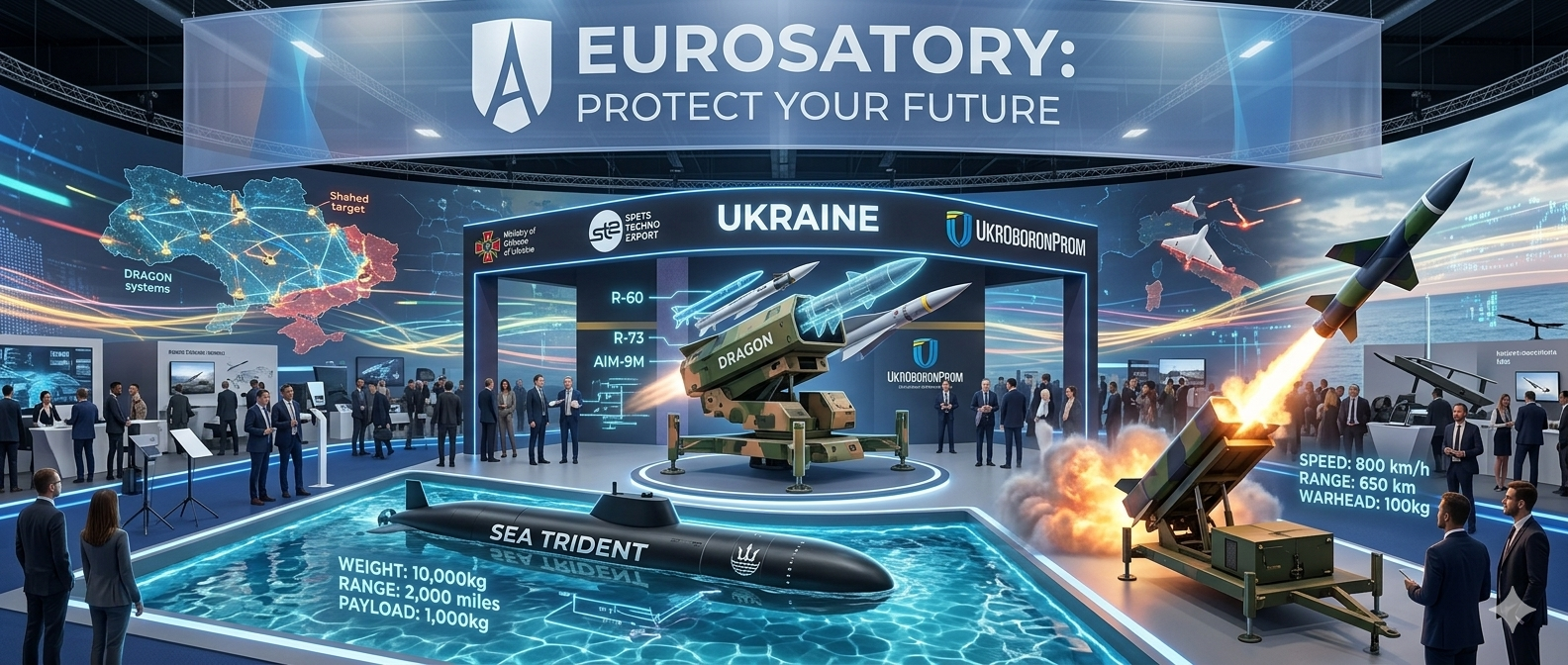
Weapon System Harmonization: The Technical Architecture of DRAGON
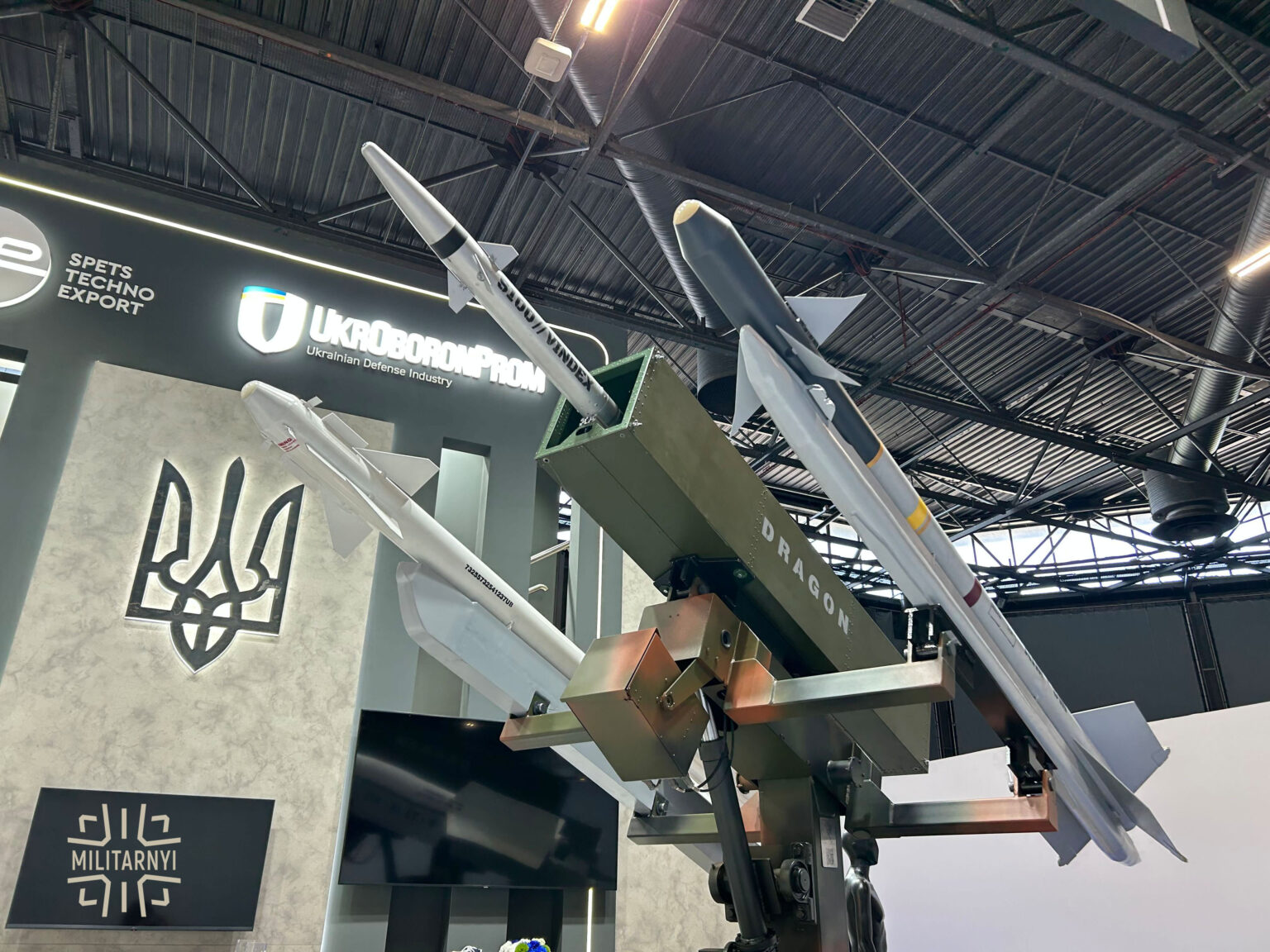
The deployment of ground-based air defense requires immediate adaptability to evolving aerial threats. As first reported from the Paris exhibition by the specialized defense outlet Militarnyi, the Center of Innovative Technologies Program has unveiled its DRAGON ground-based launcher system at the stand of Ukraine’s state enterprise Spetstechnoexport. The platform is specifically engineered to adapt existing air-to-air missile inventories into highly mobile ground-to-air defense grids.
In an operational assessment detailed by Militarnyi, it was confirmed that the DRAGON system has transitioned from a localized prototype into a codified asset. “DRAGON has already been codified and used on the battlefield for a year and a half”, a company representative stated, highlighting its deployment against Shahed-type loitering munitions. Taras Chmut, Director of the “Come Back Alive” Foundation, indicated that initial procurement for these mobile platforms began as early as 2023.
Technical Performance Metrics:
Multi-Missile Integration: The launcher features a hybrid configuration capable of firing three air-to-air missiles utilizing infrared (IR) homing heads. The system cross-matches Soviet-legacy and NATO standards, currently supporting the R-60 (effective range up to 6.5 km), the R-73 (range 10–15 km), and the American AIM-9M Sidewinder (range 8–10 km).
R&D Pipeline: Current engineering tracks are focused on integrating the advanced Western AIM-9X Sidewinder Block II alongside a proprietary Ukrainian anti-aircraft missile designated as the ST-100.
Operational Readiness: The hardware features a 15-minute deployment time. Its power management infrastructure allows for 8 hours of active operation or up to 14 days in passive standby mode.
C2 and Communications: Command and control (C2) functions are executed either via a localized physical cable link or through an integrated Starlink satellite terminal for secure remote operations.
The BALOO Support Unit: The launcher operates alongside the BALOO transport-charging trailer. Designed to sustain high operational readiness, BALOO transports 6 to 8 missiles simultaneously (configured as either 8 AIM-9 units or a split load of 4 AIM-9s and 2 R-73s). Crucially, the trailer contains 240 liters of nitrogen dedicated to cooling the missiles’ infrared seeker heads prior to launch sequence initiation.
Sub-Surface Submersion: SEA TRIDENT’s Strategic Heavy Payload Capacity
Naval engineering trends are increasingly prioritizing low-visibility, long-range autonomous sub-surface profiles over traditional surface combatants. At Eurosatory, Ukrainian developer Global Mark unveiled a significant shift in maritime hardware capabilities. As detailed in the on-site coverage by Militarnyi, the SEA TRIDENT heavy-class autonomous underwater vehicle (UUV) is engineered for fully autonomous strategic maritime operations.
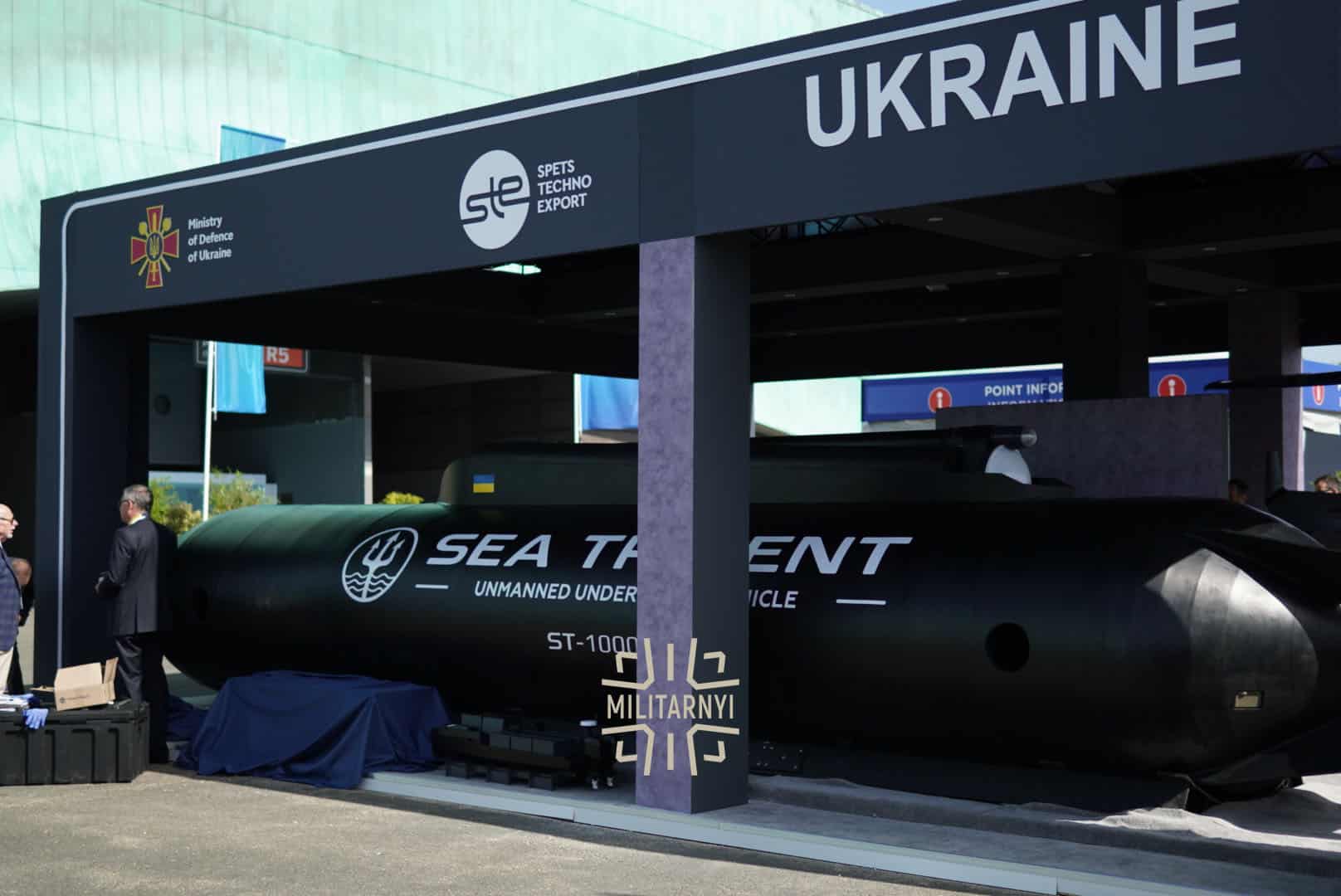
The introduction of the Sea Trident represents a notable scaling milestone for domestic naval tech, moving past the compact dimensions of earlier submersibles like the Toloka series into heavy-displacement systems.
Engineering Specifications:
Mass and Dimensions: The UUV weighs 10,000 kg and features a physical footprint of 10,000 × 2,000 × 1,500 mm.
Payload and Mission Range: It is engineered to transport a 1,000 kg payload over a maximum operational range of 2,000 miles, enabling extended strategic targeting and sub-surface logistics delivery.
Velocity and Hydrodynamics: The platform operates at a cruising speed of 6 knots (11 km/h), with a maximum sprint speed of 10 knots (18.5 km/h).
Coastal Optimization: The vehicle’s working depth is rated at 60 meters, a specification tailored for covert operations within shallow coastal zones and restricted naval choke points. Its system architecture allows it to execute kinetic strike missions, payload delivery, and the active interception and neutralization of adversarial underwater drones.
High-Velocity Tactical Depth: The UAV-290 Turbojet
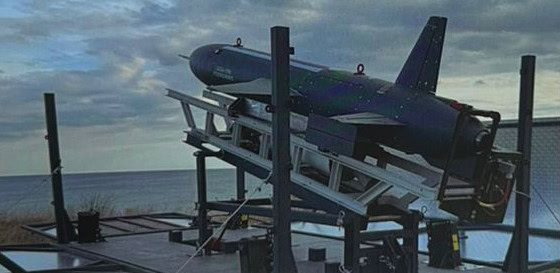
For deep penetration behind defensive networks, tactical aviation alternatives must minimize radar cross-sections and maximize velocity. To address this requirement, state defense company Ukroboronprom showcased its newest strike platform. According to data published by Militarnyi, the UAV-290 is a turbojet-powered strike drone designed for precise kinetic engagement against stationary ground targets at tactical depths.
Core Performance Architecture:
Propulsion and Airspeed: Utilizing a high-efficiency turbojet engine, the UAV-290 achieves a sustained cruising speed of 800 km/h, heavily compressing the interception and reaction window for local air defense radars.
Launch Sequence: The drone launches via a solid-fuel rocket booster from compact mobile ground platforms before transitioning to autonomous flight guided by an integrated INS+GPS navigation matrix.
Payload Efficiency: With a total launch weight of 350 kg, the airframe carries a 100 kg warhead to a maximum operational distance of 650 km.
Physical Footprint: The platform features a wingspan of 1.7 meters and an overall length of 3.5 meters, allowing for rapid relocation, storage, and deployment by minimal field crews from standard mobile vehicle platforms.
The Technical Horizon
The hardware presented at Eurosatory 2026 highlights a broader industry shift toward modular, software-defined military equipment. By decoupling the software management layers from physical munitions—as seen in the DRAGON’s hybrid missile compatibility—these developers are establishing new parameters for asset utilization. The primary question moving forward is how quickly these open-architecture platforms can be scaled into standardized production lines for international defense portfolios.