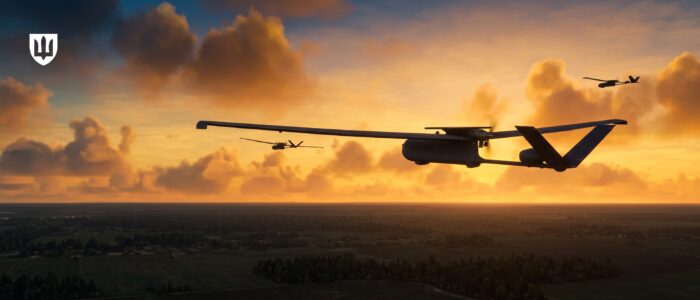
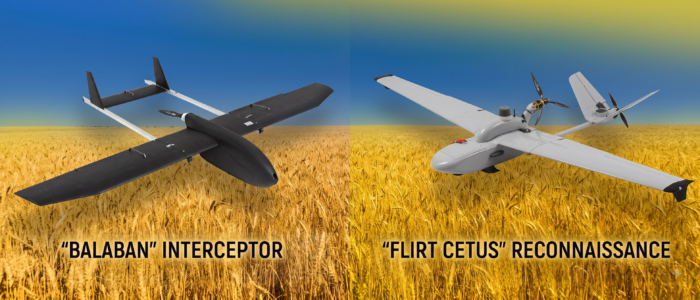
In a stunning display of technological ingenuity and audacious covert tactics, Ukraine has unleashed AI-driven drones, uniquely trained on Soviet-era museum aircraft, to strike deep within Russian territory. “Operation Pavutyna” (meaning Spiderweb or Web), a meticulously planned assault on June 1st, has reportedly inflicted crippling losses on Russia’s strategic bomber fleet, showcasing a new dimension in AI-assisted warfare and marking a fiery start to the summer amidst the ongoing conflict.

The game-changer? Artificial intelligence. These weren’t just any drones; their AI was reportedly schooled on decommissioned bombers, including exhibits from Ukraine’s Poltava Museum of Long-Range and Strategic Aviation. This unconventional “boot camp” enabled the AI to master target recognition and execute precision dive-attack algorithms with unprecedented accuracy against active Russian warplanes.
Forget long-range sorties from Ukrainian airspace. In a daring logistical feat that sounds ripped from a spy novel, the drones – a potent mix of VTOL (Vertical Take-Off and Landing) quadcopters and catapult-launched “wing-type” UAVs – were smuggled into Russia. They were then transported via trucks, ingeniously concealed within mobile wooden shelters. At the critical moment, the roofs of these unassuming structures remotely opened, unleashing the drone swarms for devastatingly sudden, close-range attacks on multiple airbases across three Russian time zones.
The Scale of “Operation Pavutyna”:
Ukrainian sources, including President Volodymyr Zelenskyy, report a staggering impact:
- 117 drones deployed in the coordinated operation.
- Over 40 aircraft destroyed or damaged, including key strategic assets like the Tu-95 “Bear” and Tu-22M3 “Backfire” bombers, crucial for Russia’s long-range strike capabilities, and even a prized A-50 airborne early warning and control (AEW&C) aircraft.
- An estimated 34% of Russia’s strategic cruise missile carriers at their primary airfields were hit.
- Targets included heavily defended airbases such as “Olenya” in the Murmansk region (nearly 1800km from Ukraine) and “Belaya” in the Irkutsk region (a jaw-dropping 4400km deep into Russia), alongside “Dyagilevo” and “Ivanovo”.
The Security Service of Ukraine (SBU) has claimed responsibility for “Operation Pavutyna”, revealing it was over eighteen months in the making. The SBU estimates the financial toll on Russia’s strategic aviation at a colossal $7 billion USD. Critically, they also confirmed the successful exfiltration of all personnel involved in the daring ground operation from Russian territory.

Evidence of the strikes has emerged through various channels. Videos posted by Russian locals allegedly show FPV drones launching from trucks parked near the targeted airfields. More concretely, satellite imagery, including Synthetic Aperture Radar (SAR) photos—which can see through clouds and darkness—published by analysts like Chris Biggers, corroborates significant damage. These images confirm at least four Tu-95s destroyed at “Olenya” and another four Tu-22M3s at “Belaya”, with visible wreckage indicating the aircraft are beyond repair. The SBU specifically stated that at “Belaya”, eight bombers were confirmed destroyed using FPV drones that maintained constant communication with operators to precisely target fuel tanks, causing massive infernos.
Strategic Fallout:
The loss of these aircraft, especially the Tu-95s and Tu-22M3s which are no longer in active production, delivers a severe blow to the Russian Aerospace Forces. This not only degrades their capacity for launching missile salvos against Ukraine but also potentially dents Russia’s air-based nuclear deterrent posture. The operation may force Russia to relocate its remaining strategic bombers to even more distant airfields, complicating their operations further.
The SBU concluded their announcement with a defiant message, quoting Ukrainian poet Lina Kostenko: “And you thought Ukraine was just simple? Ukraine is super. Ukraine is exclusive. All the rollers of history have passed over it. All kinds of trials have been worked out on it. It is hardened to the highest degree. In the conditions of the modern world, it is priceless.” They vowed to continue their efforts: “We are doing everything to drive the enemy from our native land! We will beat him on sea, in the air, and on land. And if necessary – we will get them from under the ground”.
“Operation Pavutyna” signals a bold evolution in drone warfare, where sophisticated AI, audacious logistics, and unconventional training converge to achieve strategic effects far beyond the traditional battlefield.
Sources: DEV.ua; MILITARNYI; SBU.