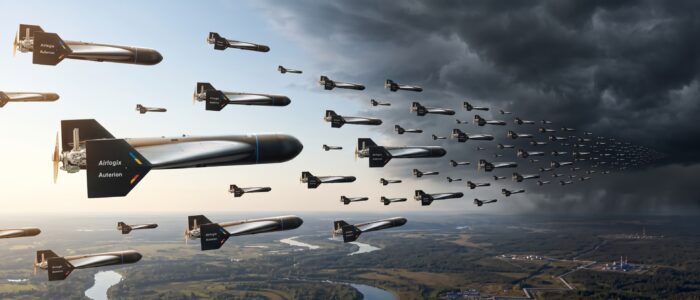
Imagine a steel wolfpack on treads. A silent, robotic hunter that stalks the grey zones of the battlefield, creeping to the very edge of enemy territory. It’s not there to fight itself. It’s there to do something far more terrifying: unleash a swarm of explosive FPV drones from its back. This isn’t a scene from a sci-fi blockbuster. This is Karakurt, the latest battlefield predator engineered by the Ukrainian innovators at IRV, unveiled at the recent Iron Demo 2025. It’s a ground-based drone “mothership”, and it’s fundamentally changing the rules of tactical engagement.

Karakurt UGV. Photo credits: Mezha.Media
The Decisive Shift: Attack from Anywhere
The core idea is brilliantly simple yet profoundly effective: separate the pilot from the point of attack. Operators can guide the tracked, rugged Karakurt UGV up to four kilometers into a forward position and simply wait. This transforms the platform into a persistent, lurking threat, ready to spring a trap from an unexpected direction, all while its human operator remains safely behind the lines. The element of surprise is absolute.
The Devastating One-Two Punch
Here’s where the Karakurt truly shows its teeth. It can launch two drones at once, both controlled by a single pilot. In a stunning display of integrated tech, the second drone automatically follows the first. When the lead drone dives on its target, the wingman autonomously zeroes in on the same impact point.
This isn’t just about hitting the same spot twice. Chief Engineer Andriy Malyshev calls this “tactical spread”. The 30-40 meter separation between the two drones is a feature, not a bug. “It allows us to hit two different vehicles in a convoy simultaneously”, he notes. Against sprawling targets like supply depots or railway lines, this coordinated strike capability is nothing short of revolutionary.
From Kilometers to the Horizon
The Karakurt’s reach is staggering. Its drones, boosted by a powerful relay, can strike targets 30 kilometers away. Add the UGV’s own forward deployment range, and you get a kill radius of over 34 kilometers. IRV’s teams have already pushed a drone with a 2.6 kg warhead out to 32.5 km. And they’re just getting started.
The future is even more ambitious. The platform is being prepped for larger 15-inch drones to carry heavier payloads, and the ultimate goal is already in sight: true, AI-driven swarm functionality. This isn’t just a drone launcher; it’s an evolutionary platform.
Built with the harsh realities of combat in mind, the Karakurt is a testament to agile, battle-hardened design. IRV works directly with military units, constantly iterating and upgrading, choosing speed and effectiveness over slow-moving bureaucracy. It’s innovation at the speed of war.
And the final, stunning detail? This entire force-multiplying system—the robotic carrier, a full complement of 12 drones, and the software—comes in at around $50,000. It’s a clear signal that the future of warfare will be defined not just by power, but by smart, scalable, and lethal innovation.
Source: Mezha.Media