Standard post-event press releases excel at cataloging superficial metrics – mass participation, country counts, and high-level networking. However, evaluating a defense technology ecosystem under active operational stress requires moving past immediate updates to conduct a rigorous, data-driven analysis. Taking a necessary analytical pause allows us to look beyond the initial headlines of the inaugural Kyiv Defense Tech Week (KDTW), held from April 27 to May 3, 2026, and examine the structural integration of its core components: academia, institutional capital, and frontline testing.

The numbers themselves are substantial: KDTW brought together more than 1,200 participants from over 30 countries. Yet, the true value of the week lies in how the organizers – Invest in Bravery and the European Defense Tech Hub (EDTH) – successfully aligned decentralized wartime innovations with scalable, cross-border corporate frameworks.
The Talent Pipeline: Institutionalizing Academic R&D
A critical bottleneck in global deep tech is human capital. While venture capital can be deployed rapidly, engineering talent trained specifically for dual-use and defense applications requires long-term infrastructure. KDTW addresses this bottleneck at the foundational level by linking academic research directly with industry needs.
The week opened at the Kyiv School of Economics (KSE) with the University Defense Tech Forum, supported by the Ministry of Education and Science of Ukraine and Brave1. A notable operational milestone highlighted during the forum is KSE’s newly licensed microelectronics curriculum, structured to build domestic self-sufficiency in hardware and semiconductor applications for modern defense systems.

The focus is shifting from isolated student projects to scalable public-private R&D partnerships, centered around centers of excellence and competitive funding infrastructure.
“High-quality education is essential for the development of defense tech, as it shapes the specialists capable of creating technological solutions to today’s security challenges”, stated Olena, Director of Development at Skyfall. “Today, education must be closely aligned with real industry needs: students should work with practical cases, engage with the military and business, and understand how their developments scale into real-world products”.
This integration serves a dual purpose. For domestic startups, it secures a continuous pipeline of specialized engineers. For international defense primes, such as Finland’s Saab, it creates an integrated framework for collaborative applied research. Petteri Alinikula, CTO of Saab Finland, emphasized that strategic university-industry partnerships and industrial PhD programs are now the standard mechanisms for rapidly absorbing cutting-edge academic insights into serial defense manufacturing.
Capital Integration and the Global Scale Model
At the Invest in Bravery Summit, the ecosystem’s focus shifted from talent incubation to institutional capital and international scaling. For Western venture capitalists, entering the Ukrainian defense tech sector is increasingly seen not as an act of geopolitical solidarity, but as a strategic entry point into highly optimized, combat-tested technology stacks.
“Invest in Bravery is not just a deal flow. It is a bridge between Ukraine and Europe. When you invest here, you are not just backing a startup; you are integrating into a system forged by the ultimate stress test. Every partnership makes the democratic world stronger, more resilient, and harder to break – protecting freedom, sovereignty, and the rule of law through the most advanced technologies ever built”, said Lola Onipko, Co-Founder and Executive Director of Invest in Bravery.
To accelerate this integration, regulatory barriers are being systematically dismantled. Iryna Zabolotna, COO of Brave1, detailed the state’s role in creating automated procurement marketplaces, stripping away legacy bureaucratic regulations, and providing direct grant infrastructure to compress development cycles.

The commercial viability of this approach is reflected in mature scale-ups actively executing cross-border joint ventures:
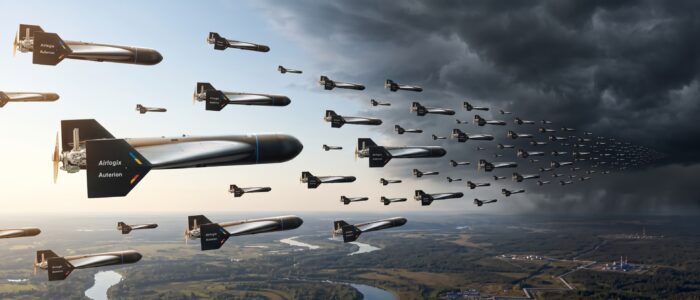
Airlogix: Driven by continuous operator feedback, the company optimized its reconnaissance platform to achieve a 100 km tactical range and a four-hour flight time. Airlogix’s COO, Dmytro Piatryn, confirmed a joint venture with Auterion involving investments of hundreds of millions of euros, alongside plans to establish six new production facilities in NATO countries by the end of 2026.
TAF Industries: Transitioning from its charitable roots as the “Khvylia’91” foundation, the company consolidated multiple specialized teams into an integrated industrial ecosystem. CEO Volodymyr Zinovskyi emphasized that their corporate strategy focuses on empowering agile engineering teams with centralized manufacturing resources to ensure economic sustainability and rapid frontline impact.
Editorial Insight: Connecting the Pillars of Defense Innovation
Evaluating the strategic alignment across the entire week, Nataly Veremeeva, Director of TechUkraine, emphasized the step-by-step connection established between academic research, commercial investment, and physical field deployment.
“Defence Tech Week in Kyiv at April 27 – May 3 was a massive set of events, dedicated to Defence Industry in Ukraine”, Veremeeva stated. “It all started with the event, focused on Academia and innovations in it, held at Kyiv School of Economics, where the questions of working with local and international talents, their retention and development were raised and discussed”.
Veremeeva noted that international integration is becoming deeply structural, driven by expanding EU funding mechanisms. This was underscored by Martin Joesaar, Head of the EU Defense Innovation Office in Kyiv, who outlined parallel funding tracks open to EU-Ukraine consortia within the next seven-year budget cycle.
The practical validation of the week culminated at Kyiv Aviation University during the 48-hour deep-tech hackathon, where over 25 international and domestic teams engineered software and hardware configurations adjacent to legacy aircraft models.
“Impressive was the number of international teams, taking part in the hackathon”, Veremeeva observed. “One phrase really stuck me – one Belgium team said that their Ask is not money, but access to test their solutions on the battlefield”.

This specific demand highlights the primary asset of the Ukrainian defense technology sector: providing immediate, real-world product validation in denied environments.
“Over this week my own impression is this one: in Ukraine the future of Defense industry is shaped, tested and perfected”, Veremeeva concluded. “If you are not here, working with Ukrainians, you are most probably missing out. We have not chosen nor this war, nor this huge need to direct vast majority of our nation’s creative powers to Defense, but this is our key to defending our future, so we create history. Join us to do it together”.
Engineering Outputs: The EDTH Hackathon Deliverables
The closing segment of KDTW focused on hard engineering deliverables, specifically targeting passive detection, computer vision tracking, and electronic warfare navigation. A total of 310 participants from 19 countries spent 48 hours developing field-ready prototypes.

Key Technical Milestones:
Radar Simulation Systems: Team RadSim secured first place at the hackathon for developing a software-based radar simulator that trains interceptor operators without relying on scarce physical radar hardware. This mirrors a parallel academic achievement by the Glushkov Institute of Cybernetics, which took second place at the University Forum pitch session with a combat radar interface training software.
Radio-Frequency Intelligence: Team Radio Pepsi earned second place and a special award from industry partners for creating an airborne system designed to detect and locate unmanned systems via RF-signal geolocation.
Thermal Tracking Computer Vision: Team Eagle Eye secured third place, delivering a real-time UAV detection and tracking solution based entirely on thermal video streams.
Advanced Academic Hardware: At the University Forum pitch session, the University of Liverpool claimed first place with a UAV detection and identification system utilizing mmWave MIMO radar technology.
To ensure these engineering milestones translate into long-term market opportunities, the European Defense Tech Hub signed a Memorandum of Understanding (MoU) with the European Defence Innovation Forum (EDIF). This agreement structurally links the Ukrainian defense tech ecosystem with Netherlands Defense Week in November 2026, establishing a standardized, cross-border format for multi-day defense innovation and hackathons.
The Analytical Outlook
Kyiv Defense Tech Week 2026 demonstrated that the Ukrainian defense sector has moved past fragmented, ad-hoc solutions toward mature, venture-backed industrial structures. Startups are proving capable of securing major international partnerships and scaling production inside NATO member states.
As the EU prepares to deploy substantial defense innovation funds through the next budget cycle, an analytical question remains for Western institutional funds and legacy primes:
Will Western defense procurement adapt quickly enough to integrate these decentralized, battle-tested innovation networks, or will traditional risk-management frameworks isolate institutional capital from the world’s fastest defense technology pipeline?