STETMAN inks licensing agreement with Requtech, paving the way for onshore production of a crucial Starlink alternative.
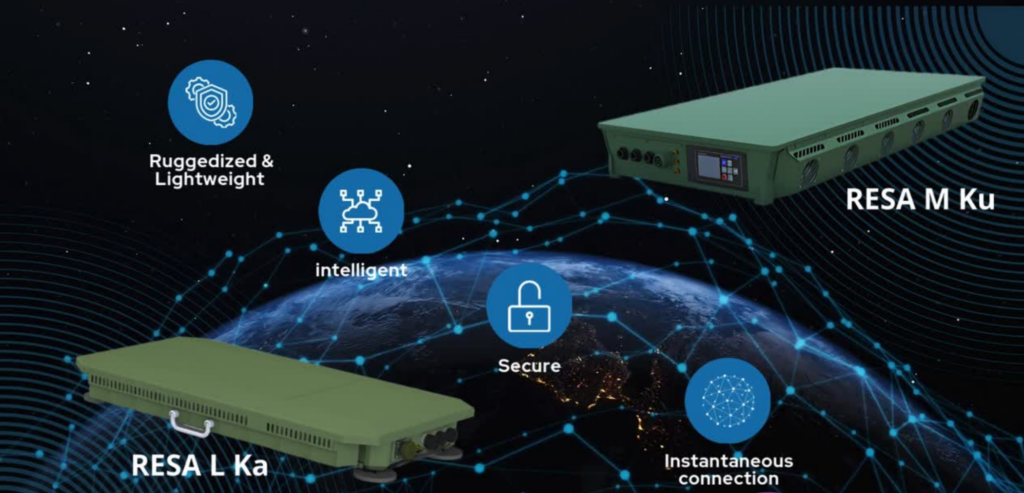
In a strategic move underscoring the critical need for resilient communications infrastructure, Ukrainian tech firm STETMAN has signed a landmark agreement with Sweden’s Requtech. The deal grants STETMAN the license to mass-produce Requtech’s advanced satellite communication terminals domestically, offering a vital alternative and backup to widely used Starlink services.
In an era defined by geopolitical uncertainty, the reliance on any single provider for critical infrastructure like satellite internet presents inherent risks. This partnership signals Ukraine’s proactive approach to diversifying its connectivity options, particularly for security and defense sectors.
Dmytro Stetsenko, head of STETMAN, confirmed the deal involves Requtech providing the technical documentation and rights for STETMAN to manufacture terminals based on their established ‘Resa’ platform. “We will adapt it to our specific needs”, Stetsenko explained, “incorporating our own design elements, hardening features, and components we’ve successfully deployed in our STARMOD systems [modified Starlink units] for Ukraine’s Security and Defense Forces over the last 2.5 years”.
A Complementary Force, Not Just a Replacement
STETMAN is no stranger to the satellite communications landscape. The company already develops, supplies, and services a range of military-grade systems (STARMOD, UASAT) and works with commercial platforms like Starlink, Intellian, Kymeta, and Resa. They already provide access to alternatives across different constellations:
- LEO (Low Earth Orbit): Starlink/SpaceX (via Starlink, STARMOD) and Eutelsat/OneWeb (via Intellian, Kymeta, Resa, UASAT)
- GEO (Geostationary Orbit): Intelsat (via Kymeta, Resa, UASAT) and UASAT (via UASAT)
“So, even today, we have a working LEO alternative to Starlink via OneWeb, plus GEO options with Intelsat and UASAT”, Stetsenko notes.
The Requtech Resa terminals licensed for Ukrainian production connect to the Eutelsat/OneWeb LEO constellation. While functionally similar to Starlink, their current data rates (around 5 Mbps up / 50 Mbps down) are lower than Starlink’s typical performance (often cited around 20 Mbps up / 200 Mbps down). Stetsenko clarifies this isn’t a terminal limitation but reflects the OneWeb constellation’s current size – roughly ten times smaller than Starlink’s. “However, for security-related tasks, this throughput is entirely sufficient”, he emphasizes.
Accelerating Domestic Production
The licensing model offers significant advantages. STETMAN avoids the lengthy and capital-intensive process of ground-up development. They aim to launch production within six months, targeting a capacity of 2,000 to 10,000 terminals monthly, paying Requtech a per-unit license fee. “Crucially, the terminal is already certified, saving us an additional 1-2 years”, Stetsenko highlights.
This move could also act as a catalyst, potentially encouraging Eutelsat to accelerate the expansion of its OneWeb constellation to meet anticipated demand from Ukraine. Stetsenko even mentioned early interest from investment groups regarding financing satellite capacity specifically for Ukraine’s needs.
To achieve these ambitious production goals, STETMAN plans a significant hiring push, seeking 80 to 140 specialists including electronic engineers, designers, software developers (from firmware to application stacks), project managers, assemblers, and quality assurance engineers.
Redundancy is Key
When asked if this development means Ukraine can ditch Elon Musk’s Starlink, Stetsenko’s answer is pragmatic. “Yes, viable alternatives exist now, even before we start licensed production, we can supply terminals for the OneWeb network from Intellian, Kymeta, and Requtech”.
However, he stresses, “I don’t believe abandoning Starlink is necessary or beneficial. It’s far better to have robust backup systems and secure funding to utilize both networks”.
While current alternatives tend to be more expensive than Starlink, Stetsenko remains optimistic: “That situation may change over time”.
This partnership represents more than just a manufacturing deal; it’s a calculated step towards technological self-reliance and operational resilience for Ukraine in a strategically vital sector, ensuring connectivity remains robust, diversified, and less dependent on any single foreign entity during critical times.
Source: DEV.ua