The tides of naval warfare are unmistakably turning in the Black Sea, and Ukraine’s Main Intelligence Directorate (GUR) is once again at the helm of innovation. In a recent closed-door presentation, GUR pulled back the curtain on its latest maritime asset, the Magura W6P reconnaissance drone. This isn’t just another iteration; it’s a strategic pivot, emphasizing intelligence gathering and patrol capabilities, signaling a new chapter in Ukraine’s increasingly sophisticated drone doctrine.

The Magura W6P, a sibling to the now-infamous V5 kamikaze drones, has been re-engineered from the keel up for a different mission set. While its exhibition model cheekily retained vestigial contact fuzes in the nose, developers were clear: the W6P is designed for reconnaissance, maritime patrol, and cargo delivery, not direct attack.
Key Upgrades & Design Philosophy:
At first glance, the W6P’s most striking feature is its trimaran design. This triple-hulled configuration (a main hull flanked by two outriggers) dramatically enhances stability on choppy waters and minimizes roll, crucial for a platform laden with sensitive optics and potentially other delicate equipment.
- Expanded Platform: Despite a comparable weight to the V5 (1900 kg fully loaded), the trimaran structure allows for a wider, 2-meter deck. This prime real estate can be kitted out with a variety of mission-specific modules, including potential launch containers for FPV drones, vastly expanding its operational versatility.
- Power & Endurance: Departing from its electric-powered kin, the W6P is propelled by a robust 200hp Suzuki DF200 gasoline outboard motor. While this means a slightly lower top speed (36 knots max, 21 knots cruising) compared to the V5’s 50 knots, it crucially extends its operational reach from 800 km to an impressive 1000 km.
- Payload Capacity: The W6P can carry a substantial 400 kg of useful payload, dedicated to its intelligence-gathering suite.
- Advanced Sensors: For its “eye in the sea” role, the drone is equipped with a gyrostabilized optical station featuring both daylight and thermal imaging channels. This is augmented by a Furuno onboard marine radar system, visually similar to the DRS4D series, capable of detecting large vessels like tankers up to 60 km away and smaller craft at around 7 km (though actual performance may vary given the antenna’s low placement). The potential for integrating other sensors, like the acoustic monitoring system seen on the newer Magura V7, remains open.
- Resilient Comms: Like other Magura family drones, the W6P utilizes multi-channel satellite communication, bolstering its resistance to enemy electronic warfare.
- Autonomous Capabilities: An integrated automatic target tracking system is touted, hinting at advanced autonomous patrolling functions crucial for covering vast maritime areas.
This development isn’t happening in a vacuum. Commander “Thirteenth,” the leader of the renowned GUR naval drone unit “Group 13,” provided candid insights into the evolving Black Sea dynamics. He acknowledged Russia’s nascent efforts to form its own specialized naval drone regiments and even develop drone carriers for FPVs to counter Ukrainian assets. “They are working stubbornly”, he admitted, “but as of today, we can’t say they have any significant successes. Their drone regiments are mostly on paper”.
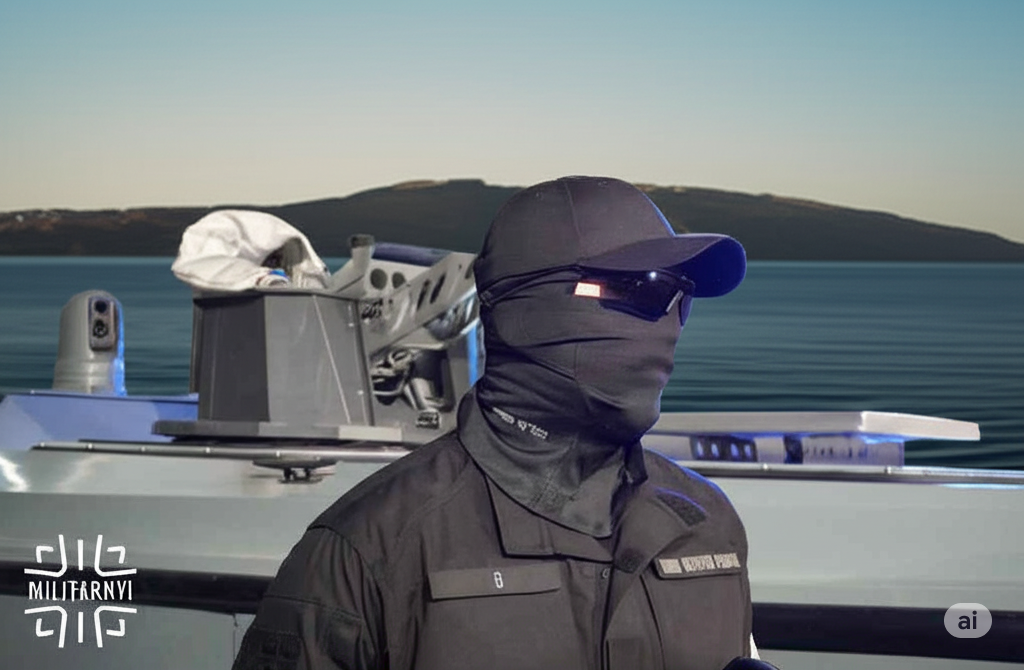
The commander attributes Ukraine’s current drone dominance – claiming “control of more than 90% of the Black Sea” – to the relentless pressure these unmanned systems have exerted. This has forced the Russian fleet into a defensive posture, rarely venturing more than 20 miles from their easternmost bases like Novorossiysk, even 800+ kilometers away from Ukrainian-controlled territory.
“The enemy is afraid of being hit”, stated “Thirteenth”. This success, however, presents new challenges: a scarcity of high-value Russian Navy targets. “We are now working on all targets”, he explained, indicating a shift towards engaging smaller patrol boats.
The GUR presentation also underscored Ukraine’s commitment to staying ahead in this technological arms race. Alongside the W6P, new offensive variants of the Magura V7 were showcased, including one armed with AIM-9 air-to-air missiles (a clear response to Russian naval aviation, which “Thirteenth” noted became less of a threat after a helicopter was shot down on December 31st) and another equipped with a remote-controlled machine gun turret.
“Thirteenth” emphasized a focused approach to development: “There are many ideas, the main thing is not to spread ourselves too thin. It’s important to concentrate on certain main tasks, set priorities”. He cited an example where they chose to focus on missile armament, leaving other successful projects like minelaying drones to units like the SSU (Secutity Service of Ukraine) who had already proven effective in that domain.
The Magura W6P, therefore, isn’t just a new piece of hardware. It’s a component of a broader, adaptive strategy. As Ukraine aims to secure its maritime territories, dedicated reconnaissance platforms like the W6P will be pivotal in providing the intelligence needed for its increasingly potent and diverse fleet of surface drones to operate effectively, ensuring that the Black Sea remains a hazardous zone for any hostile naval presence. The game of cat and mouse on the waves has a new, far-seeing player.
Source: MILITARNYI
Want to dive deeper into the evolution of Ukraine’s formidable Magura drones? Catch up on our earlier reports chronicling their development and impact:
-
Read about how the Magura V5 came to dominate the Black Sea.
-
Discover the tactics involving Magura V5s, decoys, and swarm capabilities.
-
Explore the broader evolution of Ukraine’s drone armada towards modular, multi-mission USVs.