Writing from Kyiv, where editorial operations are currently sustained by backup power systems, the connection between air defense technology and daily existence requires no elaboration. The ongoing strain on the energy grid has accelerated the demand for cost-effective, scalable solutions to counter aerial threats.

In response to the economic asymmetry of using high-cost missiles against low-cost loitering munitions, Ukraine is currently deploying a multi-layered defense strategy. Over the past month, three distinct systems—involving French, British, and Ukrainian cooperation—have moved from development to operational validation.
Here is an overview of how these technologies are being integrated to form a cohesive defensive tier for critical infrastructure.
Layer 1: Autonomous Area Denial
The System: Atreyd “Wall of Drones”
Origin: France/Ukraine
The first component addresses the need for static defense around high-value assets. Developed by the French startup Atreyd, this system is currently being deployed to protect Ukraine’s critical infrastructure.
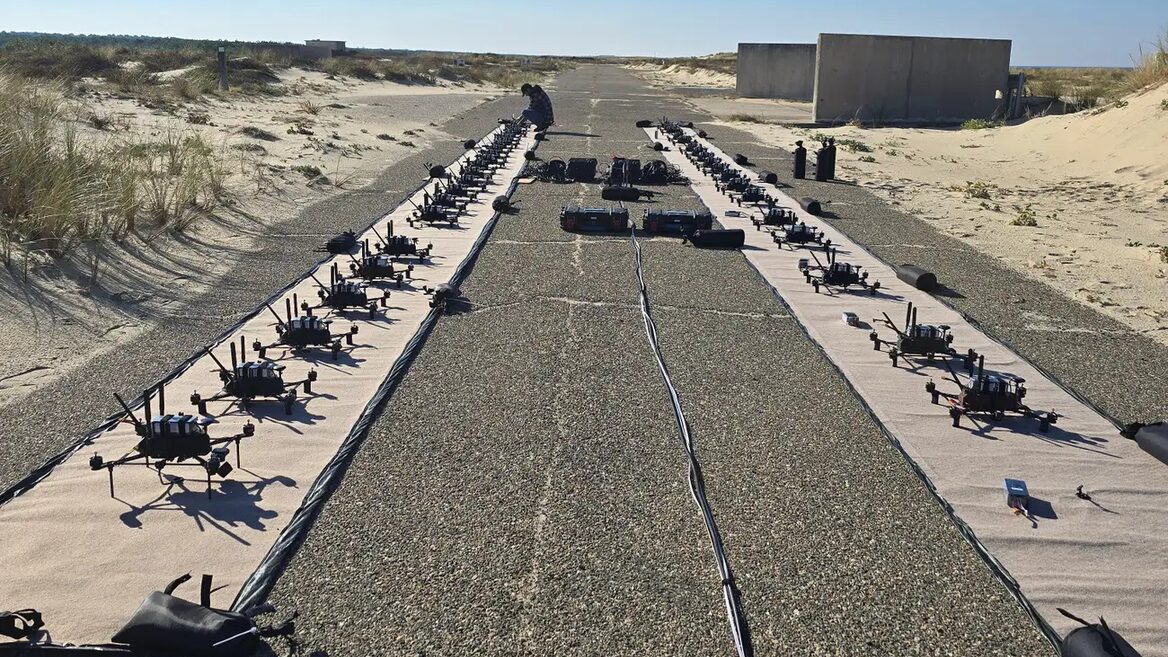
Unlike traditional interceptors that hunt targets over long distances, the system acts as a final defensive perimeter. Upon radar detection of an incoming threat—specifically Shahed-type drones or guided aerial bombs (KABs)—the system automatically launches a swarm of FPV drones.
Technical Specifics:
-
Autonomy: The system utilizes AI to calculate the optimal interception trajectory, arranging the swarm into a “curtain” to detonate near the target.
-
Scalability: A single operator can monitor up to 100 drones, significantly reducing the manpower requirement.
-
Resilience: The platform operates using pre-loaded 3D terrain maps, allowing it to function effectively in environments with heavy GPS jamming.
The developer claims a high success rate during testing, positioning the system as a cost-efficient solution for protecting specific energy facilities.
Layer 2: Mass Production and Night Operations
The System: Octopus
Origin: Ukraine/United Kingdom
While Atreyd focuses on point defense, the Octopus project addresses the issue of volume. The Ministry of Defense of Ukraine has confirmed that this interceptor has entered serial production, marking a shift from prototyping to industrial scaling.
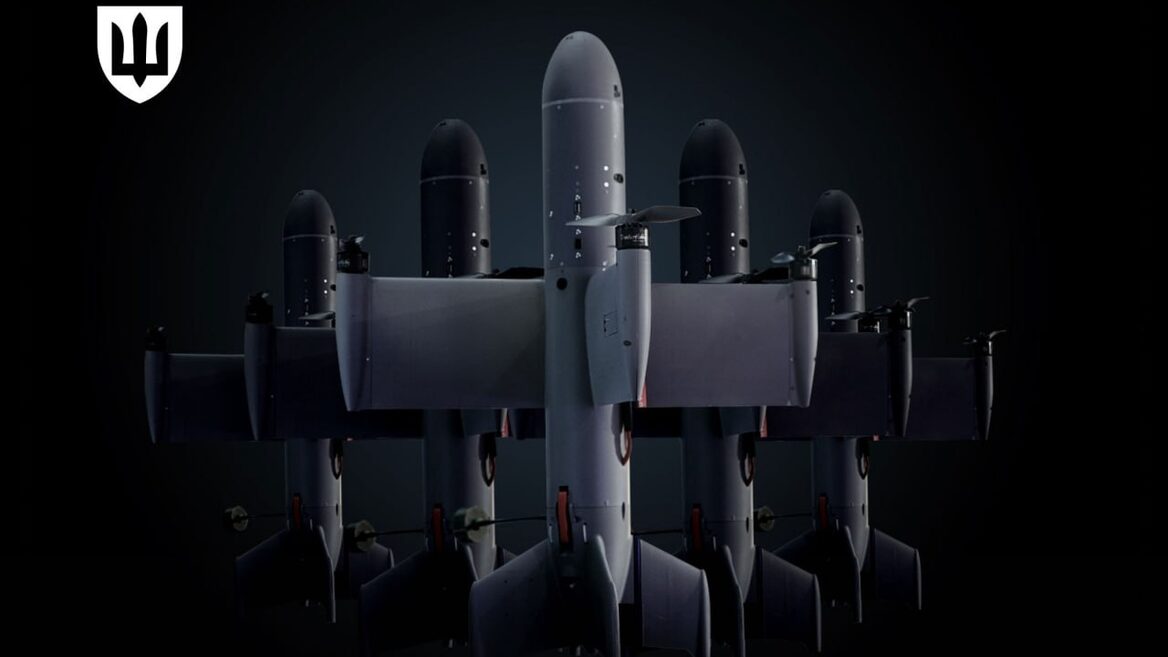
Developed in collaboration with British partners, the Octopus is engineered specifically for night operations and low-altitude interception—tactics frequently employed by Russian forces to evade radar detection.
Key Metrics:
-
Production Capabilities: According to Luke Pollard, UK Minister for Defence Procurement, the manufacturing target is approximately 2,000 units per month.
-
Operational Status: Prime Minister Denys Shmyhal noted that the system has been validated in combat conditions and remains effective under electronic warfare (EW) suppression.
This volume of production suggests a strategy of saturation, ensuring enough interceptors are available to counter swarm attacks without depleting stocks of advanced anti-aircraft missiles.
Layer 3: High-Speed Interception
The System: Alta Ares / Tenebris Turbojet Platform
Origin: France/Ukraine
The third element was demonstrated yesterday to President Zelenskyy and President Macron at a French military base, introducing turbojet propulsion to the drone defense ecosystem.
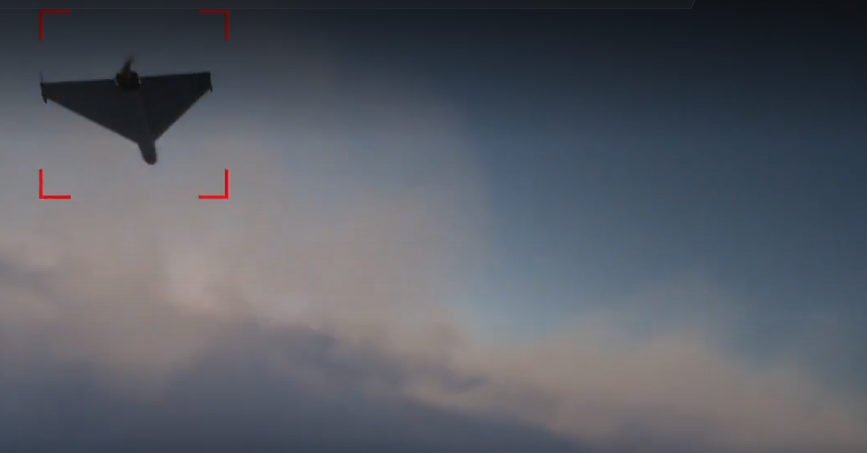
A partnership between the French integrator Alta Ares and the Ukrainian operator Tenebris, this system targets faster, more maneuverable threats that propeller-driven drones cannot intercept.
Technical Specifics:
-
Propulsion: The switch to turbojet engines extends the interception range to 30 km and significantly increases speed.
-
Guidance: The “Safe Protection Dome” utilizes AI for terminal guidance, which reportedly improves interception efficiency by 35%.
-
Localization: The system currently utilizes 85% European components, mitigating supply chain risks associated with non-European battery manufacturers.
Following NATO validation on October 20, 2025, the system was deployed in Ukraine ten days later. Plans are now underway to localize full production in France by Q1 2026, establishing a bi-national defense cluster.
Summary
The simultaneous deployment of these three systems indicates a strategic pivot in air defense. By combining the static, autonomous “wall” (Atreyd), the mass-produced volume of the Octopus, and the high-speed precision of the Alta Ares jet platform, Ukraine is constructing a diversified shield.
This tiered approach aims to neutralize the economic advantage of cheap attack drones, ensuring that the defense of critical infrastructure remains sustainable through the winter and beyond.