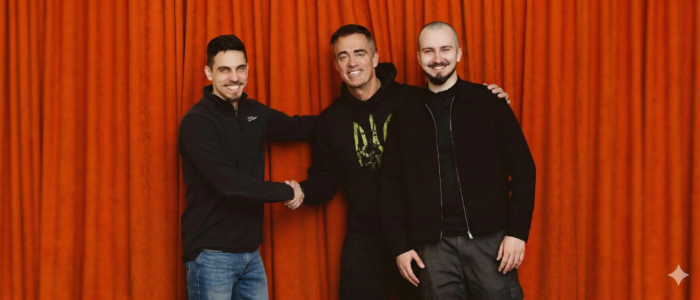
By 2025, ground drones (UGVs) have evolved from niche assets into essential logistics and evacuation tools for the Defense Forces. However, frontline experience exposes a major vulnerability: signal loss. Expensive machines are frequently lost in tree lines or urban ruins due to connection failures. The new Ukrainian startup Lanka Robotics has emerged to solve this specific problem, seeking $1 million in investment to scale a solution that allows drones to navigate without an operator.
The Pivot: From Hardware to “Brains”
Lanka Robotics is not a newcomer to the field. The team has been working in the UGV sector for about three years, with co-founders who engineered robotic systems even before the full-scale invasion.
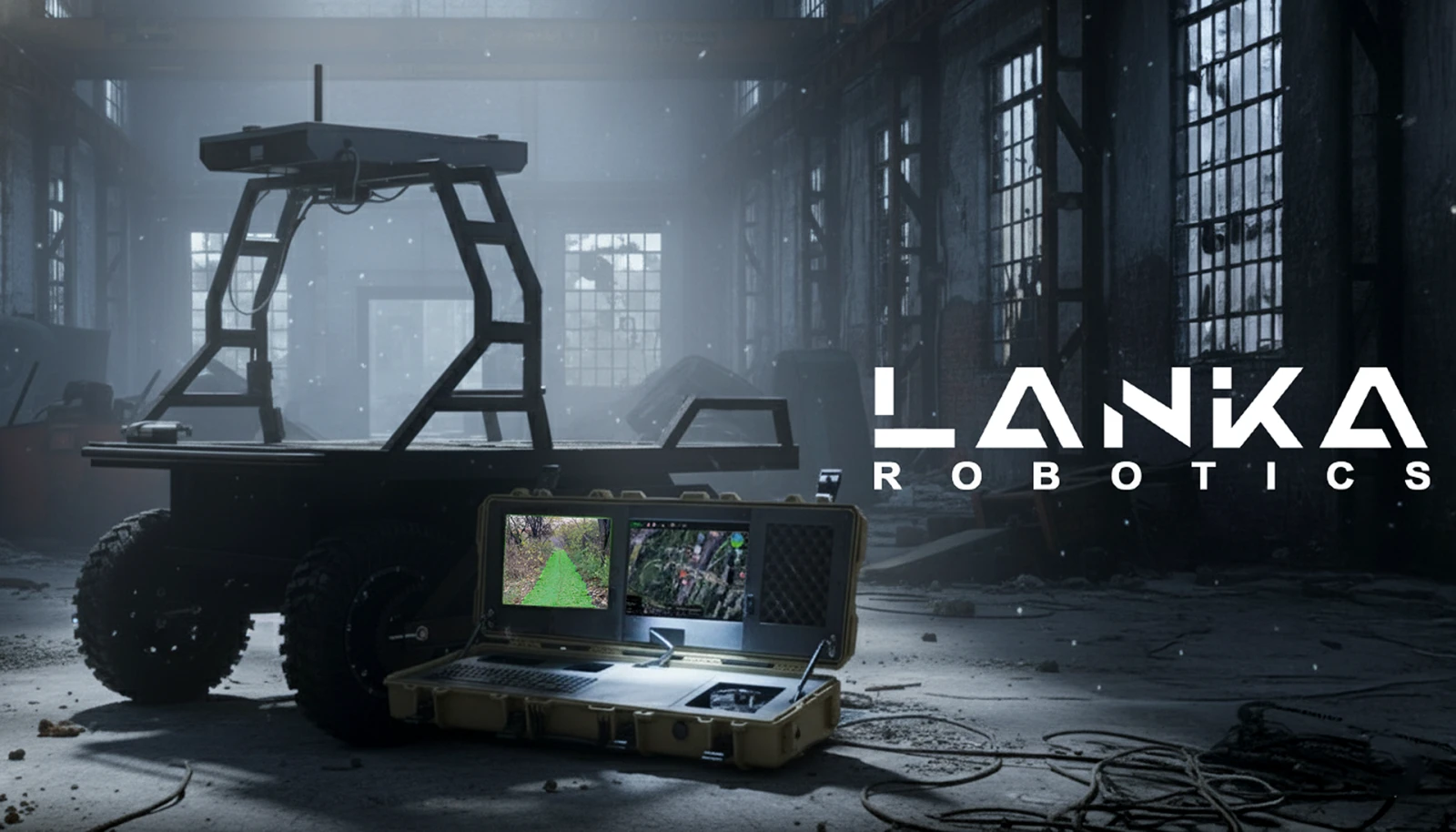
Their previous development, the “Mamut” UGV, is a logistics drone with a 200 kg payload capacity. While “Mamut” is currently undergoing proving ground tests and is available via the Brave1 marketplace, it primarily serves as a testbed for the company’s true flagship product: autonomy software.
The team made a strategic decision to focus on software integration rather than competing in the crowded hardware market.
“Despite the fact that we have our own UGV, our strategy is aimed at the fastest possible dissemination of the technology”, says Sofia, co-founder of Lanka Robotics. “Instead of selling ready-made robots, we are working on a software module that will be integrated into UGVs of other manufacturers who lack this intelligent software”.
Visual Navigation and “Last-Mile” Autonomy
The core of Lanka Robotics’ innovation addresses the “radio silence” nightmare. When Starlink fails or GPS is jammed, a drone usually stops or gets lost. Lanka’s engineers utilize computer vision to keep the machine moving.
“Currently, our system allows the UGV to drive 100 meters without connection, where there is no GPS, since, for example, Starlink loses connection in tree lines or between high buildings”, Sofia explains. “There can be a connection delay of 1-2 seconds, and this can already end in the loss of the drone. Our solution is based on computer vision technology and visual navigation”.
This module enables the UGV to analyze the terrain via camera and make trajectory decisions without operator input. It can stay on course or return to the last point of stable connection.
“One can say this is ‘last-mile driving’ – this is a task that the military understands”, Sofia adds.
Future Capabilities and R&D
The startup is looking beyond simple navigation. Future features include retracing successful routes, obstacle recognition and avoidance, and automatic mine detection. The team is also in the R&D phase for an ambitious AI-based system capable of defending against hostile FPV drones and turrets.
The technology is moving fast from the lab to the field.
“The system has already been successfully tested on the training ground with ‘Mamut’, and a partnership has been established with manufacturers of two other UGVs. These days, the system is being handed over for testing to military units”, notes Sofia.
Investment and Market Advantage
Registered in the summer of 2025, Lanka Robotics has already gained traction, receiving positive feedback at the Darkstar bootcamp in November. To scale the team and accelerate R&D, the company is seeking $1 million in investment. They are also awaiting approval for a grant under the Brave1 general track.
The startup sees its competitive edge in cost-effectiveness compared to Western alternatives.
“The main advantage of Ukrainian development is accessibility. Foreign companies offer closed autonomy ecosystems, the cost of which reaches $100,000-$200,000. This makes their mass testing and implementation at the front practically impossible”, says Sofia. “In contrast, the domestic system, even complete with a UGV, will cost significantly less”.
Lanka Robotics is betting that the coming year will define the era of autonomy for ground robotic complexes, and they aim to lead this technological shift by integrating affordable, smart solutions into the Ukrainian defense ecosystem.
Source: Defender Media