For nearly four years, Ukraine has served as the world’s most grueling testing ground for defense technology. The full-scale invasion by a nuclear power forced a transformation of the nation’s industrial base. At the World Defense Show 2026 in Riyadh, Ukrainian companies demonstrated that they have moved beyond improvisation. They are now offering industrialized, battle-hardened ecosystems that are reshaping modern combat doctrine.
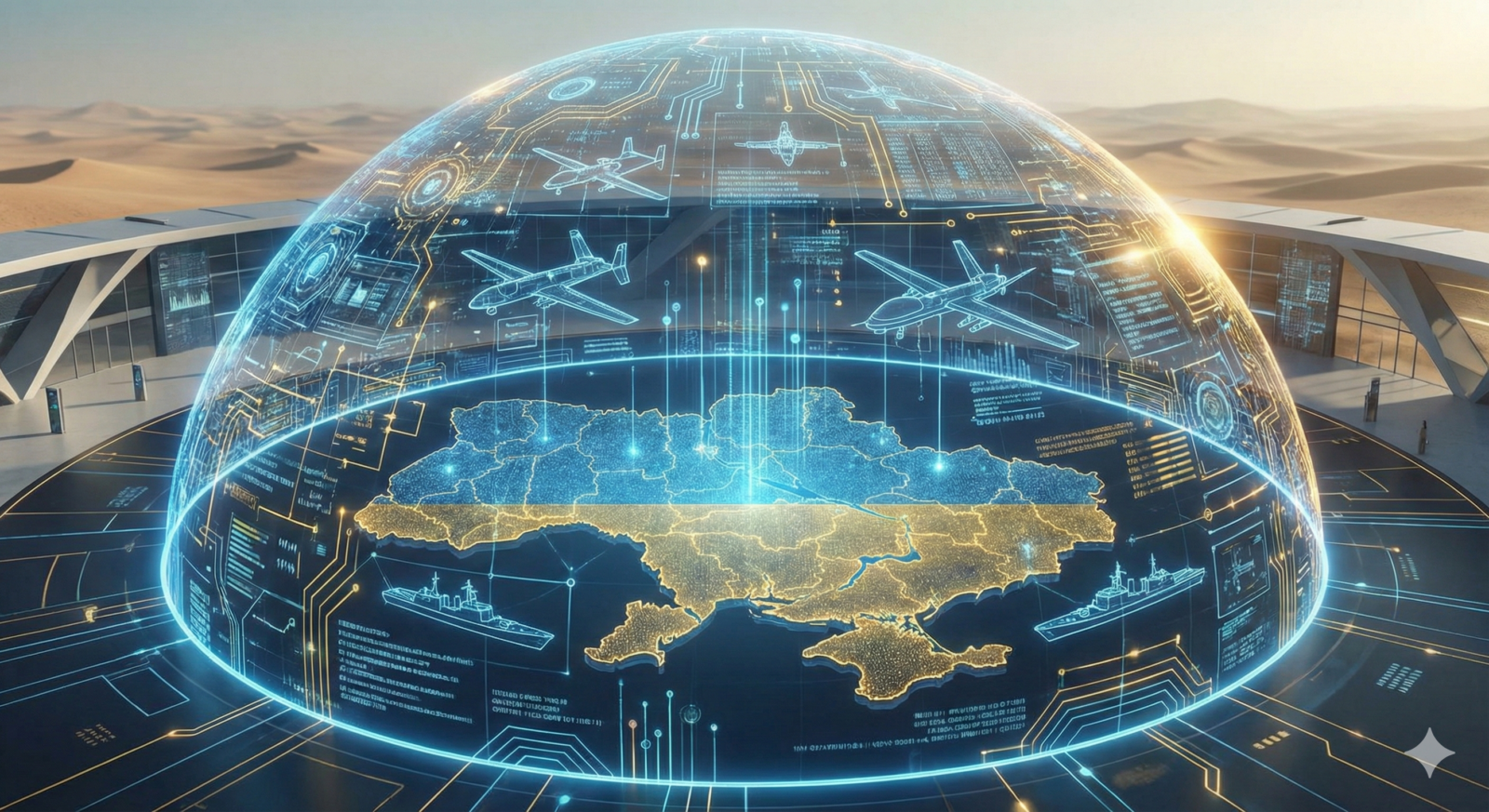
The presence of Ukrainian manufacturers in Saudi Arabia highlighted a critical shift: the transition from “garage” innovation to systemic, mass-produced solutions capable of operating under intense electronic warfare (EW) conditions. Below is a detailed technical breakdown of the key technologies and strategic agreements unveiled in Riyadh.
Industrial Integration: The Ukroboronprom & NCMS Alliance
The exhibition marked a significant step in Ukraine’s integration into the global defense supply chain. JSC Ukrainian Defense Industry (Ukroboronprom) formalized a strategic partnership with the National Company for Mechanical Systems (NCMS).
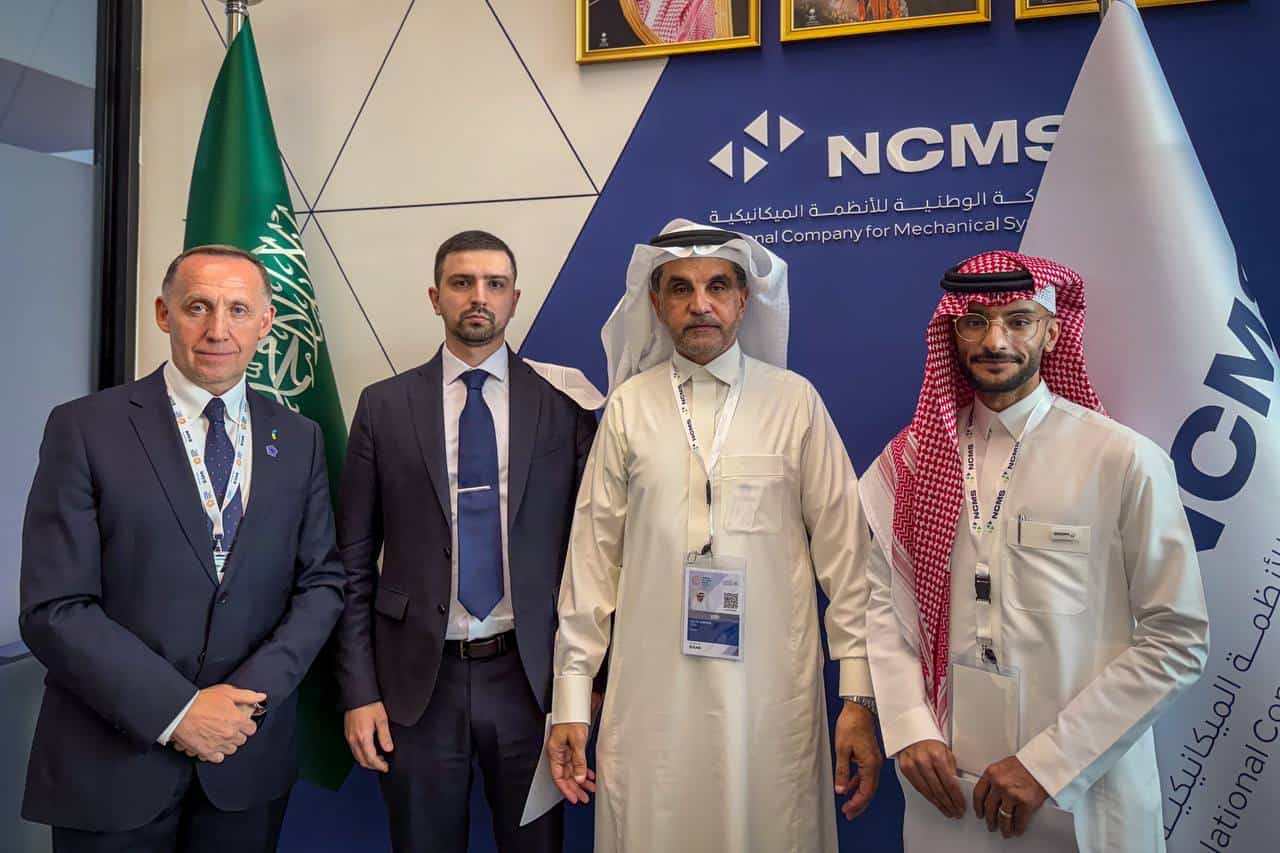
NCMS is a Saudi technological leader specializing in the manufacture of optoelectronics, combat modules, and ammunition management systems. According to reports from the event, this agreement is not merely ceremonial; it focuses on the joint production and integration of combat modules and optical devices. This collaboration suggests a move towards combining Saudi high-tech manufacturing capabilities with Ukrainian engineering solutions tested in high-intensity warfare.
Aerial Ecosystems: UADefense’s “Trinity”
The era of the “single-purpose drone” is fading. UADefense presented a comprehensive tiered system of Unmanned Aerial Vehicles (UAVs) designed to control the battlefield from logistics to strike.
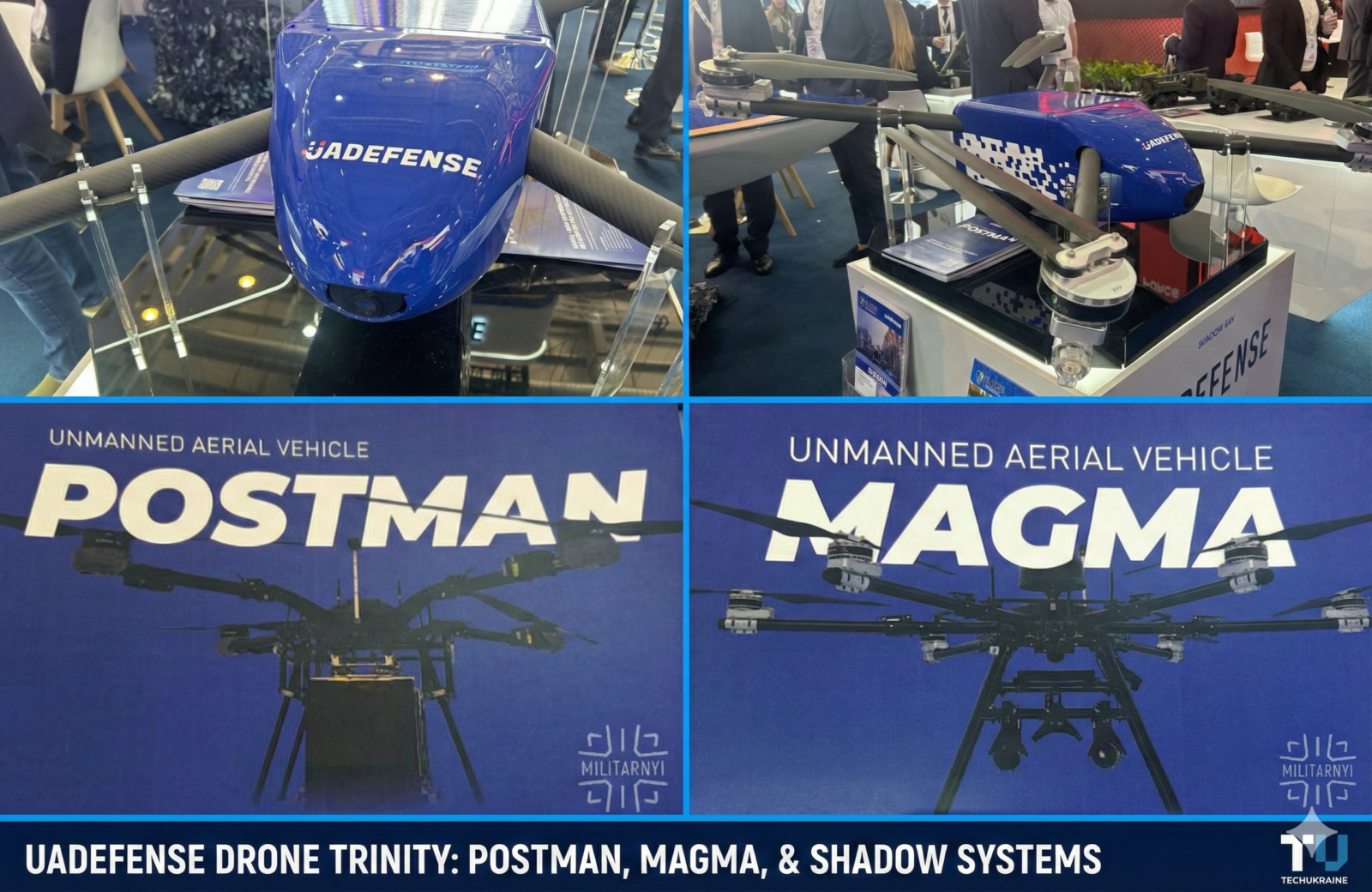
Their presentation featured three distinct platforms, each filling a specific tactical niche:
1. The Heavy Lifter: “Postman” Logistics remains a critical challenge in modern trench warfare. The “Postman” is a VTOL (Vertical Take-Off and Landing) drone designed to solve the “last mile” delivery problem.
-
Payload: Up to 75 kg.
-
Operational Range: 20 km.
-
Key Tech: It features a secure, encrypted communication system with pseudo-random frequency hopping to counter jamming. Crucially, it integrates with Starlink and possesses an autonomous “return-to-base” protocol if communication is lost. Its primary roles include ammunition resupply and the evacuation of wounded personnel.
2. The Striker: “Magma” This heavy hexacopter bomber is built for kinetic impact.
-
Payload: 25 kg (capable of carrying up to 10 specialized munitions).
-
Endurance: 45 minutes with a full load; operational radius of 15 km.
-
Sensors: Equipped with a thermal imaging camera on a gimbal for night operations. It utilizes a CRPA antenna to filter out GPS spoofing, ensuring precision strikes even in EW-saturated environments.
3. The Eye: “Shadow” A reconnaissance wing designed for long-endurance surveillance and artillery correction.
-
Range: Up to 70 km (telemetry) / 50 km (video link).
-
Flight Time: 2 hours at a cruising speed of 65 km/h (max speed 90 km/h).
-
Launch/Recovery: Catapult launch and parachute landing protect the sensitive optics and airframe.
Naval Asymmetry: The “Mothership” Concept
Ukraine’s asymmetric success in the Black Sea has driven the evolution of Unmanned Surface Vehicles (USVs). UADefense unveiled the M.A.K., a next-generation USV that prioritizes stealth and modularity.
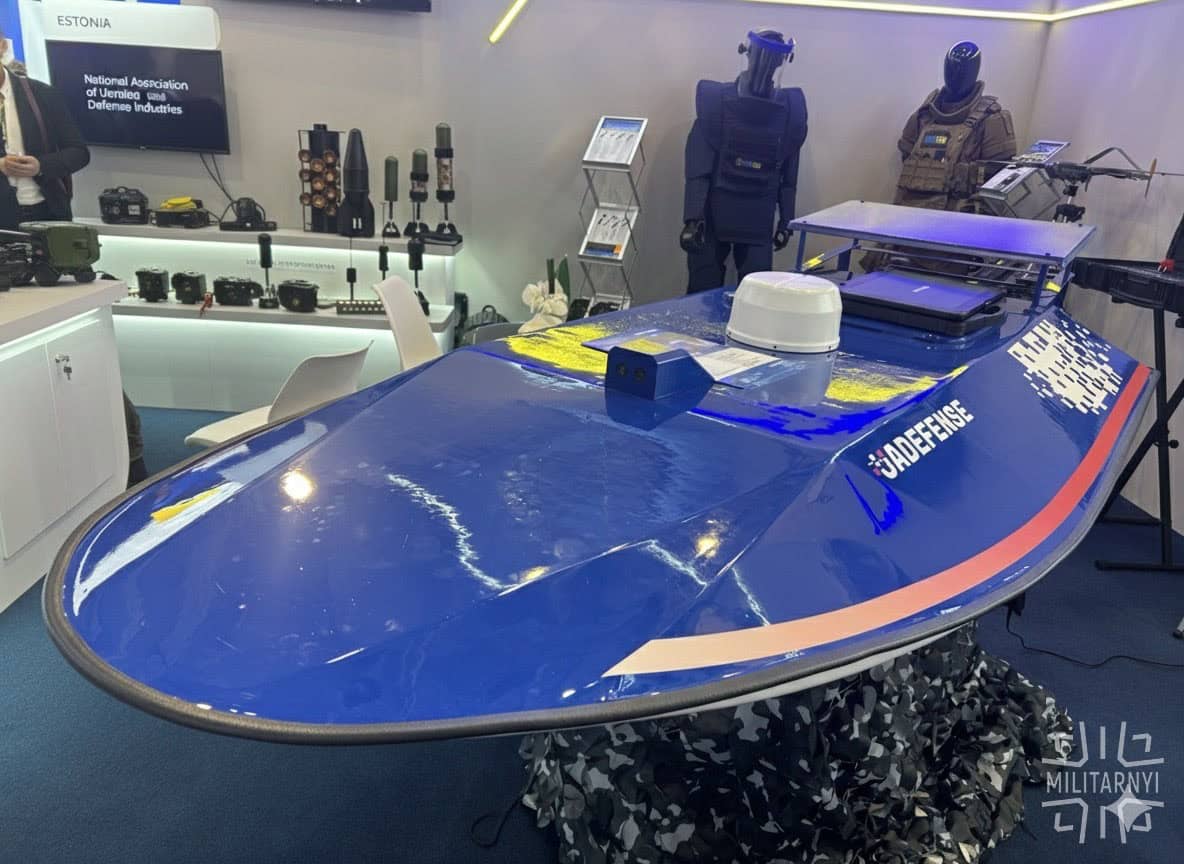
The engineering focus is on low observability. The vessel is constructed from radio-transparent fiberglass and sits incredibly low in the water—rising only 30-40 cm above the surface—making it nearly invisible to standard radar and visual detection.
-
Speed: Up to 40 km/h (approx. 22 knots).
-
Dimensions: 3.8m length, 1m width.
-
Seaworthiness: Operates effectively in wave heights up to 0.75m.
However, the defining feature of the M.A.K. is its operational concept. As detailed by observers, it can function as a “mothership” for aerial drones. The vessel can transport FPV drones to a launch point 50 km offshore, release them, and extend their strike radius deep into enemy territory—a tactic that fundamentally alters naval engagement rules.
Standardizing the Kill Chain: UBM’s Munitions
For years, drone operators relied on improvised explosives—effective, but often unstable. The Ukrainian company UBM showcased a solution that industrializes drone warfare: a line of standardized, mass-produced ammunition.
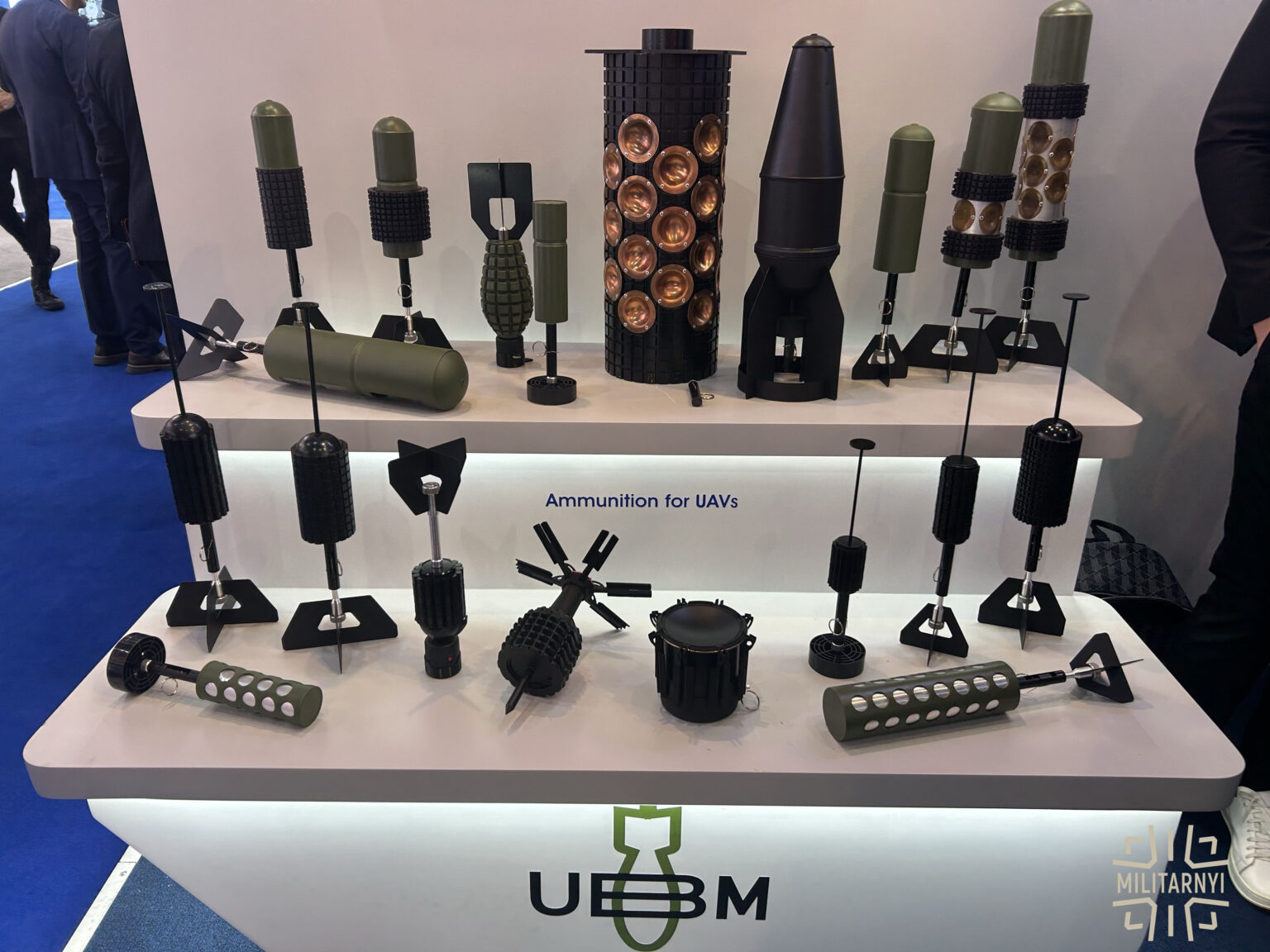
The lineup includes High-Explosive Fragmentation (HE-Frag) and Shaped Charge (HEAT) munitions, specifically engineered for aerial drops.
-
Safety & Reliability: The munitions feature advanced electromechanical fuses with a two-stage arming system (check removal + airflow activation) and self-destruct mechanisms.
-
Lethality: The OBP-23.1 (HE-Frag) creates a guaranteed kill zone of 11 meters. The KBP-23.1 (HEAT) is capable of penetrating light armor and the roof protection of main battle tanks.
-
Targeting: Developers noted that these munitions are optimized to strike the vulnerable lower chassis of vehicles, disabling mobility instantly.
The Interceptor: SEEDIS vs. The Swarm
The proliferation of enemy reconnaissance drones requires a cost-effective countermeasure. Using expensive missiles against cheap drones is economically unsustainable. Addressing this challenge, SEE (System Electronic Export), in collaboration with NAUDI (National Association of Ukrainian Defense Industries), unveiled the SEEDIS automated interception system.
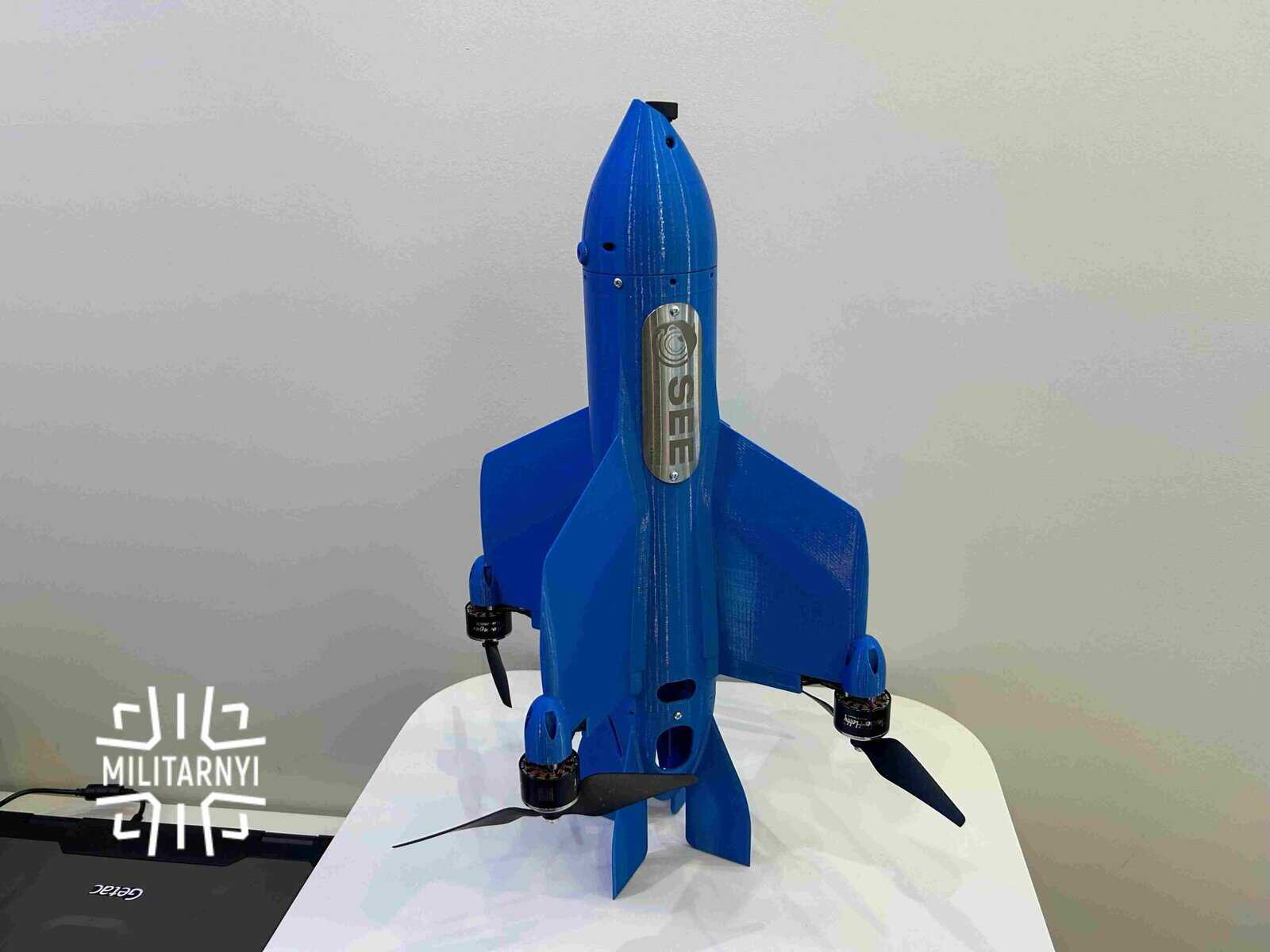
This is a “drone-hunter” designed for kinetic interception. Unlike traditional FPVs that require elite pilot skills, SEEDIS relies on software automation.
-
Speed: 320 km/h—allowing it to catch almost any tactical UAV.
-
Radius: 18 km range; operates at altitudes up to 3000 meters.
-
The Tech Edge: The system utilizes machine vision for automatic target locking and guidance. Once the target is identified, the AI takes over the final approach, eliminating the need for manual piloting during the critical terminal phase.
Conclusion The technologies showcased in Riyadh are not theoretical prototypes; they are the result of rapid iteration under fire. Ukrainian companies are moving toward ecosystems (drone carriers, standardized ammo, automated control) rather than isolated products. This shift from manual improvisation to automated, industrial precision is what defines the current trajectory of Ukrainian Defense Tech.
Based on original reporting by Militarnyi.