In the defense capitals of the West, the debate over “long-range capabilities” is often bogged down by bureaucratic caution. In Ukraine, however, Fire Point is moving at the speed of physics. Denys Shtilerman, a PhD physicist and Chief Constructor, is not just building missiles; he is designing a strategic lever intended to force a diplomatic resolution by making the war physically and economically unsustainable for the Russian elite.
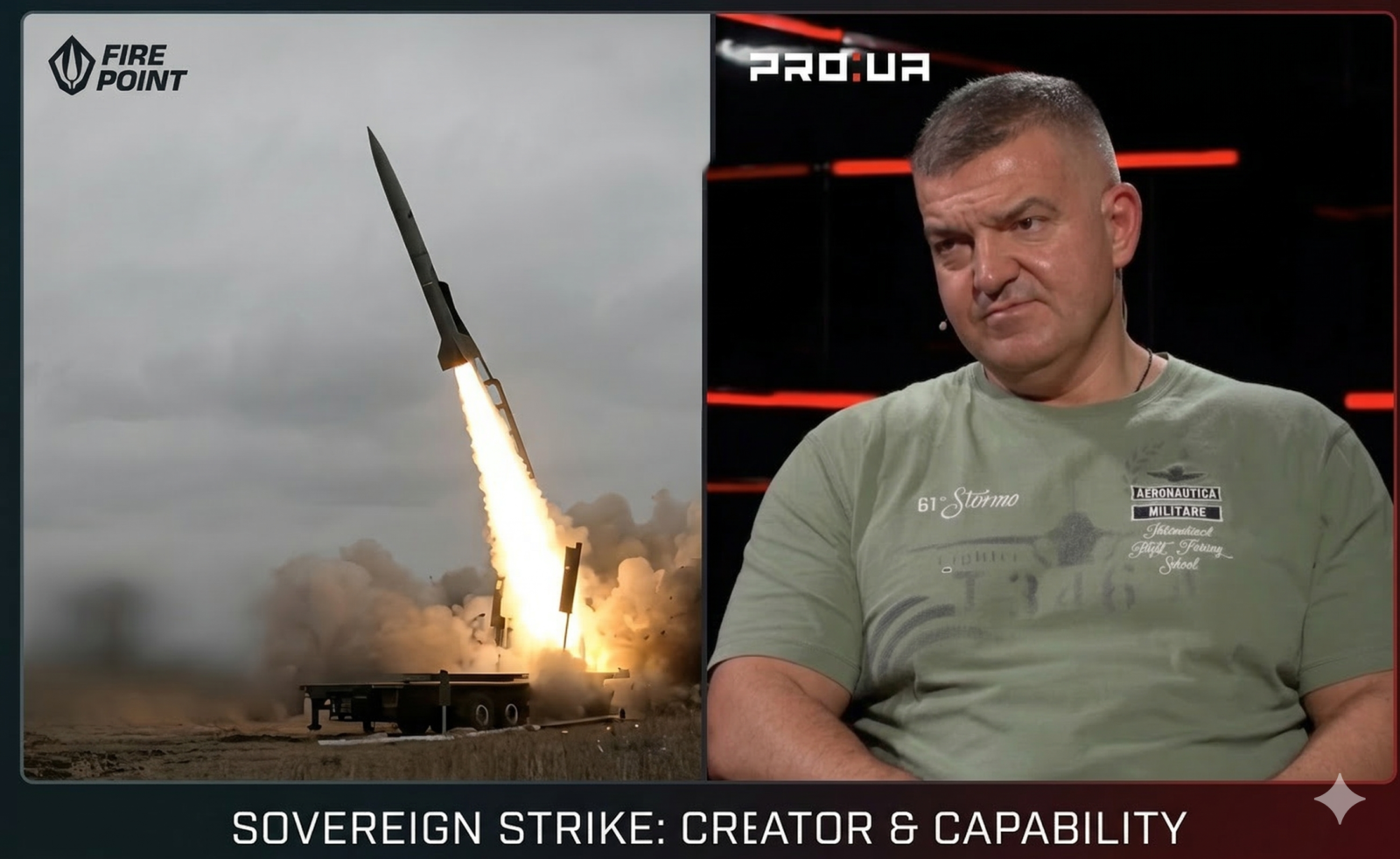
The PhD Logic: Why Moscow Matters
For the Russian leadership, the war has long been a peripheral concern. Shtilerman argues that strikes on regional industrial zones—while tactically important for reducing production—do not influence the Kremlin’s political calculations.
“It is not necessary to strike the entire Russian Federation. To make an impression on the Russian elite, hits must be inside Moscow—specifically Moscow and Rublyovka. Everything else has no meaning for them”, Shtilerman explains.
By mass-producing the FP5 Flamingo (3,000 km range) and the FP9 ballistic systems, Fire Point provides Ukraine with a precision tool to target military infrastructure within the heart of the Russian state. While hits on factories in Bryansk or Votkinsk are necessary to physically degrade the enemy’s arsenal, they lack the psychological weight required to shift the strategic balance in Moscow.
Disrupting the Axis: Out-Engineering Autocracies
Fire Point’s agile methodology is a direct challenge to the aging industrial doctrines of the “Axis” (Russia, Iran, and North Korea). While Russia relies on the Kalibr and Iskander—expensive, all-aluminum systems costing between $700,000 and $2.2 million—Fire Point has engineered a superior alternative for just over $500,000.
The technological gap is stark. While the Axis continues to use traditional metal frames with a high radar cross-section, Fire Point utilizes advanced composites, creating a “stealth-lite” profile that is significantly harder to intercept. Furthermore, the company has moved away from specialized, multi-million dollar launch chassis. Instead, their missiles launch from modified civilian trucks that blend into standard logistics traffic, making them nearly impossible to track and neutralize before launch.
Virtual Warfighting and Digital Twins
The rapid development of the FP7 and FP9 ballistic systems was made possible by Fire Point’s “Digital-First” R&D. To solve the complex physics of hypersonic flight (Mach 5+), the team bypassed years of expensive physical trials by running hundreds of virtual launches. This computational approach allowed the team to refine aerodynamic coefficients and flight models in a digital environment, drastically shortening the time from blueprint to battlefield.
Absolute Sovereignty: No Kill-Switches
In a world where defense exports often come with hidden “kill-switches” or third-party vetoes, Fire Point is championing Independence by Design.
“Everything besides the inertial navigation system is completely Ukrainian development. All other components are our components: actuators, the engine, the engine control unit, the antenna, the GNSS receiver”, Shtilerman confirms.
To ensure total strategic autonomy, the company has localized the production of almost every critical component. Even the imported Inertial Navigation System (INS) is integrated into an open-source architecture that prevents external interference or remote deactivation. This ensures that Ukraine’s strategic decisions remain entirely in its own hands.
Scaling at the Speed of War
The scale of Fire Point’s operations is a direct result of Ukraine’s streamlined defense ecosystem. In just 24 months, the company has established 67 production sites across Ukraine, covering over 250,000 square meters of manufacturing space.
The contrast with Western bureaucracy is dramatic. While a major European defense firm might struggle for 1.5 years to navigate red tape for a new plant, Fire Point can deploy a new production line, secure all permits, and handle industrial connections in just one week. This redundant, decentralized network ensures that Fire Point can sustain a production rate of 3 Flamingo missiles per day.
Strategic Conclusion
By reclaiming the engineering heritage that once fueled the global arms market, Fire Point is turning the tide. For Ukraine’s allies, the logic is clear: supporting sovereign, low-cost, high-precision DeepTech is the most effective way to shatter the Kremlin’s sense of security and accelerate the path to a negotiated peace.
Source: ProUA