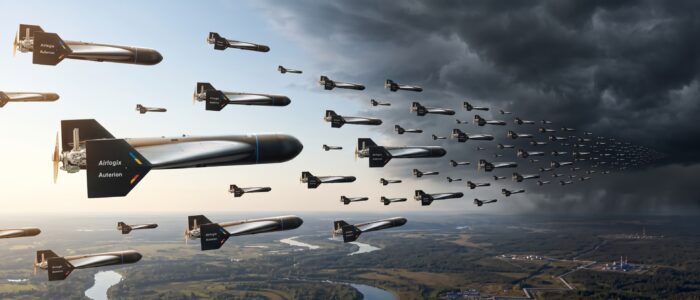
Modern military procurement is experiencing an aggressive structural shift. The traditional Western defense acquisition model – defined by multi-year R&D cycles and multi-billion-dollar reliance on heavy defense primes – has hit a critical bottleneck. Facing an asymmetric gap in low-cost, attrition-tolerant autonomous systems capable of surviving dense electronic warfare (EW) environments, the U.S. military is forced to bypass bureaucratic legacy pipelines.

To bridge this operational deficit, the Pentagon is turning to an ecosystem that has spent the last four years rapidly compressing decades of aerospace innovation into weekly frontline iterations: Ukraine.
The definitive staging ground for this industrial integration is the U.S. Department of War’s Drone Dominance Program (DDP). As the multi-stage initiative transitions into its high-stakes second phase, battle-tested Ukrainian defense tech firms – and their strategic Western corporate vehicles – are leveraging real-world combat validation to position themselves for long-term integration into the U.S. defense industrial base.
The Phase 2 Blueprint: Logistics, Metrics, and Market Stakes
Phase 2 represents a major operational scaling effort by the Pentagon, transitioning from initial hardware screenings to intense, live-scenario evaluations. The strict technical and commercial parameters governing this phase underscore the institutional weight of the competition:
Operational Timeline: Field evaluations are scheduled to run from August 2026 through January 2027.
The Competitive Field: Out of the initial pool of global applicants, the Pentagon has formally invited 48 elite companies to field approximately 78 unique drone designs.
The Procurement Target: Following the conclusion of the six-month trial, the U.S. military will select exactly 10 winners. The ultimate payload is a massive combined procurement contract to manufacture and deliver 60,000 tactical drones.
Performance-Based Reward: The distribution of the contract is merit-driven; a manufacturer’s position on the live evaluation leaderboard directly dictates the volume and financial weight of their procurement order.
To secure a spot in the top 10, systems must survive grueling deployment scenarios. Testing is split into two distinct, high-intensity operational categories:
Long-Range Strikes: Deep penetration systems optimized for targets at long distances.
Tactical Attacks in Close Quarters: Short-range autonomous systems engineered for complex frontline environments and close-quarters combat.
Transatlantic Syndicates: The Contenders Validating the Model
The confirmed participant list highlights how deeply local Ukrainian engineering is fusing with established Western defense capital and manufacturing logistics.
Wilcox Cherry Defense
A prominent example of this corporate integration is Wilcox Cherry Defense. The entity is a formalized, cross-border joint venture between the Ukrainian drone developer General Cherry (General Chereshnya) and the prominent American defense contractor Wilcox Industries. This alliance pairs Ukraine’s real-time, software-driven battlefield iterations with Wilcox’s high-volume manufacturing footprint.
BlueBird Tech & Zaruba Inc.
In an official statement to Defender Media, BlueBird Tech confirmed its successful entry into Phase 2. To satisfy the complex regulatory and supply chain mandates of the U.S. Department of War, the Ukrainian developer has locked in a tactical partnership with American defense contractor Zaruba Inc.
Ukrainian Defense Drones Tech Corp (F-Drones)
Operating as the U.S.-based corporate vehicle for the Ukrainian manufacturer F-Drones, Ukrainian Defense Drones Tech Corp (UDD) enters Phase 2 with a distinct first-mover advantage. UDD’s flagship F10 tactical strike drone was among the select platforms that successfully navigated the opening phase of the competition, officially qualifying for UAV supply lines to the U.S. Department of War. Phase 2 will determine the ultimate scale of their long-term manufacturing runway.
Skycutter & SkyFall
The competitive landscape also includes British aerospace firm Skycutter, which secured the highest overall score during the initial phase of the program. According to industry sources cited by Defender Media, Skycutter’s top-tier performance was achieved through an agile technical partnership with Ukrainian defense tech company SkyFall. The platform that won the opening phase was the Shrike 10 Fiber – a sophisticated fiber-optic-guided FPV kamikaze drone designed to remain completely immune to heavy electronic jamming environments.
Capitalizing on Friction: The Long-Term Venture Horizon
The success of these syndicates points to a deeper reality: the Pentagon is not engaging Ukrainian tech out of geopolitical altruism, but out of absolute operational necessity.
By embedding Ukrainian architectures into Western procurement via joint ventures and international consortia, the U.S. military is importing crucial defense assets: immediate electronic warfare resilience, decentralized component sourcing completely independent of adversarial supply chains, and engineering methodologies optimized for low-cost mass production.
The upcoming field trials from August 2026 to January 2027 will do more than just allocate capital to 10 hardware manufacturers. They will codify the baseline technical standards for tactical autonomous warfare across allied nations. For Western venture capitalists and institutional allocators, the signal is clear: the defense startups scaling the fastest are those capable of closing the gap between active battlefield telemetry and Western industrial capacity.
Sources: Defender Media, Department of War – Drone Dominance Program