The electronic warfare (EW) paradox on the modern battlefield has reached a critical bottleneck. As jamming networks grow denser, conventional radio-controlled FPV drones increasingly lose telemetry, rendering even the most skilled pilots blind at the final moment of target engagement. While Ukrainian defense-tech innovators successfully pioneered a workaround by using EW-proof fiber-optic cables – pioneered by companies like 3DTech with their Khyzhak (Predator) series – a new tactical limitation emerged. Operating fiber-optic drones historically required a heavy logistical footprint, tethering one pilot setup to a single aircraft.

In high-intensity combat, a one-to-one ratio between pilot and drone limits the ability to execute synchronized ambush maneuvers or massed strikes. The question keeping Western venture capitalists and defense tech stack developers awake has been clear: how do you scale un-jammable aerial assets without exponentially expanding the deployment crew on the zero line?
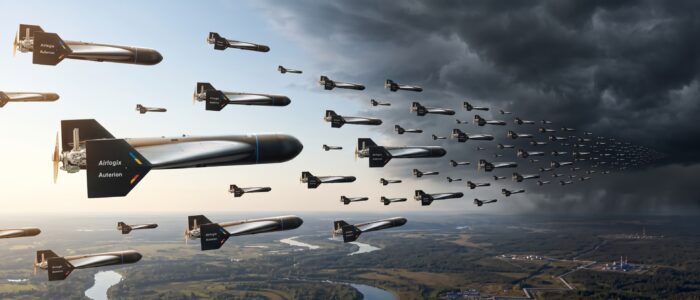
Ukrainian defense-tech manufacturer 3DTech has delivered the payoff. The company has officially introduced HYDRA, a unified Ground Control Station (GCS) capable of orchestrating a localized swarm of up to five fiber-optic FPV strike drones simultaneously from a single hub.
Technical Specifications: Inside the HYDRA Hardware Architecture
Designed for synchronized multi-axis strikes, group ambush operations, and mission execution in complex radio-electronic environments, the HYDRA system fundamentally shifts the ergonomics of frontline drone deployment. By combining high-bandwidth fiber-optic connectivity with localized hardware acceleration, the system consolidates advanced tactical capabilities into a standardized defense tech stack.
According to the official product configuration from 3DTech, the HYDRA Ground Control Station features:
Enclosure & Display: Housed in a rugged, impact-resistant case featuring an integrated 19-inch battlefield display.
Computing Platform: Powered by an Intel Core i5 processor architecture, paired with 16 GB of DDR4 RAM and a 256 GB SSD for high-speed telemetry processing.
AI Accelerator: Integrated Hailo-8 neural processing unit (NPU) for low-latency, edge-computed object classification and targeting.
Media Conversion: Equipped with digital SFP 1490/1550 nm media converters, capable of handling optical data links up to 80 km.
Power Subsystem: Dual-mode power architecture supporting 220V AC grid/generator input or 6S military-grade battery configurations.
Interoperability & Distributed Pilot Networks
The core structural breakthrough of the HYDRA complex lies in its flexible distributed control architecture. The station breaks the traditional “one pilot, one station” bottleneck by enabling up to three pilots to operate in parallel simultaneously.
The system supports simultaneous connections for up to five fiber-optic UAVs, displaying high-quality real-time video streams on a single or multiple screens, with native support for operator goggles. Operators can instantly hot-swap control between different airborne assets with a fast-switching function.
This multi-operator synchronization unlocks advanced tactical paradigms: a scout pilot can pinpoint armor, while strike pilots instantly take over individual drones from the standby pool to execute an immediate, synchronized attack. Furthermore, the HYDRA hub natively integrates with military situational awareness networks, allowing crystal-clear video feeds to be securely streamed directly to regional command posts.
Integrated Automation and Remote Starlink Ambushes
To reduce the cognitive load on minimal combat crews operating in high-stress environments, 3DTech has heavily automated the engagement cycle. Backed by its built-in artificial intelligence system, the complex features automated target detection and tracking capabilities.
Furthermore, the station tracks drone communication quality in real time. This continuous link monitoring provides the operator with instant data to make rapid tactical decisions: whether to abort and return the asset, strike a closer secondary target, or continue the flight deeper into contested territory.
For advanced standoff operations, HYDRA features an autonomous standby lifespan exceeding six hours. Crucially, the system supports remote control via Starlink satellite communication. This allows teams to set up concealed drone nests in advance, enabling operators located at a safe distance to wake the system, monitor the perimeter via AI, and launch consecutive interceptors with a staggering one-second launch interval between drones.
This capability makes it an ideal platform for remote high-risk mining operations and rapid aerial defense, building on 3DTech’s previous successes in adapting Khyzhak platforms to clear the skies of enemy reconnaissance UAVs.
The Strategic Outlook for Fiber-Optic Networks
By merging the physical immunity of fiber optics with the cognitive leverage of localized swarming and hardware-accelerated AI assistance, 3DTech is redefining the defense tech paradigm. The company previously proved that fiber optics could forge a new frontier in aerial warfare by bypassing heavy EW jamming; with HYDRA, they have addressed the scalability problem.
As Western defense strategists look toward a future where electromagnetic spectrum dominance is fiercely contested, Ukraine’s rapid hardware-software synthesis offers a glimpse into tomorrow’s doctrine. The question is no longer whether fiber optics can compete with traditional radio-controlled architectures, but how fast peer-adversaries will adapt to a world where physical wires, rather than invisible frequencies, dictate absolute control over the tactical edge.
Source: Defender Media.