The effect of digital synergy. What are the prospects for the development of the IT sector and startup industry in Ukraine’s expected accession to the EU? Forbes Ukraine reports.
The Ukrainian IT market has been growing dynamically since Ukraine’s independence, which did not stop even during the Russian full-scale invasion. According to the National Bank of Ukraine, IT exports grew by 5.85% in 2022. The development of technological potential is accompanied by large-scale digitalization, the pace of which is ahead of a number of developed countries.
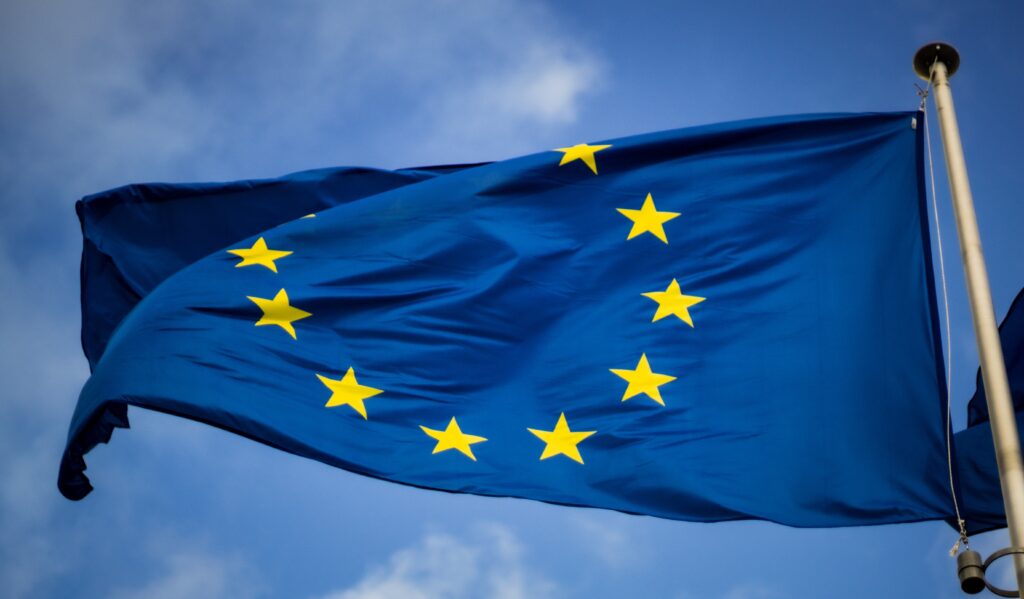
Today, Ukraine is a signatory to the Association Agreement with the EU and has the status of a candidate for EU membership. And this process should create a powerful synergy effect for both sides in terms of information technology development. After all, Ukraine’s European integration will increase the EU’s competitiveness in the digital sphere and provide the Ukrainian IT market with additional incentives for development.
How European integration should help the Ukrainian IT sector
According to Oleksandr Borniakov, Deputy Minister of Digital Transformation for IT Development, as a result of European integration, the dynamic Ukrainian IT sector will strengthen the development of information and communication technologies in Europe and will receive the following benefits:
- Exemption from customs duties and taxes on certain goods and services;
- Elimination of trade barriers, tax problems and regulatory obstacles;
- Expanded opportunities for receiving grants and subsidies from the EU;
- The opportunity to participate in European tenders;
- Transformation into one of the main centers for the development and provision of IT services in Europe due to high qualification and affordable prices;
- Intensification of cooperation with European companies;
- Increasing investments in the Ukrainian IT industry;
- Improving the quality of IT educational programs by intensifying cooperation between Ukrainian universities and European educational institutions;
- Facilitating the protection of intellectual property of Ukrainian IT companies.
“By joining the EU, our IT industry will be able to play a significant role in the development of the EU’s digital economy. This will lead to the creation of new jobs and growth of the Ukrainian economy,” summarizes Oleksandr Borniakov.
In addition, according to Borniakov, Ukraine’s accession to the EU will help create conditions for the development of data centers and attract global content leaders to Ukraine – Google, Meta, Netflix, etc.
“Expanding the customer base and attracting new customers will not be an advantage of European integration, as Ukrainian IT companies have access to the European market today, and Ukraine is one of the centers of the technical talent pool in Europe,” continues Kostiantyn Vasyuk, Executive Director of ITU (IT Ukraine Association), “But it will be easier for Ukrainian IT companies in need of investment to attract partners from Europe, which will help develop new projects, increase competitiveness, and grow more actively.
Kostiantyn Vasyuk is convinced that European integration will encourage young people to choose a career in the IT industry more often, and the number of higher education institutions providing quality education in technology will increase. This area of development will be especially relevant, as European youth choose non-technical universities and specialties in 75% of cases.
What will be the economic impact of Ukraine’s digital European integration?
According to a study conducted by leading economists at the initiative of the Ministry of Digital Transformation, Ukraine’s integration into the EU’s digital single market could have the following positive effects:
- Ukraine’s GDP: growth of up to +12%;
- Exports of goods from Ukraine to the EU: up to +17% (about €3 million);
- Exports of services from Ukraine to the EU: up to +12.2% (about €400 million);
- Exports of goods from the EU to Ukraine: over +20% (over €4 million);
- Exports of EU services to Ukraine: up to +9% (almost €300 million).
“A 1% increase in digitalization leads to a 0.42% increase in Ukraine’s GDP. Thus, Ukraine’s gradual approximation to the EU’s digitalization level can lead to an additional increase in Ukraine’s GDP by 2.4-12.1% (up to $15.8 billion),” summarizes Valeria Ionan, Deputy Minister of Digital Transformation for European Integration.
Integration into the EU’s digital single market has already begun. Valeria Ionan says that last fall, Ukraine joined the EU’s Digital Europe program, which provides funding for the digitalization of European countries in various areas. Thanks to this, representatives of the Ukrainian IT industry can already receive funding in the following areas:
- High-performance computing
- Artificial intelligence
- Data and cloud services;
- Digital skills;
- Use of digital technologies in the economy and society.
What opportunities does European integration create for the startup industry?
“Transforming Ukraine into an attractive jurisdiction for doing business and developing high-tech startups is one of the priorities of our daily work. This is another internal front of work that makes Ukraine stronger,” says Oleksandr Borniakov.
In June 2023, the Ministry of Digital Transformation sent a request to join the European Commission’s initiative, the European Startup Nations Alliance (ESNA), which currently unites 26 EU member states and Iceland. As a result, the Ukrainian IT sector will soon be able to join the implementation of the alliance’s main tasks:
- Increasing the competitiveness of the European startup ecosystem;
- Identifying best practices in startup policy;
- Providing technical support to countries to implement these practices.
In this context, Borniakov mentions the state-owned Ukrainian Startup Fund, founded at the initiative of the Cabinet of Ministers, which topped the ranking of the most active funds after the start of the full-scale invasion, having concluded a record number of deals with Ukrainian projects.
The gradual harmonization of Ukraine’s IT ecosystem with the EU is also taking place within the framework of the EU’s EU4Digital initiative, which provides for
- Exchange of advanced case studies
- Cross-border investments;
- Opening of EU markets for startups from Ukraine;
- Encouraging investment;
- Creating jobs for talented young people.

What changes in the regulatory sphere does Ukraine need for digital European integration?
According to Konstantin Vasyuk, the European experience can help improve legislation and create a stable and predictable business environment, which is one of the value foundations of Europe and a long-awaited dream of Ukrainian enterprises. And the process of integrating the Ukrainian IT sector into the European legal space has already begun.
“Generally speaking, IT companies integrate into the European market through their product or service, competing and accepting the conditions of countries as input for business development. Another aspect of integration is related to the work of offices in Europe. Since Ukrainian IT companies are now actively opening businesses in European countries, labor and tax legislation is one of the planned factors for them in building a development strategy in the EU,” continues Konstantin Vasyuk.
However, further European integration will require a number of legislative changes from Ukraine, including those related to the IT market and the startup industry. And out of 29,000 EU acts that Ukraine will need to implement in the process of joining the EU, 523 are related to the Digitalization and Media section.
“Some of these acts are the latest and have not yet been implemented even in the EU. They relate to the IT sector and high-tech startups, such as the Digital Services Act, the Digital Markets Act, and the Data Governance Act. In addition, all EU acts that are currently at the draft stage will also become our obligations after approval. We are talking about the European Chips Act, Interoperable Europe Act, Gigabit Infrastructure Act, Cyber Resilience Act, Data Act, Artificial Intelligence Act, AI Liability Directive,” Borniakov clarifies.
Konstantin Vasyuk adds that in some areas, the Ukrainian IT industry starts preparing for European integration in advance and at a high expert level. Thus, to implement the European developments set out in the Artificial Intelligence Act (AI Act) proposed by the European Commission on April 21, 2021, which may become the basic legal act for the development and functioning of artificial intelligence in the EU, a working group on the regulation of artificial intelligence was launched on the basis of the Ukrainian National Bar Association. Its goal is to implement European developments in the Ukrainian legislative field through joint efforts of legal professionals, government and business representatives. The IT Ukraine Association, the largest national association of the IT industry in Ukraine, has also joined this process.
Intellectual property protection should become a separate important area. In order to strengthen this area, the Ukrainian National Office of Intellectual Property and Innovation (IP Office) signed a Memorandum of Understanding with the European Intellectual Property Agency (EUIPO) in July 2023, as well as a Memorandum of Enhanced Technical and Strategic Partnership with the European Patent Office.
These memorandums define the areas of cooperation, lay the groundwork for new joint projects, exchange of information and experience, and technical assistance. But the most important aspect is that they clearly outline our European path of harmonization and partnership.
In addition, at the regular WIPO General Assembly held in July 2023, the Ukrainian IP Office received confirmation of its status as an International Searching Authority (ISA) and International Preliminary Examining Authority (IPEA). This is an additional evidence of the high quality of patent examination carried out in Ukraine, which already meets international standards.
What European future will the tax space for IT “Diia.City” have?
In the context of Ukraine’s digital European integration, it is also worth mentioning the unique legal and tax space Diia.City, in which the best international practices for stimulating the IT industry have been successfully adapted to Ukrainian realities. Despite the fact that the Diia.City project was launched just two weeks before the full-scale invasion, about 600 companies – both large outsourcing players and promising high-tech startups – are already taking advantage of its benefits.
According to Oleksandr Borniakov, at the stage of creating the concept and legislative framework for Diia.City, Ukraine analyzed the experience of dozens of countries that have introduced special conditions for the development of the technology sector. Among them: the special tax regime IP-Box for entrepreneurs, in particular from the technology sector in Poland, or the Estonian tax regime, which provides for the exemption of IT companies from VAT and a zero income tax rate to stimulate reinvestment.
What is the downside of European integration for the Ukrainian IT sector?
However, this rather positive picture would not be complete without mentioning certain risks for the IT business that may be associated with Ukraine’s accession to the EU.
“The notorious European bureaucracy is the first obstacle that any business and IT companies in particular need to prepare for. After all, work in the European market will be accompanied by more complex administrative procedures that require additional time and resources to complete,” says Konstantin Vasyuk.
Another expected risk, according to Mr. Vasyuk, is the cost of labor and the relocation of personnel, as the European market can undoubtedly attract specialists from Ukraine and other countries, which will cause a shortage of talent in Ukraine. This, in turn, may lead to an increase in the cost of labor for IT specialists. After all, companies will have to fight even harder to retain valuable staff.
This material has been produced with the financial assistance of the European Union. The views expressed herein can in no way be taken to reflect the official opinion of the European Union.