LVIV, UKRAINE – September 28, 2025 – Demonstrating remarkable resilience amid the ongoing war, Ukraine’s technology sector showcased its growing importance on the global stage at the annual IT Arena conference. Organized by the Lviv IT Cluster, the event attracted a significant international audience, with 6,450 attendees from over 40 countries gathering to engage with a tech ecosystem that is rapidly innovating under the most demanding conditions.
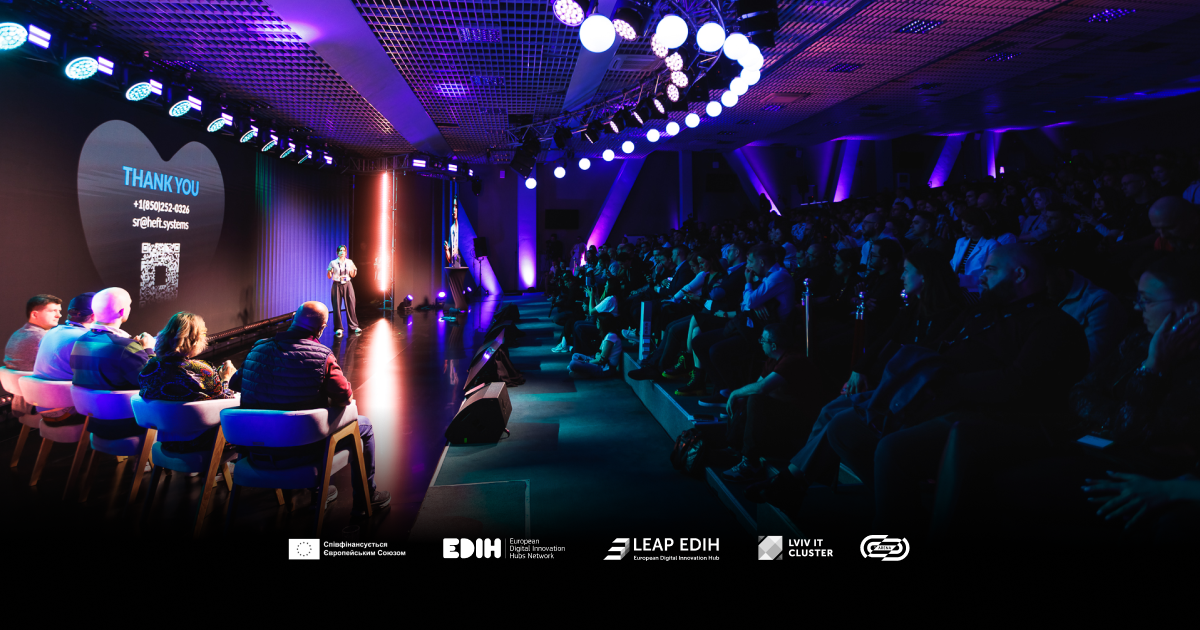
This year’s conference was structured around five key stages: Business, Technology, Product, Startup, and a new, highly relevant Defense track. The core agenda focused on the practical application of artificial intelligence, cybersecurity, and the development of defense technologies that are being tested and deployed in real-time.
“We held the first IT Arena 12 years ago with 800 participants. This year, that number has increased eightfold, and with each year, the event is attended by more international delegations. This shows that despite the challenges of the full-scale invasion, Ukraine’s tech sector has not only maintained its resilience but is an engine of innovation. IT Arena has become an important platform where our IT specialists can present their products to the global business community and prove that the Ukrainian tech industry has enormous potential to compete with global leaders”, stated Stepan Veselovskyi, Founder of IT Arena and CEO of Lviv IT Cluster.
Defense Innovation as a Key Driver
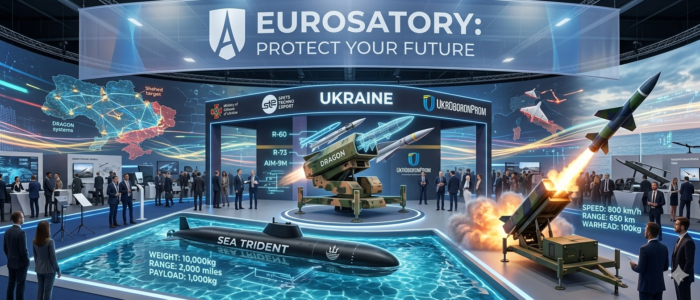
The defense technology track was a primary focus for international partners and investors. Ukraine’s unique position as a live-fire innovation lab for military tech has generated intense global interest.
“I came to Ukraine as a volunteer in April 2022, and it was then I realized that this ecosystem—defense technology—would absolutely take off. We are witnessing a revolution in this sphere, and I am incredibly proud to be a part of it. We have already closed six deals”, said Justin Zeefe, founder and managing partner of Green Flag Ventures.
Discussions also centered on improving collaboration between the government and the private sector. Oksana Ferchuk, Deputy Minister of Defence for Digitalization, outlined the key issues: “The main challenges for the ministry are limited resources and tight deadlines. For the IT sector, it’s the lack of clear rules for cooperation with military units. The solution is transparent collaboration and the legalization of private defense solutions”.
AI in Governance and on the Battlefield
Artificial intelligence was a dominant theme across all tracks. On the government front, Mykhailo Fedorov, Vice Prime Minister and Minister of Digital Transformation, presented his digital AI assistant, a chatbot designed to streamline communication. “The main task of AI is to solve people’s problems. We created a chatbot so that no idea gets lost. Through it, Ukrainians can share ideas about digitalizing state services, send a resume to join the team, or report issues”, Fedorov explained.
In the military context, panels explored AI’s role in real-time decision-making. “Threats now evolve at the speed of software”, noted Dr. William “Dollar” Young, an expert in electronic warfare. “Therefore, countermeasures must also learn and react quickly, changing tactics and strategy on the battlefield”.
Startup Competition Signals Strong Investor Confidence
The Startup Competition underscored the high level of investor confidence, with a total investment pool from attending VCs reaching a record $15,000,000, alongside a $60,000 grant fund. The competition featured two distinct tracks: a general category and a special category for defense-tech and cybersecurity startups.
Winners in the general category included Ovul, a fertility and hormonal health tracker; Heft, a health monitoring system for cows; and StackBob, an AI platform for identity and access management.
In the defense-tech track, the winning solutions, many already battle-tested, were Dwarf Engineering, a UAV control assistant for mission continuity during signal loss; BabAI, an AI software for autonomous threat evasion for drones; and Bravo Dynamics, a developer of resilient mesh-communication systems for unmanned platforms.
An Expert Perspective from TechUkraine
Nataly Vieriemieieva, Director of TechUkraine, attended the conference and offered her analysis of its strategic importance.
“IT Arena has grown from a relatively small event into one of the largest and most prominent tech conferences in Ukraine”, Vieriemieieva observed. “The presence of international delegations, like the one from Luxembourg organized by TechUkraine Ambassador Arno Lume, shows a high level of global interest in what is happening here”.
Vieriemieieva was particularly impressed by the dedicated defense expo. “I was truly inspired by speaking with a large number of defense tech companies. The buzz of the engineering minds is so powerful. We are creating a lot of innovation that is tested and applied directly on the battlefield”.
She also highlighted the announcement of the $50 million Phoenix Fund by Dominique Piotet (former CEO of Unit.City) and Charles Whitehead (founder of EU-Incubators), calling it a promising and unique initiative that will invest in both classic and dual-use technologies.
In her concluding thoughts, Vieriemieieva summarized the spirit of the event and the nation’s tech sector: “Despite the rockets and drones attacking us almost every day, we are thriving, we are booming. And with the help of our wit, our creativity, and our will to succeed, we will be winning this war”.