While the world debates the future of alternative fuels, Ukrainian forces are already testing them in the heat of battle. The new hydrogen-electric Raybird UAV brings near-silent flight and a “cold” thermal signature to the front lines, marking a pivotal shift in stealth warfare.
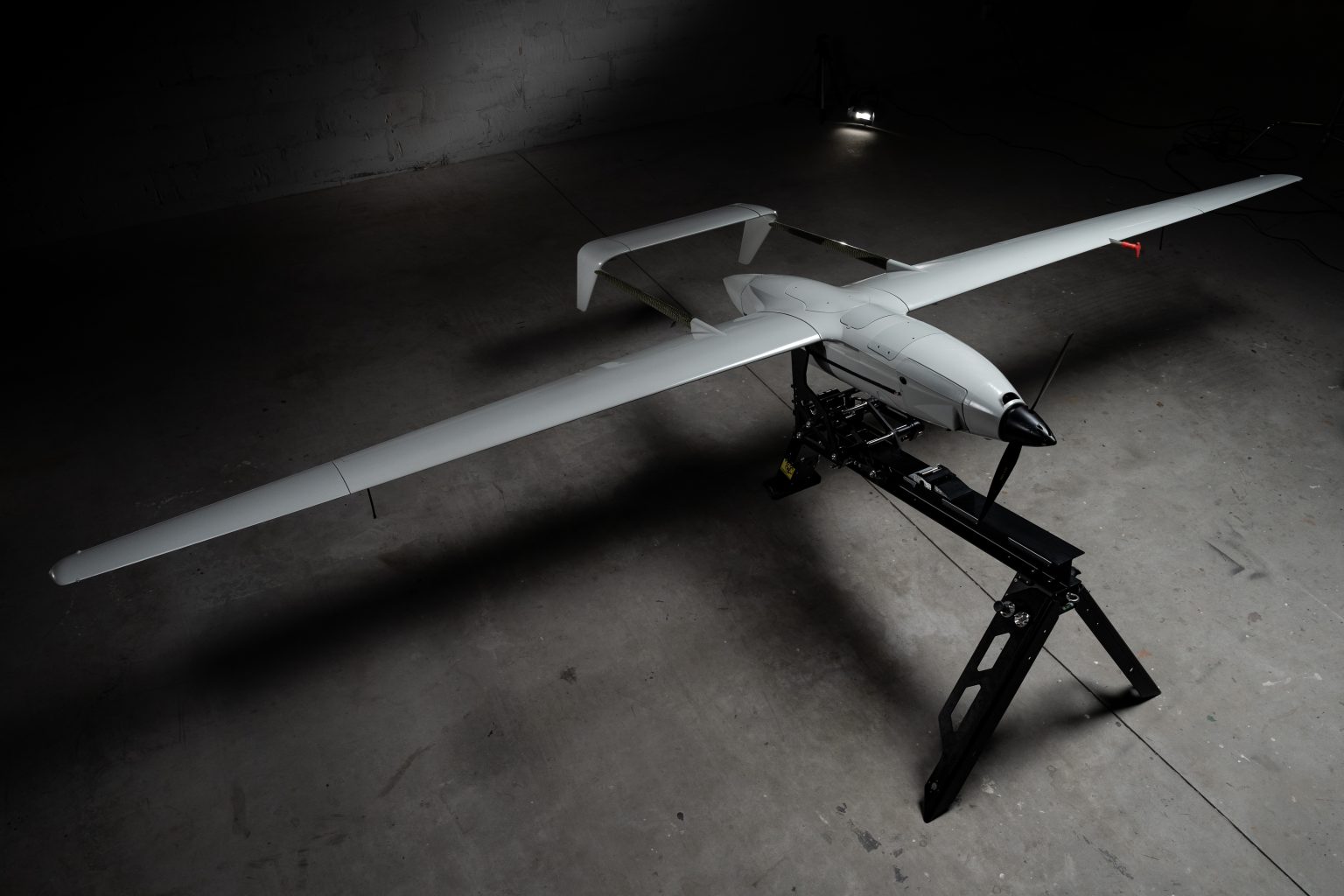
In the skies over Ukraine, a new breed of scout is at work. It doesn’t roar like a gasoline engine, nor does it run out of breath quickly like a standard battery drone. It is the Raybird, a long-range reconnaissance UAV now equipped with a hydrogen-electric propulsion system—and it has been flying combat missions since December 2025.
Developed by the Ukrainian company Skyeton, this hybrid drone represents a leap forward in military tech: replacing the noise and heat of internal combustion engines (ICE) with the cool, quiet efficiency of hydrogen fuel cells.
The Stealth Advantage
For reconnaissance units, visibility is death. Standard long-range drones, typically powered by combustion engines to stay aloft for days, have two fatal flaws: they are loud, and they glow like beacons on enemy thermal cameras.
The hydrogen Raybird solves both. According to Skyeton, the new powerplant generates significantly less heat than an ICE, rendering the drone’s thermal signature almost negligible. It is also dramatically quieter, allowing it to loiter undetected over enemy positions. Furthermore, the electric motor eliminates the vibration issues of piston engines, providing a smoother platform for high-precision optics and sensors.
Combat Proven
This isn’t just a prototype gathering dust in a hangar. Skyeton confirms that the hydrogen-powered Raybird has successfully completed interagency trials and is currently deployed with a unit of the Ukrainian Defense Forces.
To make this possible, engineers had to reimagine the aircraft’s architecture. The fuselage was redesigned to distribute the weight and volume of the hydrogen system while maintaining the aerodynamics that made the original Raybird famous.
Balancing Power and Endurance
The transition to hydrogen is a strategic trade-off. While the conventional gasoline Raybird boasts a massive endurance of over 28 hours, the current hydrogen hybrid stays airborne for approximately 12 hours. However, Skyeton engineers are already pushing to extend this to 20 hours.
For many missions, 12 hours of silent, invisible flight is far more valuable than 28 hours of loud exposure.
Roman Kniazhenko, CEO of Skyeton, explains the philosophy behind the shift:
“Hydrogen fuel is a solution that allows us to combine all the advantages of an electric motor – high reliability and power of the propulsion system, simplicity of its maintenance – with long continuous flight, which is a characteristic feature of our UAV. For us, it is important to keep the balance of these characteristics, because Raybird performs complex deep reconnaissance tasks, for which a high-tech payload is used, and the average duration of such missions is over 10 hours”.
Future-Ready Architecture
The system is built for the extremes. Like its predecessor, the hydrogen Raybird operates in temperatures ranging from -35°C to +55°C, ensuring reliability whether in the freezing Ukrainian winter or scorching summer heat.
Skyeton positions the hybrid Raybird not just as a drone, but as a self-sufficient solution, scalable for mass production. As global defense industries look for ways to reduce logistics footprints and increase stealth, Ukraine is once again proving to be the ultimate testing ground for next-generation warfare technology.
Source: MILITARNYI