The economic doctrine of modern air defense has reached a definitive turning point. For four years, the global military community has watched an unsustainable war of attrition: multi-million dollar missile systems forced to engage $20,000 loitering munitions. This calculated economic imbalance was the core of the “Shahed” strategy—until Ukrainian engineers fundamentally broke the math.
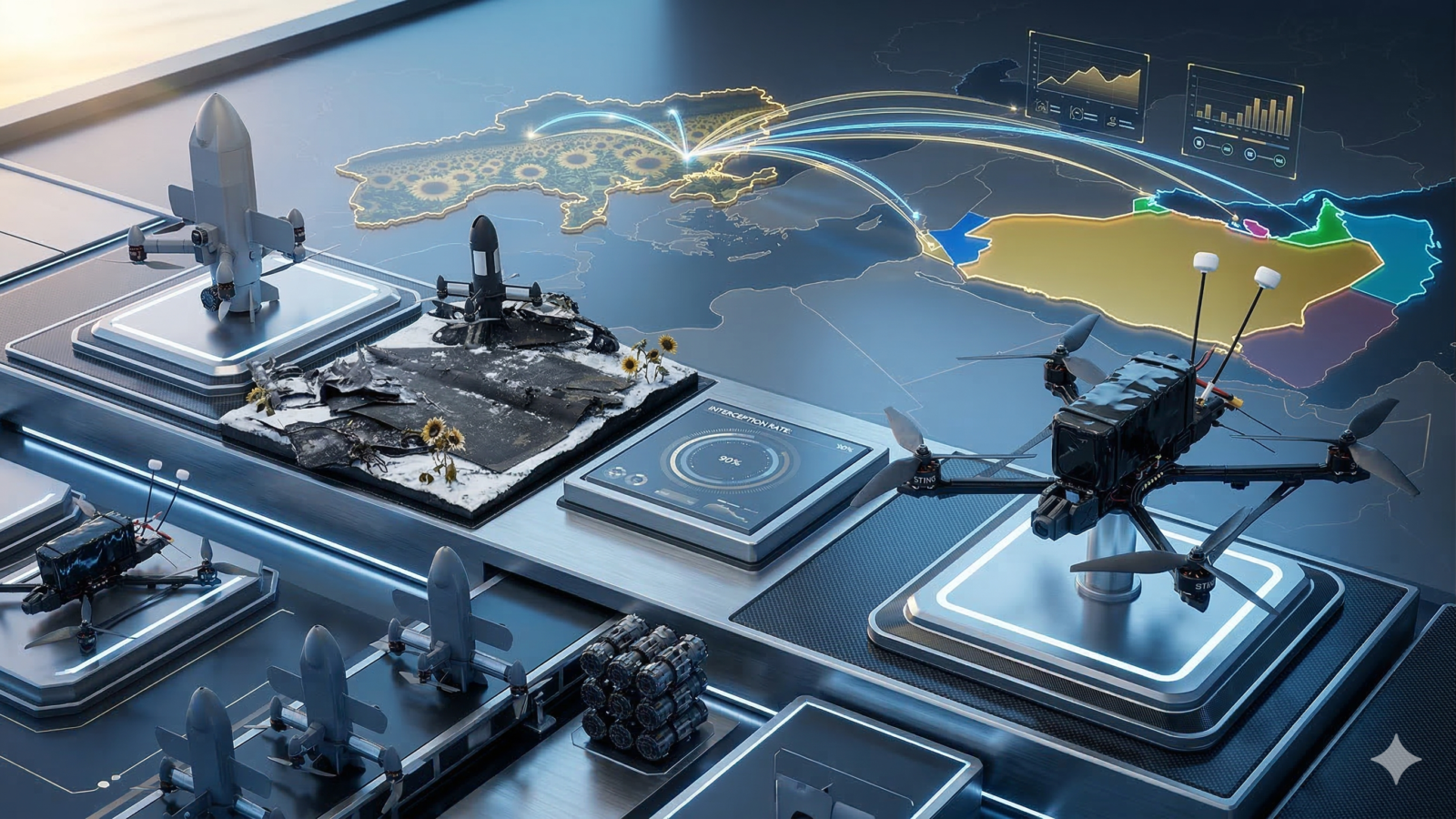
By March 2026, the Ukrainian defense-tech sector has transformed the “drone-on-drone” concept into a strategic industrial category. Achieving interception rates of up to 90% against mass UAV attacks, Ukraine is transitioning from a battlefield laboratory to a global Tier-1 provider of asymmetric defense solutions.
The Saudi Aramco Interest: SkyFall and Wild Hornets
The urgency of this shift is underscored by reports from The Wall Street Journal regarding Saudi Aramco, the world’s largest oil producer. Seeking to protect its critical infrastructure from regional drone threats, the energy titan has bypassed traditional defense contractors to enter negotiations with Ukrainian manufacturers.
At the forefront of Riyadh’s interest are two primary platforms:
SkyFall (P1-SUN): A high-speed interceptor specifically optimized for the “Shahed hunt.” SkyFall has confirmed that numerous Middle Eastern countries have already requested assistance, recognizing the P1-SUN as a battle-proven solution for safeguarding high-value energy assets.
Wild Hornets (STING): The pioneers of the high-speed FPV-interceptor category. The STING platform established the original blueprint for air-to-air drone combat, proving that cost-effective hardware could neutralize sophisticated loitering munitions with surgical precision.
Scaling for the Gulf: 7,000 Units and Beyond
The interest in the Persian Gulf is not limited to energy giants; it has reached the level of sovereign security procurement. TAF Industries has reported a massive surge in formal inquiries, with the UAE requesting 5,000 interceptor drones and Qatar requesting 2,000 units, while Kuwait has also expressed formal interest.
Similarly, the Strix Air project and its Air Baby interceptor continue to attract significant focus from the UAE. This regional demand highlights a critical vacuum in Western defense offerings: the need for mass-producible, low-cost aerial shields that have survived thousands of hours of active combat.
Vertical Integration: The “Vandal” Engine and Industrial Sovereignty
To sustain this momentum, the Ukrainian ecosystem is moving toward total technological independence. Central to this effort is Motor-G, which has introduced the Vandal engine.
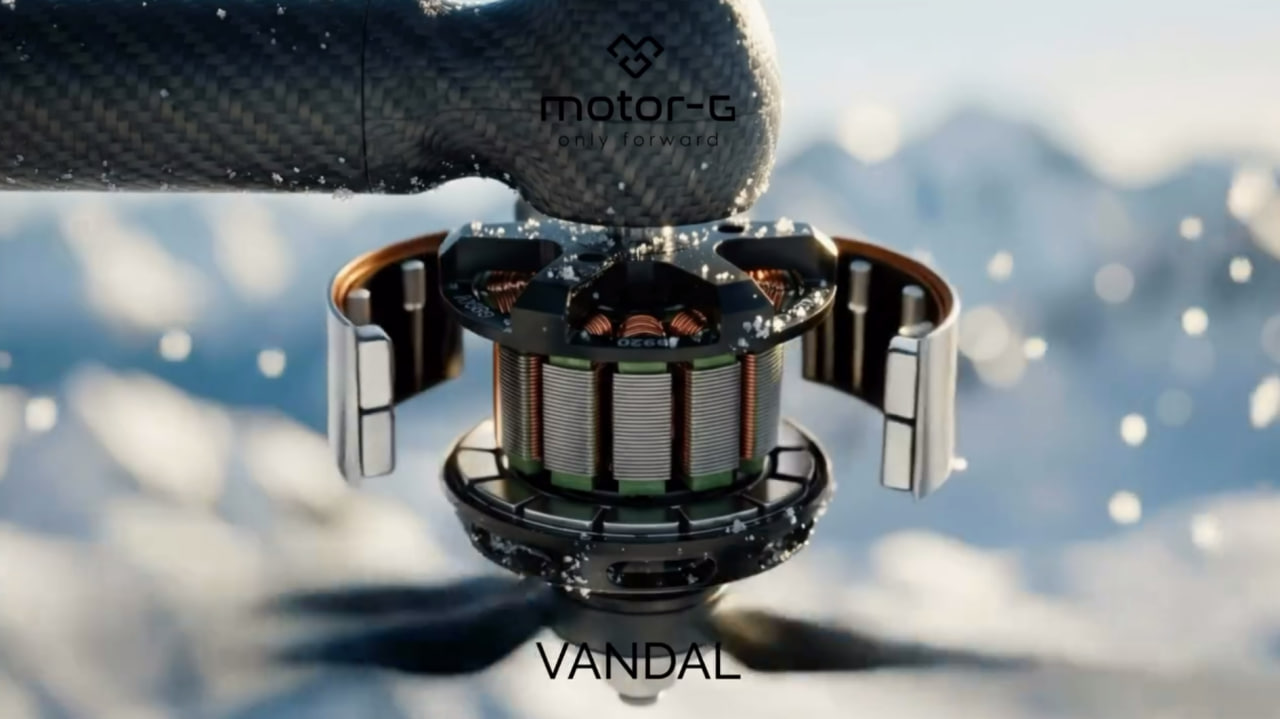
By localizing the production of high-performance propulsion systems, Ukraine is ensuring that its interceptor programs—from SkyFall to Wild Hornets—remain immune to global logistics bottlenecks. Domestic engine production allows for “full-cycle” manufacturing, ensuring that the speed and reliability of these interceptors are tailored specifically to the evolving threats on the battlefield.
Strategic Restraint: The Path to Global Export
Despite the multi-billion dollar potential of the international market, the Ukrainian industry and state are maintaining a disciplined “Frontline First” doctrine. Both SkyFall and Wild Hornets have clarified that while international demand is unprecedented, active exports are contingent on domestic saturation and state-level diplomacy.
SkyFall representatives noted they are ready to support international partners once the Ukrainian government provides the necessary legal clearances. Wild Hornets leadership echoed this, stating that while they receive daily inquiries from the EU and Middle East, their production remains 100% focused on the Armed Forces of Ukraine (AFU), the National Guard, the SBU, and the GUR. The Ukrainian government is currently leading diplomatic talks regarding operator training and potential future supplies. However, direct commercial exports will only commence after domestic security needs are fully met and a robust legal framework for military exports is finalized under Ukrainian law.
Conclusion: The “Ukraine Standard”
In 2026, the question is no longer whether traditional air defense is obsolete, but how quickly it can be supplemented by Ukrainian-style interceptor networks. From the P1-SUN to the STING, Ukraine has created a modular, cost-effective, and combat-proven shield.
Ukraine has solved a multi-million dollar global security problem with a tactical, domestic solution. The global market is now waiting for the gates to open, but for now, the priority remains clear: securing victory at home before securing the world.
Editor’s Note: This analytical piece is based on original reporting and research provided by Militarnyi