In an asymmetric war of attrition, the true measure of technological dominance is no longer just destruction – it is sustainability.
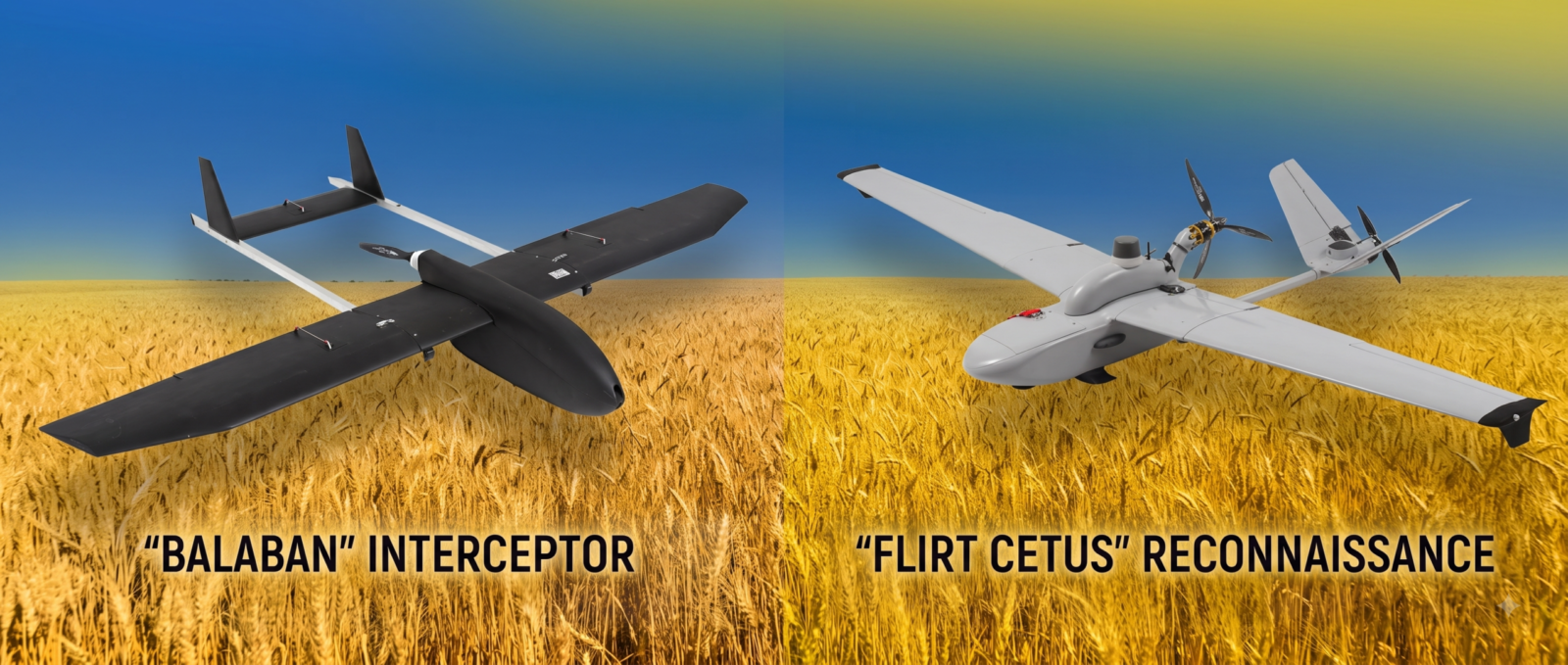
While the early stages of full-scale conflict were defined by single-use, expendable strike drones, the rapidly evolving battlespace demands high-attrition resistance and long-term operational efficiency. Ukrainian defense tech innovators are pivoting toward systems engineered to survive, return, and execute dozens – if not hundreds – of missions.
From cutting-edge kinetic interceptors designed for modern anti-drone ecosystems to battle-proven reconnaissance workhorses, Ukraine’s defense sector is proving that sustainability is a prerequisite for survival.
The New Kinetic Interceptor: Phantom Defense Unveils the “Balaban”
As reported by Defender Media, Ukrainian defense-tech company Phantom Defense has officially presented its new fixed-wing drone interceptor, the Balaban.
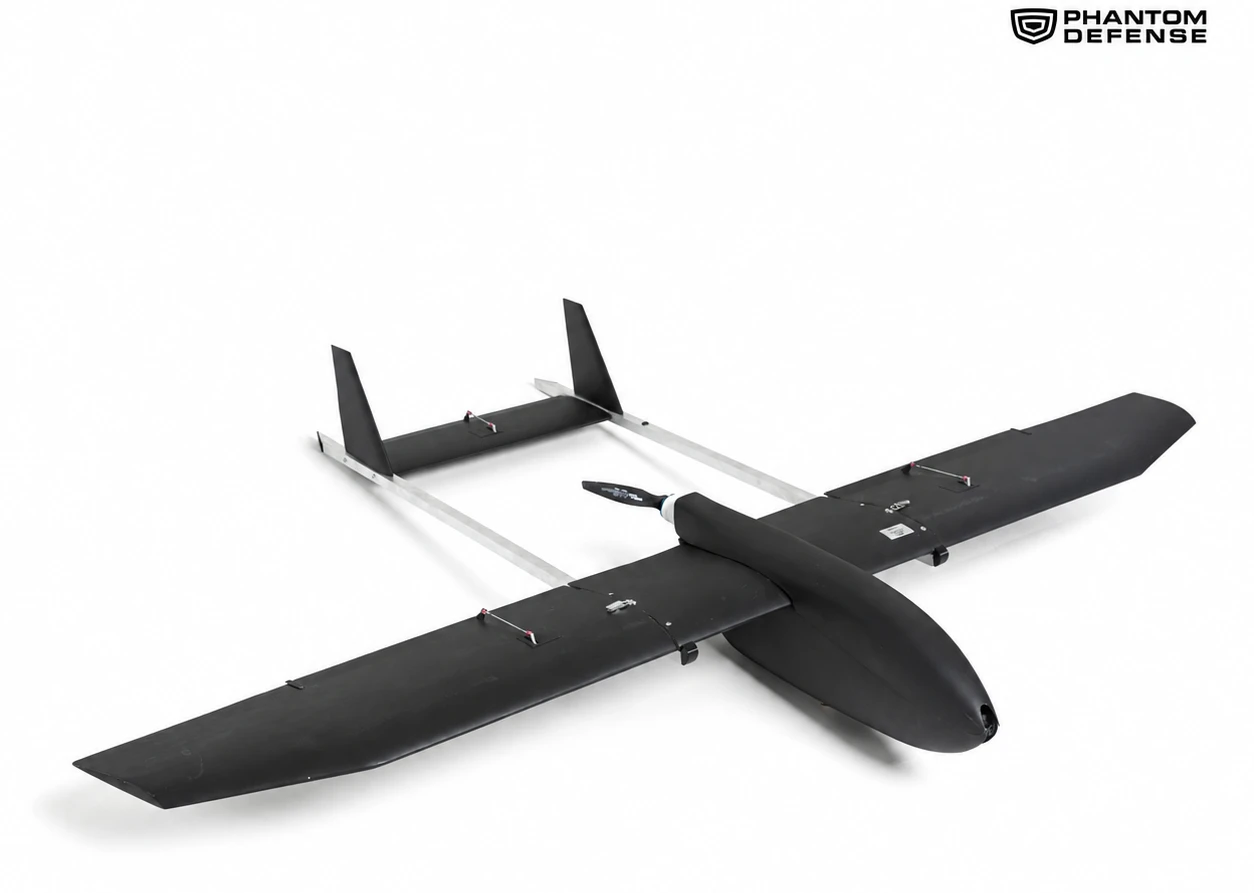
Designed to combat airborne threats, the system addresses one of the most critical challenges in modern air defense: cost-effective interception. Unlike traditional loitering munitions or disposable interceptors, the Balaban features a automated return-to-base system. If no target is engaged during a patrol, the UAV automatically returns to its launch site.
Key Technical Specifications:
Flight Endurance: Over 2 hours
Top Speed: Approximately 250 km/h
Operational Radius: Up to 70 km
Maximum Payload Capacity: 1.2 kg
Launch Mechanism: Catapult launch
The Balaban operates via an autopilot system capable of fully autonomous missions, with flight control managed through a ground control station. In the event of signal loss or direct operator override, the drone autonomously returns to the starting point. During recovery and landing procedures, operators can remotely activate onboard lights for visual tracking.
To bypass enemy EW (Electronic Warfare) interference, the UAV relies on satellite navigation alongside an alternative positioning system using radio beacons, achieving a claimed positioning accuracy of up to 100 meters. The platform also supports two-way telemetry for real-time system monitoring, remote control of video transmitter power, and in-flight video channel switching.
Rather than operating as a standalone unit, the Balaban is integrated into a multi-layered anti-drone ecosystem developed by Phantom Defense, which includes:
Skydarix: AI-powered radar systems
Specter: Electronic warfare complexes
Streamhunter: Video interception systems
Karakurt: Net-launchers
Currently preparing for official state codification, the Balaban has already received a certificate of conformity and is available for direct military procurement. Phantom Defense – which develops EW systems, target detection tools, kinetic weapons, and situational awareness platforms – has not disclosed the unit price.
The Workhorse of Reconnaissance: FLIRT CETUS Proves Battle-Hardened Reliability
While new kinetic interceptors represent the frontier of active air defense, operational survival in deep aerial reconnaissance remains the backbone of battlefield intelligence. As highlighted in a feature by Militarnyi, the FLIRT CETUS fixed-wing mapping and reconnaissance UAV demonstrates how civil tech adaptation can yield exceptional operational longevity.
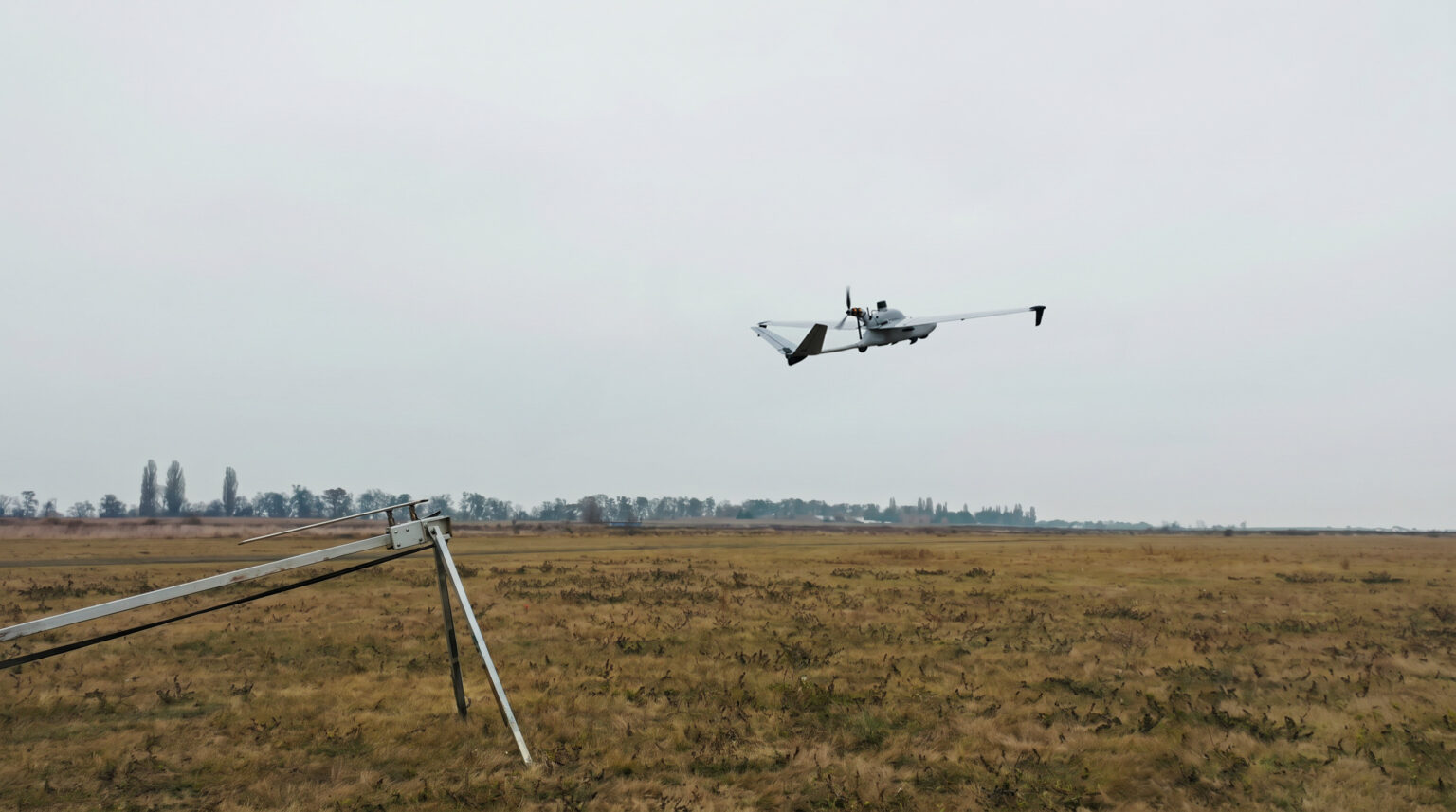
Originally designed for commercial aerial photography and mapping, the FLIRT CETUS emerged during the defense of Kyiv as a crucial aerial asset. Described early in the war by a veteran pilot as “reliable as an AK-47”, the platform was built around the philosophy that modern aerial reconnaissance requires high survivability to enable repeated missions in contested airspace.
Precision Intelligence via High-Altitude Imaging
The FLIRT CETUS operates on an electric powertrain, giving it a low acoustic signature that prevents early visual or auditory detection. With an operational radius of up to 70 km and EW-protected communication links, the platform operates at varying altitudes without sacrificing image resolution.
Its key operational edge lies in its optics and navigation architecture:
Payload: Equipped with a full-frame SONY ILX-LR1 61 MP camera, capturing imagery at a resolution of 9504 × 6336 pixels.
Navigation: Features a jam-resistant GNSS system.
Low-Observable Design: Intentionally lacks nose/forward-facing cameras, significantly reducing its radar and visual detection signature.
The ultra-high-resolution payload allows operators to fly higher – keeping the aircraft outside the effective range of many short-range air defense systems – while giving analysts granular detail to identify targets, track enemy troop movements, and feed precise data into GIS mapping software. Delivering high-quality imaging on the first pass mitigates the need for re-flights, directly preserving crew and aircraft safety.
The Economics of Attrition
In aerial photo-reconnaissance, longevity translates directly to cost efficiency. Practical battlefield data underlines the platform’s extraordinary durability:
2023 Operations: A single FLIRT CETUS airframe completed 102 confirmed combat missions without loss within a single reconnaissance unit.
2025 Operations: Another unit logged 36 confirmed missions with a single airframe.
This level of survivability dramatically reduces the unit cost per square kilometer processed – bringing it down to an estimated $25 per km².
The Strategic Imperative: Cost-Per-Mission as a Metric of Victory
The pairing of systems like the Balaban and the FLIRT CETUS illustrates a vital shift in Ukrainian defense strategy. Whether intercepting incoming threats or mapping enemy fortifications, the focus has shifted toward high-endurance, reusable platforms capable of operating under heavy electronic jamming.
In a conflict where supply chains and hardware reserves dictate long-term success, reducing the cost-per-mission and preserving hardware resources is no longer just an engineering goal – it is the strategy that will decide the war’s outcome.