Nataly Veremeeva, Director at TechUkraine was pleased to participate in a round-table discussion entitled “War & tech: What if “tech for good” became “tech for peace?” of Summer University of Tomorrow’s Economy, which took place in Paris.
Summer University of Tomorrow’s Economy is an initiative, created by Mouvement Impact France. The main goal is to highlight global issues of humanity — ecological crisis, wars, social struggles. Summer University of Tomorrow’s Economy gathers main European entrepreneurs and leaders. This year’s 5th edition of the event was an opportunity to bring together entrepreneurs and decision-makers from all walks of life towards new rules of the economic game around 4 major projects: share, regenerate, cooperate and work differently.
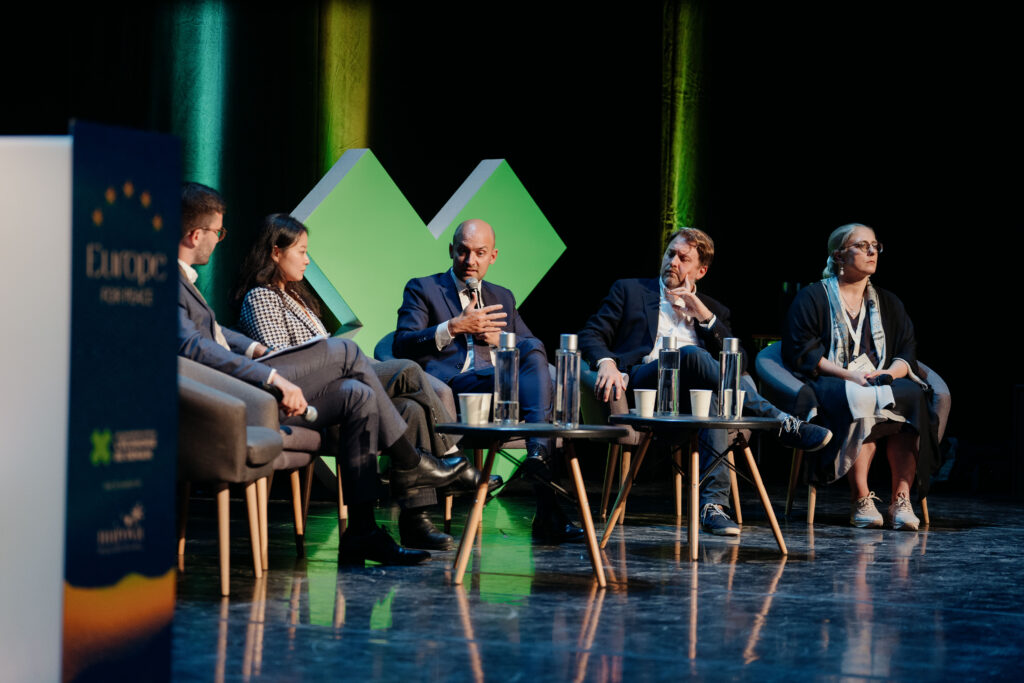
 The topic of the panel was to a large extent Ukraine. Jean-Noël Barrot, Minister for Digital Transition and Telecommunications, Benoît Tabaka, Google France, Jean Guo, Konexio and Nataly Veremeeva, TechUkraine were among the speakers. The panel was moderated by Theo Bourgery Gonse, a reporter at EURACTIV.
In the context of a full-scale war on the territory of Ukraine, Europe is facing new economic, social and geopolitical challenges. Over the past 16 months, Ukraine has been on the defensive in the face of the enemy, protecting its statehood and the civilized world. Except for the set of challenges and problems caused by the war, Ukraine’s example shows trends in the development and resilience of the IT sector. The IT industry actively supports the Armed Forces of Ukraine and all those who are fighting for the country’s independence. From the first days of the war, IT companies have been donating millions to charities, purchasing weapons, vehicles, drones, equipment, and other necessary equipment to bring victory over the enemy closer.
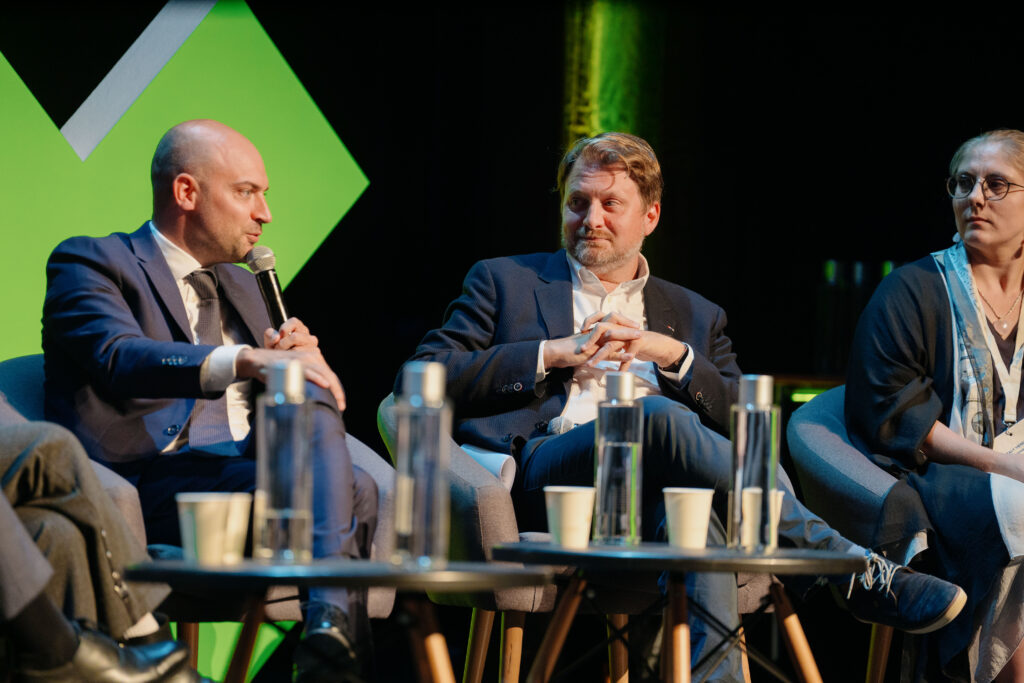
Jean-Noël Barrot, the Minister for Digital Transition and Telecommunications in France, expressed his opinion on how the tech is used on the daily basis during the war in Ukraine and what the French government is doing to to help Ukrainians.
”I see the role of tech both in preventing war, and during the war and after the war, to rebuild. In preventing war I think very important is the role of disinformation. There is an increasing awareness that dozens of public spaces that we’ve created, need to be taking into account that enemies of freedom and peace are using the disinformation to prepare for war. We see this on European level and we’ve taken decisions that have never been taken before to forbid channels that were supported by russians, broadcasting russian propaganda. We’ve seen later in Africa how russia uses this tool for disinformation in order to stimulate violence and make a democracy weak. The key challenge is not only to react, but also to make social networks and platforms. And we’ve just adopted the major regulations, which is called the Digital Services Act. New obligations are coming to actions,” — said the Minister.
”There are 2 things that struck me during the war in Ukraine. One is the urgency to provide Ukraine with access to communications, data and cyber. Because one of the first things russians wanted to do is to isolate Ukraine from the global communication. The second aspect how tech can help during the war is of course the support of refugees. But for tech, we would not have been able in Europe to welcome so many Ukrainian refugees. To help them find housing, to help them find transportation, to find reskilling, trainings, to find jobs, to help them to get access to the communications and telecommunications as well.”
“In France we can learn a lot from Ukraine, because Ukraine has a vibrant tech. And Ukraine is more advanced then France in case of digital access to the public services,” — Jean-Noël Barrot added.
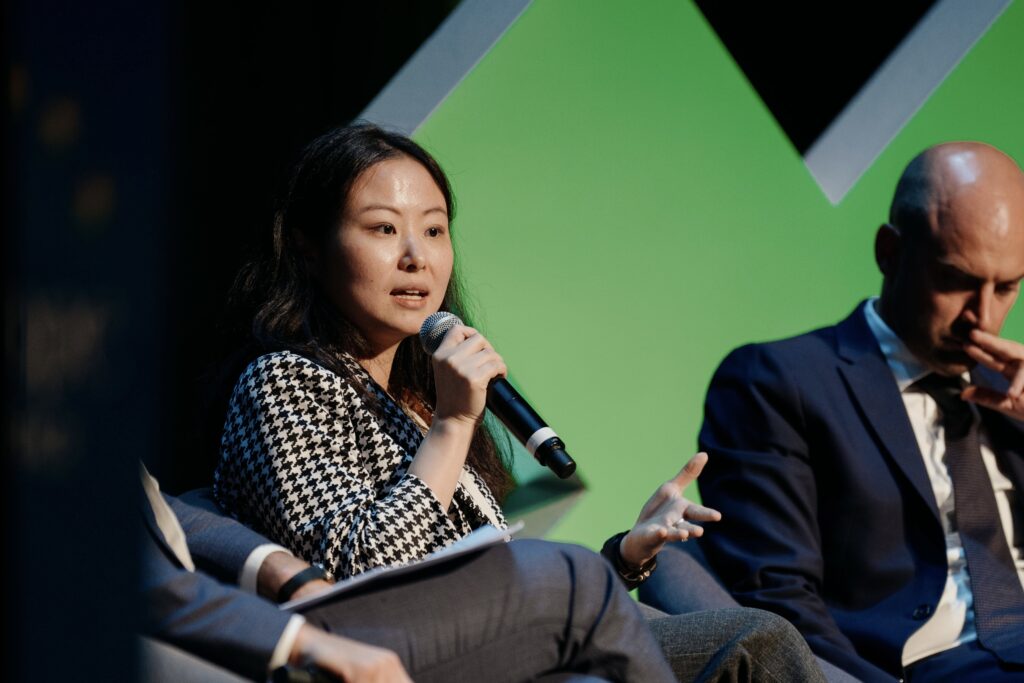
Jean Guo, CEO at Konexio, answered the question how the tech could be a glue in bringing people together. “We always think about the question of the needs of technological innovations, but this should benefit the most people, including most vulnerable and marginalized communities. So when you look at the instances all around the world, we see that tech is playing a key role in keeping efforts. For example, after the elections in Kenya, and the violence happened there. An application was launched in order to help report incidents, to keep transparency, when it comes to democratic elections.”
“We see an increasing power of tools including AI to make it much more relevant. In Ukraine, there is still a critical question of infrastructure and connectivity. So there have been different initiatives for schools, for hospitals, for public administrations to make sure people are connected and have an access. The second thing is a Digital Assembly by the European Commission. They try to bring different stakeholders to make the best practices on how to continue sharing the information. And finally, re-skilling, making sure that people can successfully integrate into society.”
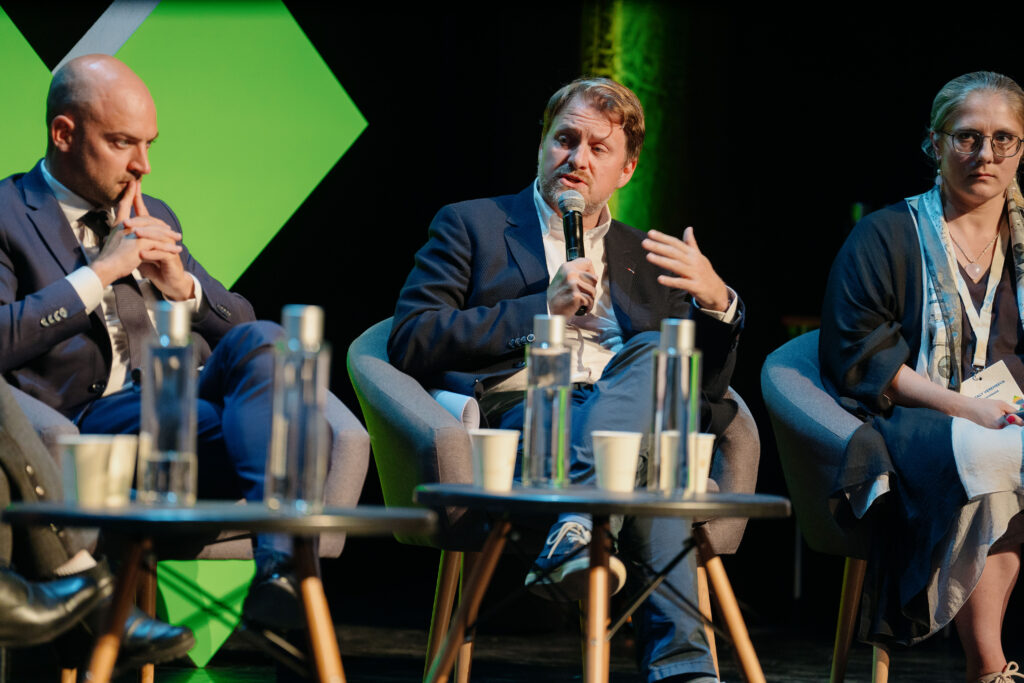
Benoit Tabaka, Secretary General of Google France answered the question what tech can do to protect civilians during the war in Ukraine today: “When the invasion started, we immediately started thinking about what Google can do in front of this new situation. Because we saw for the first time such an invasion on a European country. Few things, the first: what can we do on the ground for Ukrainians? The first thing is that we are existing on Google maps, you can see the location of people on the road. We decided to disable this kind of feature because we are giving sensitive information to the Russian army. The second thing is that we worked with the Ukrainian government to deploy some alerts, called air alert alerts, to notify Ukrainians in the country, to inform people of bombs or planes coming to the country, to make people aware. The last point was to accelerate google translate because lots of Ukrainian people left Ukraine and they had to speak to Polish people, to Spanish people.”
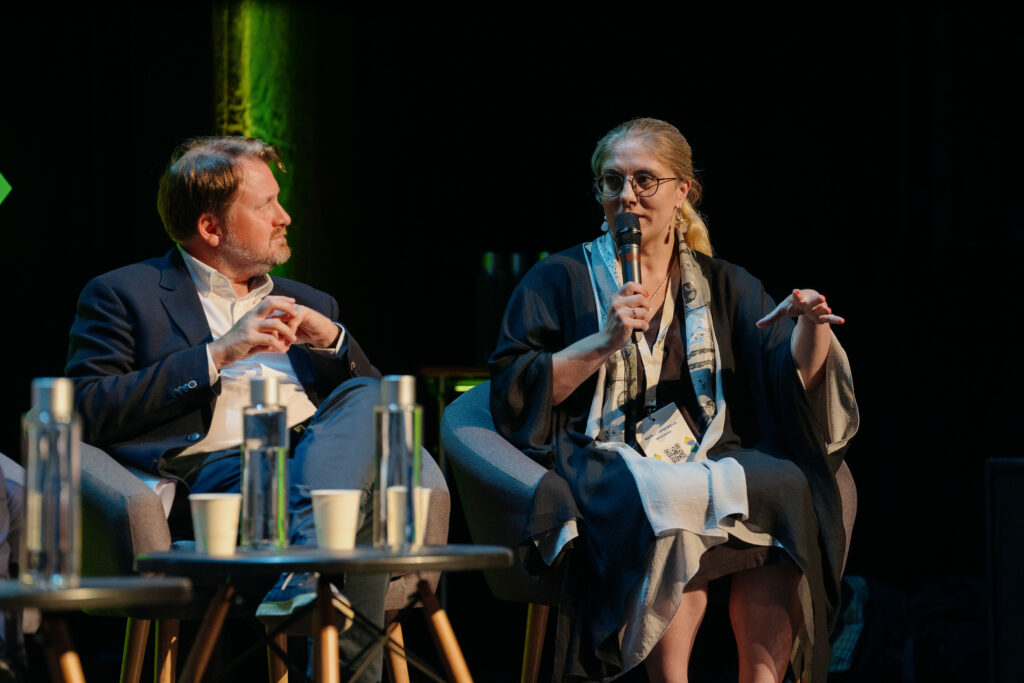
In her turn, during her speech in Paris, Nataly Veremeeva revealed the main achievements of Ukrainian IT, its private and public sectors. She also mentioned the impact of the Ministry of Digital Transformation on the country’s resilience, especially the impact of our projects such as Diia and Army of Drones.
“Since the war started, tech has become one of the pillars of Ukrainian resistance in multiple ways: donations, international connections, exact solutions, physical people that joined the IT Army. This conflict is one of the first cyber conflicts in which online and cybersecurity are playing a very important role. And both from the Russian and our side we have cyber armies. We have a lot of volunteers and the tech sector was booming during the last years. We had around 5,000 IT companies, more than 300,000 IT professionals. We were doing quite well and we’re growing 30% per year. All this allowed us to be very efficient, helping our country in need.”
Nataly told the European community about 2 kinds of E-armies, operating in ongoing war: the Internet Army of around 100 of online-soldiers and the IT Army, that has around 300 participants. The Internet army is working with fighting disinformation, with false narratives, with social media etc. And the IT Army is focused on cyber attacks. 95% of IT companies have one or more professionals who are involved in this type of activity. The Ministry of Digital Transformation took the lead to organise these projects.
“When the war started, not only the government started to help. People gathered, thinking about what they could do to help. And tech companies did the same. Our country managed to keep the dialogue with the citizens despite everything. We have digitized documents, application for internally displaced persons to receive the compensation, application for voting for critical questions, we have an application E-Vorog (E-Enemy), which is used to identify the enemy, where all the population can identify the enemy, and an application for reporting about damaged property. These helped Ukraine to cope organizationally with the problems that are created by the war. There are still challenges that need to be solved by startups, by tech companies. And we are really hopeful that by development of our sector, and by building connections with other countries, especially with technologically advanced companies, we can do better together, sharing the same values.”
Watch the full video recording of the discussion.
Photo Credits by Etienne Boulanger.
We are grateful to our international partners for their support and to the organizers of Summer University of Tomorrow’s Economy for such an important event!
Read more about the integration of war and tech in Ukraine: BRAVE1 Defense Technology Development Cluster Awarded $225,000 in Grants