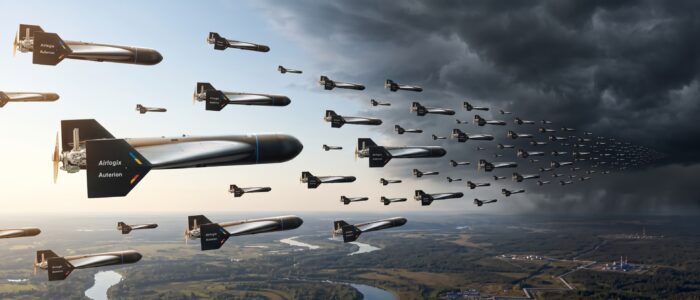
TechUkraine Digest: December 2025
If previous months were defined by rapid prototyping, December 2025 will be remembered as the month of institutionalization and heavy industrialization. The Ukrainian defense tech sector effectively closed the chapter on “emergency innovation” and opened a new era of systemic integration with NATO standards and global supply chains. We witnessed a synchronized push across three vectors: the codification of robotic ground systems, the establishment of “China-free” manufacturing capabilities, and the arrival of serious venture capital to scale battle-hardened solutions.
Here is an in-depth look at how the ecosystem transformed this month.
1. The Maturity of Hardware: Codification and Specialization
The most significant shift in December was the formal recognition of robotic systems by military bureaucracy, signaling their readiness for mass deployment. The sector moved beyond simple FPVs into complex, autonomous ground and air solutions. A prime example is the synergy between Frontline Robotics and DevDroid. While DevDroid’s Droid NW 40 received official NATO codification—validating its logistics and safety standards for the battlefield—Frontline Robotics simultaneously launched the serial production of the Burya 2.0 turret. This isn’t just about remote control anymore; it is about creating a “mini-tank” capability where universal heavy weapon mounts are paired with compliant, standardized platforms.
Simultaneously, we are seeing a divergence in drone specialization. While Lanka Robotics focused on solving the critical software bottleneck of autonomy for ground units, other players targeted niche physical performance. General Chereshnya introduced Air Pro, a high-speed interceptor capable of 200 km/h, directly addressing the need for kinetic counter-UAV solutions. Furthermore, Osiris AI and DefDrones united to merge hardware with advanced intelligence.
On the materials front, Polifly unveiled the polyurethane Cooper drone, moving away from standard carbon fiber to lighter, cheaper, and more scalable materials. This trend was capped by Ailand Systems, whose Spinner UAV was granted a NATO Stock Number, proving that Ukrainian hardware design is now mature enough to enter the logistics supply chains of the Alliance.
2. The Invisible Front: Resilience in the Ether
As kinetic hardware evolves, the electromagnetic spectrum remains the fiercest battleground, and December’s releases reflected a pivot towards “smart” resilience. Himera continued to lead this charge, deploying the B1 Repeater. This device addresses the critical “last mile” of connection, ensuring that tactical radios function even in fragmented terrain under heavy jamming. This complements the broader trend of decentralized protection, exemplified by the portable EW system VIK-2K receiving official codification. The message is clear: electronic warfare is no longer just for strategic assets; it is becoming a personal defensive tool for every infantry unit.
Innovation also touched detection. Silent Defense (ARES) introduced an acoustic targeting system, moving away from purely radar-based detection which can be visible to the enemy. By listening to the skies, ARES provides a passive layer of defense. Meanwhile, Sky Spy secured $1.6M specifically to develop Agent 001, a system designed to rewrite the rules of EW engagement, suggesting that the next generation of jammers will be AI-driven and adaptive. To support this vital sector, Brave1 and the EU launched a €150k grant program tailored for air defense technologies.
3. Geopolitics of Manufacturing: Sovereignty and Expansion
Perhaps the most strategic development of the month was the aggressive move towards supply chain sovereignty and international localization. The narrative of “dependence on China” is being actively dismantled. Motor-G took a bold step by announcing a roadmap for a “China-Free” future in defense tech, a critical move to secure the supply chain against geopolitical shifts. This desire for independence is matched by an outward expansion of production capacity.
Ukraine is physically embedding its defense industry into Europe. Quantum Systems and Frontline Robotics launched a joint production facility in Germany, a move that secures technology transfer and scales manufacturing away from the immediate frontline risks. Similarly, Ukrspecsystems is building a massive $250M defense ecosystem in the UK, while new agreements with the Netherlands and Norway laid the blueprints for joint drone production through 2026. This is a transition from Ukraine being a buyer of aid to becoming a technological partner of security architecture.
4. Capital Flows: From Grants to Venture Scale
The financial landscape of December proved that the “war economy” is becoming a legitimate investment market. While grant programs from Brave1 (specifically unlocking grants for component manufacturers) and the USF (launching Startup EDGE) continue to de-risk early-stage R&D, the real story is the influx of institutional capital. The €10 million leap for battlefield innovation from Unite, Brave, and NATO signals that the Alliance is putting money behind its political support.
However, the private rounds are where the validation lies. Himera secured over $2.5M to fortify battlefield comms. We are also seeing the ecosystem’s “graduation” via the Seeds of Bravery program, which awarded over €1.8M to 78 startups in its final cohort. The funnel is working: startups are moving from small grants to seed rounds, preparing for global scaling.
5. Beyond the Battlefield: DeepTech and Future Horizons
Finally, December showed that Ukrainian tech is not solely defined by the war. The ecosystem is actively cultivating deep tech and civilian applications. The YEP Accelerator launched Wave 2 of “Beyond the Thesis”, bridging the gap between academic science and commercial product.
Recognition of this potential is growing globally. Ukraine was honored for Ethical AI leadership at AI Horizon 2025, and the IDF Awards 2025 highlighted the titans driving this ecosystem. Looking forward, the announcement of the 8 startups selected for CES 2026 and the focus on CleanTech energy independence highlights a resilience of a different kind: the ability to plan for a sustainable, high-tech future even while fighting for survival today.
Summary
December 2025 was a pivotal month. It confirmed that Ukraine is successfully converting combat experience into a structured, scalable, and globally integrated defense industry. As we move into 2026, the foundation built this month—codified robots, Western production lines, and “China-free” components—will be the launchpad for the next phase of the war: the technological overmatch.